
Can Cats and Dogs Share the Same Water Bowl?
In many multi-pet homes, cats and dogs live together in peaceful harmony. Still, should owners provide them with a single shared water dish? This question frequently arises for practical convenience and space reasons. While a cat and a dog can share the same water bowl in certain cases, it is rarely ideal for the feline companion. Here are the essential points to consider so that both pets drink well.
Is Sharing a Water Bowl Dangerous?
Some dogs also step directly into the bowl with muddy paws or drop garden dirt inside after returning from daily walks. Choosing a heavy, wide container placed over a washable mat helps limit these messy inconveniences.
For two healthy companion animals that are vaccinated and dewormed, sharing clean drinking water rarely poses any major medical hazard. The standing supply simply needs to be renewed and refreshed frequently throughout the day.
Dogs drink by vigorously lapping with their tongues, leaving behind substantial saliva and floating food crumbs in the bowl. The water gets dirty rapidly, which easily repels fastidious cats that are exceptionally sensitive to water freshness.
Whenever either animal contracts a contagious illness, immediately separate all communal drinking stations and ask your veterinarian for professional guidance on keeping both pets protected.
The fundamental challenge of a shared bowl is therefore far less about disease transmission and much more about feline behavioral comfort.
Cats Need Quiet Surroundings to Drink
Watch the scene quietly for a few days. If your cat drinks serenely beside the dog, cohabitation is going smoothly. If it constantly watches the dog or flees at the slightest movement, it clearly requires a protected space.
A cat drinks by lowering its head, placing itself in an inherently vulnerable posture. Felines naturally prefer drinking in a calm setting without being disturbed or startled by unexpected household activity.
Even a gentle, well-meaning dog might approach abruptly, sniff, or invite play right while the cat is drinking. The cat may cut visits short or avoid the communal station altogether as a result.
A cat that drinks less due to persistent stress faces greater risks of developing urinary issues, especially when consuming an exclusively dry kibble diet that requires adequate fluid intake.
That is why experts advise reserving at least one private drinking station in your home that remains completely inaccessible to the dog.
Addressing Different Heights and Needs
If your dog is large, a sturdy wall shelf or a cat tree platform can safely support the cat's water dish. Make sure the perch is completely stable and easily accessible, even for an aging feline.
Dedicting an entire room to the cat with an interior pet flap too small for the dog is another effective way to protect its water, food, and litter.
A dog drinks considerably more than a cat and empties bowls quickly. A shared bowl risks sitting bone dry precisely when the cat arrives looking for a refreshing drink.
Placing your cat's water bowl up high on furniture or shelving that the dog cannot reach ensures the cat feels secure and always has access to clean, fresh water.
Meanwhile, your dog also needs its own generously filled water container placed on the floor, properly proportioned to its size and daily drinking requirements.
Is a Shared Pet Fountain a Good Idea?
A high-capacity pet fountain can work nicely in a calm household, provided you monitor the water level regularly and clean the unit frequently, as canine saliva and debris quickly clog filters and pumps.
Make sure the fountain sits firmly on the floor and keep any electrical power cables securely tucked away out of reach of curious canine teeth.
Even if you run a shared fountain on the main floor, always keep a secondary water station reserved exclusively for your cat up in an elevated spot.
Healthy Daily Habits to Adopt
Plan calm windows when the cat can move around without canine attention, such as during dog walks outdoors. Cats often take advantage of these quiet moments to eat and drink in complete tranquility.
Change the water at least once daily, and more often if the dog shares the container. Wash all drinking bowls thoroughly on a regular basis to keep them fresh and hygienic.
Separate food dishes entirely, since dogs are easily tempted by rich feline kibble, which is inappropriate for canine nutritional balance and digestive health.
Observe your pets closely over time. If your cat avoids certain spots or seems visibly tense, reorganize the placement of essential resources across the living space.
When to Seek Veterinary Advice
Remember to report any shifts in canine behavior too, as sudden, excessive thirst in your dog also justifies a professional medical checkup.
If your cat drinks noticeably less after a dog arrives, or displays signs of urinary trouble, make an appointment with your veterinarian promptly.
Frequent trips to the litter tray, peeing outside the box, or blood in the urine should alert you. A male cat unable to urinate is an absolute medical emergency.
Your vet can also offer personalized suggestions on home layout so both pets find their proper space and live together without unnecessary stress.
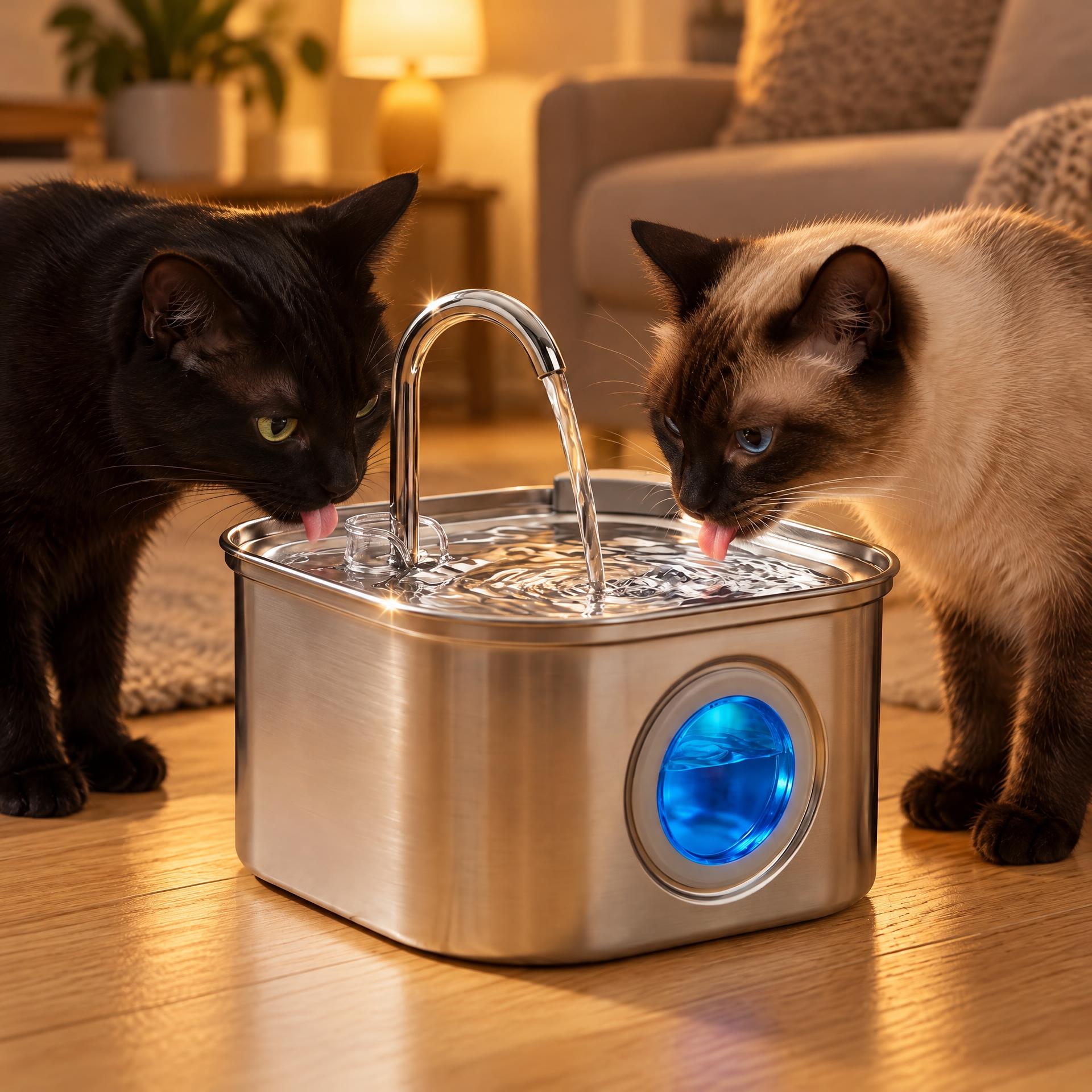
If you wish to provide moving water, the Veyrulis fountain combines a 3.2-liter SUS 304 stainless steel reservoir, filtration that captures hair and impurities, quiet operation, and an illuminated window to monitor the water level. It does not replace a suitable diet or the advice of your veterinarian.
Sources and further reading
This advice is for information only and does not replace your veterinarian's opinion.