
Cat scratching the sofa despite having a cat tree: understand and act
Your cat climbs down from their cat tree, crosses the living room and sinks their claws into the armrest. This does not necessarily mean their equipment is useless: the sofa may simply meet a particular preference better. Behind the search “cat scratching sofa despite cat tree”, the useful question is therefore: what do they find here that they cannot find elsewhere? Before replacing anything, watch the exact spot they target, their posture and the covering. These clues can help you create a well-matched alternative, without punishment or a rushed purchase.
Cat scratching the sofa despite a cat tree: observe what happens
Start by describing the scratching rather than counting the damage. Does your cat always target the same corner, the side of the backrest or the top of the seat? Do they stand upright, stretch forwards or work almost flat? Note the circumstances too: waking up, moving into another room or someone arriving. A photo of damaged areas can provide a reference, without encouraging the behaviour for a clearer picture or interrupting your cat to get a better look.
The AAFP and ISFM guidelines on feline environmental needs (2013) include opportunities to scratch within an environment offering hiding places, elevated perches, separate resources, familiar smells and respectful interactions. A cat tree therefore does not automatically accommodate every preference your cat may have. Here, the goal is more specific: identify what makes this part of the sofa interesting, then reproduce its useful qualities on an acceptable scratching surface that is available at the same moment.
The exact location matters more than simply having a cat tree
An armrest on a daily route does not serve the same purpose as a post in a rarely visited corner. If your cat consistently scratches after a nap, a distant alternative may simply come too late along their route. Temporarily place a scratching surface as close as possible to the targeted area, without blocking the way. You are not trying to rearrange the whole living room, but to test this particular spot.
Keep the alternative nearby at first, even if the arrangement looks less than elegant. Moving it straight away to a discreet location would confuse the test: you would no longer know whether rejection was about the surface or the place. Once your cat chooses it regularly, try moving it away gradually. If sofa scratching returns, move it back towards the last location used. Some spots will remain relevant long term; accepting this is better than repeatedly moving things without results.
Match the direction of the movement, not just the height
Look at where the hind paws rest and which way the front paws pull. Scratching on the outside of the armrest suggests testing a vertical surface. A clawed seat points instead towards offering a horizontal support. If your cat targets a slope or rounded edge, an angled surface is worth trying. These are possibilities suggested by observation, not fixed categories: the same cat may enjoy several orientations at different times.
Position the support so your cat can repeat their usual movement without furniture getting in the way. Avoid taking hold of their paws to demonstrate: let them explore, then calmly reward spontaneous use with attention or a treat they enjoy. Check the manufacturer's instructions for permitted positions of use, any fixings and all other technical questions. An accessory designed to rest on the floor should not be turned into an improvised hanging panel.
Test texture by changing just one variable
The sofa fabric may provide a grip that the existing post does not. Examine the covering your cat targets: a pronounced weave, a rough surface or material that gives slightly under their claws. For comparison, offer a purpose-made scratching surface that feels different from the one already available. Keep the location and orientation the same wherever possible. This helps distinguish a texture preference from a response simply to novelty or proximity.
Do not cover the new accessory with a piece cut from the sofa: you could create a resemblance that is unhelpful later on. Also avoid textiles with accessible loops, dangling threads or pieces that come loose. Check the condition of the support according to its instructions. If your cat explores it without scratching, give them time; approaching, sniffing and walking away is not yet enough to conclude that they dislike the material.
Protect the sofa without confusing the test
During trials, protection suitable for the sofa covering may limit damage, provided it has no parts that could be swallowed and poses no snagging risk. Follow its instructions and check compatibility on an inconspicuous area. The alternative must remain right beside it and immediately usable. Avoid shouting, spraying and repellent smells: these do not tell your cat which surface to use and may make the place unpleasant for them.
Above all, assess your cat's choice: do they use the new support more when both options remain accessible? If they scratch elsewhere on the sofa, observe that new area before changing everything. The aim is not to prohibit scratching, but to give it an acceptable outlet. Finally, consult a vet about any sign of pain, limping, a fall, parasites or behavioural change. A new difficulty should not be dismissed as a furniture preference.
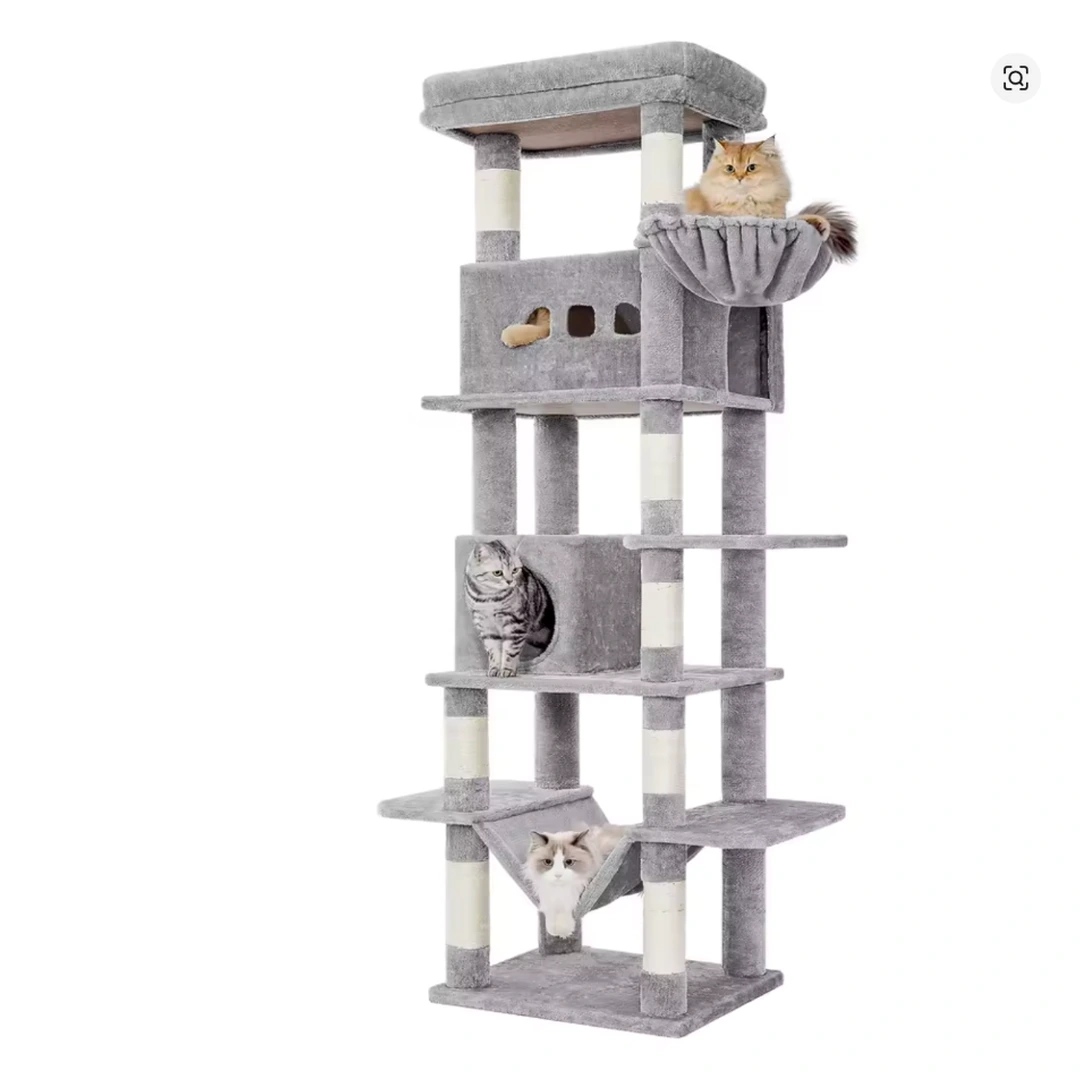
VEYRULIS is preparing a large, 210 cm multi-level tower cat tree for accessoireschat.com. It is not yet on sale: the price has not been approved, and the colour variant remains to be confirmed. Its specifications will need checking against the instructions for the model delivered. To redirect scratching away from the sofa, compare its surfaces above all with the places, orientations and textures your cat actually chooses.
Sources and further reading
This advice is for information only and does not replace your veterinarian's opinion.