
Indoor Cats and Feeding: Organising Mealtimes
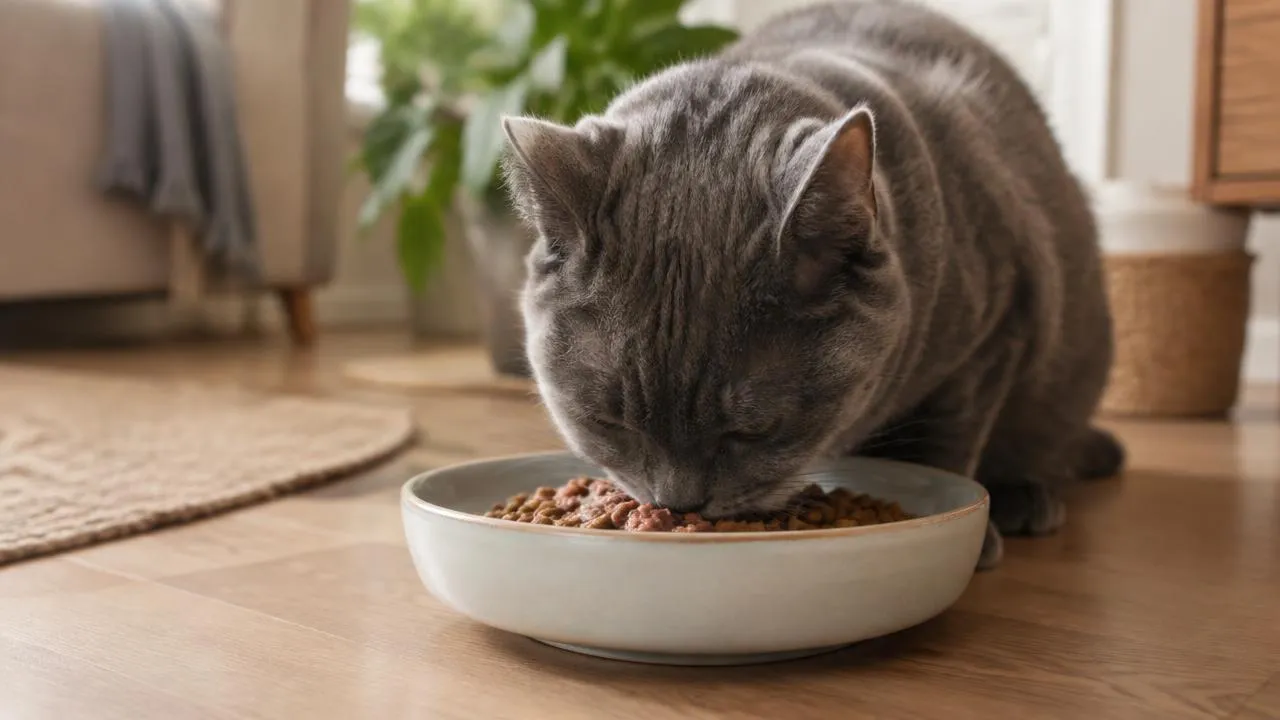
Living exclusively indoors can naturally limit a cat's opportunities for foraging and natural predatory behaviours. Discover practical ways to organise meals and resources while respecting your cat's natural daily rhythm. The AAFP consensus statement highlights that feeding schedules, feline behaviour, and the wider home environment are equally important. These general guidelines do not replace personalised advice from your veterinary surgeon, who knows your companion best.
Taking Stock of Daily Habits
The indoor cat often relies entirely on their human guardians for their daily nutrition. A strictly indoor life can naturally limit natural predatory and foraging behaviours, as noted in the AAFP consensus statement. Organising mealtimes can therefore offer welcome opportunities for environmental exploration, without altering the daily food portion established for the animal. Allowing your cat to search for part of their daily ration provides engaging activity within a home where hunting opportunities are sparse. Distribute only the measured daily portion, without increasing the total quantity offered.
Observe carefully how your feline companion navigates living areas, furniture, and quiet corners. Cats sharing a household do not always distribute territory equally: some actively avoid certain locations, pathways, or specific housemates. This spatial context is essential when deciding where to place food and fresh water. Introduce only one new feeding location at a time. If your cat avoids the area or seems hesitant, return to a familiar setting and observe their response before planning another change.
Measuring and Monitoring Daily Portions
The AAFP describes a natural feline preference for frequent, small meals eaten in solitary peace. Several modest portions served throughout the day can align much more closely with this natural rhythm than a single large meal. Ask your veterinary surgeon what total quantity and measurement suit your cat, avoiding assumptions based on another pet. Wet food and dry kibble are not interchangeable in every type of feeding device. The guidance notes that puzzle feeders exist for different food textures; ensure your chosen model matches the specific food type.
You can offer a portion of the daily dry kibble in a simple puzzle feeder or place small amounts across accessible spots. Professional consensus documents indicate that such approaches encourage natural searching and physical activity. Start simply, making sure your cat understands how the device works and that food remains straightforward to retrieve. Varied surfaces can enrich the environment without demanding strenuous athletic effort. Always consider your cat's physical abilities before placing a food portion on higher furniture or shelving.
Organising Daily Feeding Routines
Some cats enjoy exploring elevated surfaces; however, this vertical option is only suitable if their physical condition safely allows it. Select feeding spots where the animal can approach, feed, and leave with ease and confidence. Environmental enrichment should always enhance daily comfort, never forcing a cat into an area where they feel insecure or cornered. A preference for quiet spots can be identified by noticing when your cat chooses to eat. Try to reduce foot traffic around the feeding station if busy surroundings disturb them.
Feeding pets in a single location can make it difficult to determine who eats what in multi-cat homes. Watch whether they tolerate each other near the bowl or if one waits for the other to leave. Distinct feeding locations, separated visually, can reduce competition and make nutritional monitoring much easier. An automated device does not necessarily offer a choice of locations or exploratory engagement. It can support a reliable routine, while placing portions elsewhere offers your cat a chance to forage.
Encouraging Natural Foraging Activity
An automated feeder can help distribute meals across the day, but it cannot replace the mental stimulation of physical foraging. Before buying or using any automatic appliance, check its functions in the manual for that exact model. Afterwards, confirm that each resident cat actually accesses their allocated portions. Feeding locations must remain convenient for the animal and accessible for the person monitoring meals. A spot that is difficult to inspect makes monitoring uneaten food awkward and complicates everyday routines.
Keeping a simple notebook can record mealtimes, chosen locations, and any uneaten food. This helps you identify preferences and practical obstacles without turning routine observation into an informal diagnosis. Bring these clear observations to your veterinary surgeon if your cat's feeding plan needs adjusting. In homes shared by multiple cats, do not assume they are bonded simply because they live together. The consensus reminds us that social bonds, personal preferences, and spatial tolerances differ between individual cats.
Adapting Resources and Ongoing Monitoring
Avoid changing locations, feeding times, and bowls simultaneously, as it becomes difficult to understand what altered your cat's behaviour. Introduce one adjustment at a time, then observe whether the animal eats normally and appears comfortable in their environment. Note which areas your cat uses regularly and which ones they avoid. This informal mapping helps you choose a feeding area aligned with their daily habits rather than human convenience alone.
At Accessoires Chat, a black automatic kibble dispenser with Wi-Fi functionality is currently in development and is not yet available for sale. Its price has not been validated, and the image is illustrative; final specifications must be confirmed in the instruction manual of the model delivered.
At Accessoires Chat, our black Wi-Fi connected feeder is currently in preparation and not yet on sale. Its retail price has not been validated; the image is purely illustrative. Final technical features and specifications must be confirmed in the instruction manual of the model delivered.
Sources and further reading
This advice is for information only and does not replace your veterinarian's opinion.