
Cat eating too fast: understanding reasons and adapting meals
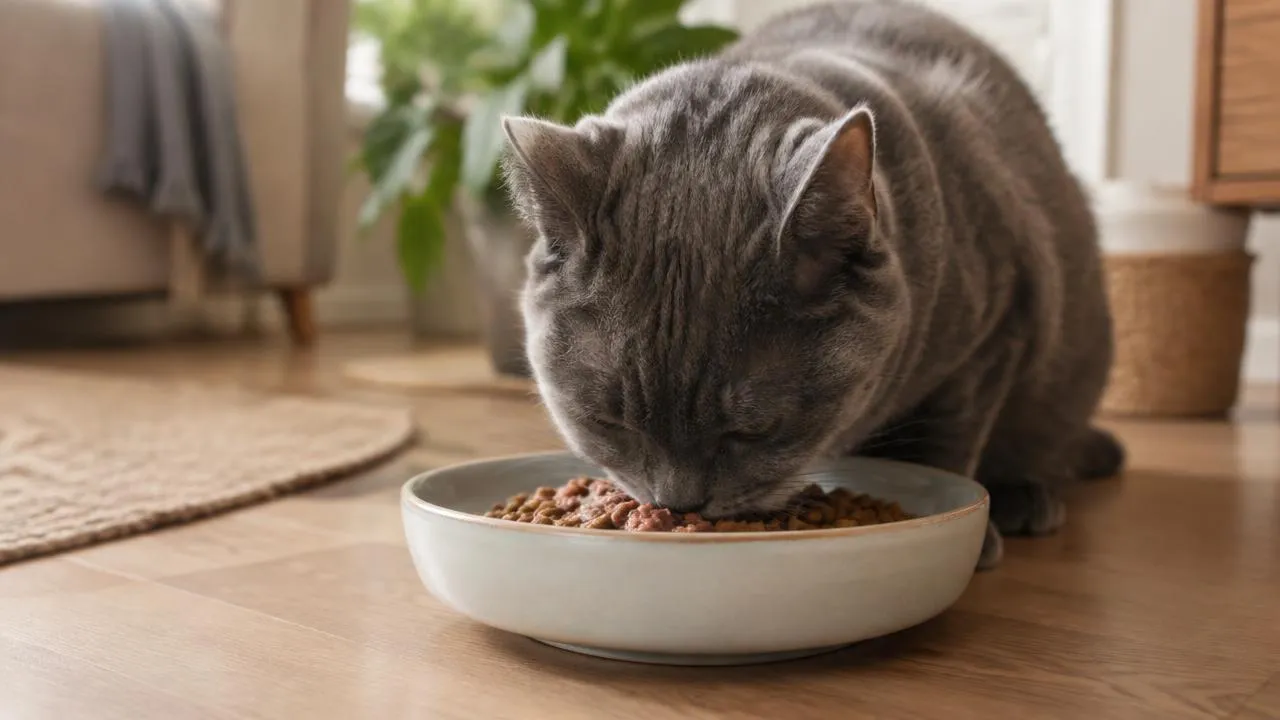
A cat that eats too quickly can be a source of worry, especially if this habit appears suddenly or comes alongside other behavioural changes. The AAFP consensus statement highlights that highly palatable foods that are easy to swallow can encourage rapid consumption; it also describes situations where a cat rushes its meal simply to escape a stressful encounter. These considerations encourage us to examine the feline environment and access to resources, rather than attempting to reduce or modify food allowances on our own without professional guidance.
Observing meal times and feeding locations
Begin by noting the exact circumstances: does your cat eat rapidly in the presence of another pet, in a busy hallway, or regardless of where the bowl is placed? Feline spatial preferences vary considerably, and certain cats deliberately choose to avoid specific household members or companion animals.
Tension between cats is not always obvious to human observers. An individual cat might swallow its food hastily and leave immediately, or stay confined to a small territory within the home. The consensus statement underlines that subtle signs of social stress can easily pass unnoticed.
If this hasty eating appears out of the blue, coincides with a change in appetite, or causes you concern, arrange an exchange with your veterinary team. The reference advises monitoring behaviour alongside any indicators of illness or social tension linked to feeding. It is never prudent to assume that everything will be resolved simply by slowing consumption: each cat's unique situation and nutritional requirements must always be evaluated first.
Understanding rations and meal schedules
Cats generally prefer eating small amounts frequently and in solitude, whereas many households offer one or two large portions in a single communal spot. The consensus statement recommends dividing the total daily intake into multiple smaller meals. Splitting the planned allowance provides a feeding rhythm far closer to natural feline instincts, without offering extra food at every demand or creating unintended caloric supplements.
Modern commercial diets can be exceptionally palatable, with small kibble shapes that are remarkably easy to swallow in seconds. The consensus links these food characteristics to potential overeating and subsequent weight gain. However, this factor alone is not sufficient to determine the primary cause of an individual cat's feeding behaviour.
A digital kitchen scale provides a dependable method for weighing portions accurately; measuring by volume is another option mentioned by the AAFP, though with less reliable precision. Keeping a written note of what is served and any uneaten leftovers helps you gain a clearer picture of actual consumption over time.
Reducing pressure around the food bowl
In multi-cat households, establish separate feeding stations that remain visually secluded from one another. The AAFP advises reflecting carefully upon social relationships between animals, their individual comfort zones, and the distribution of vital resources. Cats often choose to avoid certain companions, even when they have lived together for years.
Install feeding stations well away from litter trays and make sure they remain readily accessible to each animal. An elevated shelf or sturdy table might suit an agile cat, but you must always take into account the physical agility and mobility limitations of every pet in the home.
Avoid forcing cats to eat side by side simply because they seem to tolerate physical proximity without overt conflict. Feline relationships can be highly selective, and signs of tension are often remarkably subtle. Observe their preferences and select locations that allow each cat to eat comfortably without feeling unsettled or watched.
Introducing gentle activity without creating obstacles
A food puzzle can make obtaining dry food a more active pursuit and stimulate natural manipulation. The AAFP suggests starting with straightforward puzzles that the cat can operate without confusion or struggle. For a fast-eating cat, this type of device can offer an option worth testing, provided it does not prevent the animal from consuming its essential daily ration.
You can also distribute a carefully measured portion of food across different accessible locations to encourage natural foraging and searching. Choose resting places that are straightforward to reach, and check systematically to verify that all hidden portions have been found.
Maintain a familiar feeding option while your cat discovers a puzzle or adapts to an unfamiliar arrangement. Enforcing slower ingestion is not an end in itself if the animal ends up experiencing frustration or fails to consume an adequate amount of food.
Tracking changes and seeking professional guidance
Keep a regular record of feeding times, exact quantities dispensed, any uneaten kibbles, and interpersonal interactions observed during meals. A clear written record helps you determine whether rapid eating is triggered by a specific context or happens consistently at every opportunity.
Do not spontaneously reduce your cat's food ration in an attempt to correct hasty eating. The total daily intake must be determined specifically for the individual animal, and any feeding plan should be monitored by tracking weight and body condition score over time.
A peaceful setting, divided meals, weighed portions, and simple foraging activities are practical levers to consider depending on the circumstances. Introduce only one modification at a time, ensuring your cat continues to consume its appropriate nutritional allowance comfortably.
In households with young children or frequent visitors, calm meal times also depend on foot traffic moving through the room. A quieter, less frequented location can help a cat feel secure beside its bowl. The AAFP emphasises that an animal may rush its food simply to avoid a stressful encounter; adapting the overall context is therefore sensible before multiplying feeding accessories.
The black automatic kibble dispenser with Wi-Fi from Accessoires Chat is currently in preparation and is not yet available for sale. Its price has not been finalised and the image provided remains illustrative. Please consult the instructions supplied with the delivered model to confirm its precise features and day-to-day operation.
Sources and further reading
This advice is for information only and does not replace your veterinarian's opinion.