
Cat Meowing at Night for Food: What Should You Do?
Night-time meowing encourages us to look closely at feeding schedules, daily rations, and household habits without jumping to hasty conclusions. Here are some thoughtful guidance points designed to help adjust your routine with a calm, methodical approach. The AAFP consensus statement reminds us that meal organisation, behaviour, and the cat's environment are all equally important. These general reference points do not replace the personalised advice of your veterinary surgeon.
Taking Stock of Daily Habits
Nocturnal meowing does not, on its own, reveal why a cat chooses to vocalise at night. Start by examining the entire twenty-four-hour day: meal timings, food accessibility, human interactions, and periods of activity. The AAFP consensus statement recommends feeding divided into several small portions across twenty-four hours. To avoid reinforcing a habit without understanding it, record instances of meowing calmly without punishing the cat. The aim is simply to document times and circumstances accurately before discussing any adjustments with a qualified professional.
Write down meal times and vocal episodes over several consecutive days. Note whether the cat finishes the portion offered and whether another pet is nearby. This factual information avoids relying on imperfect memories and helps your vet understand the daily routine. Keeping a multi-day log clearly separates an isolated event from a repeating pattern. Record whether your cat ate before bedtime and whether their feeding dish remained quietly and safely accessible throughout the night.
Measuring and Monitoring Daily Rations
The daily food ration should always adhere to the amount discussed with your veterinary professional. Dividing this measured quantity into smaller meals allows you to feed more frequently without adding extra food in response to every meow. Put the schedule in writing so everyone in the home follows the same plan. Sticking to a set allocation is much easier when portions are prepared in advance, preventing tired owners from offering unplanned snacks during the night.
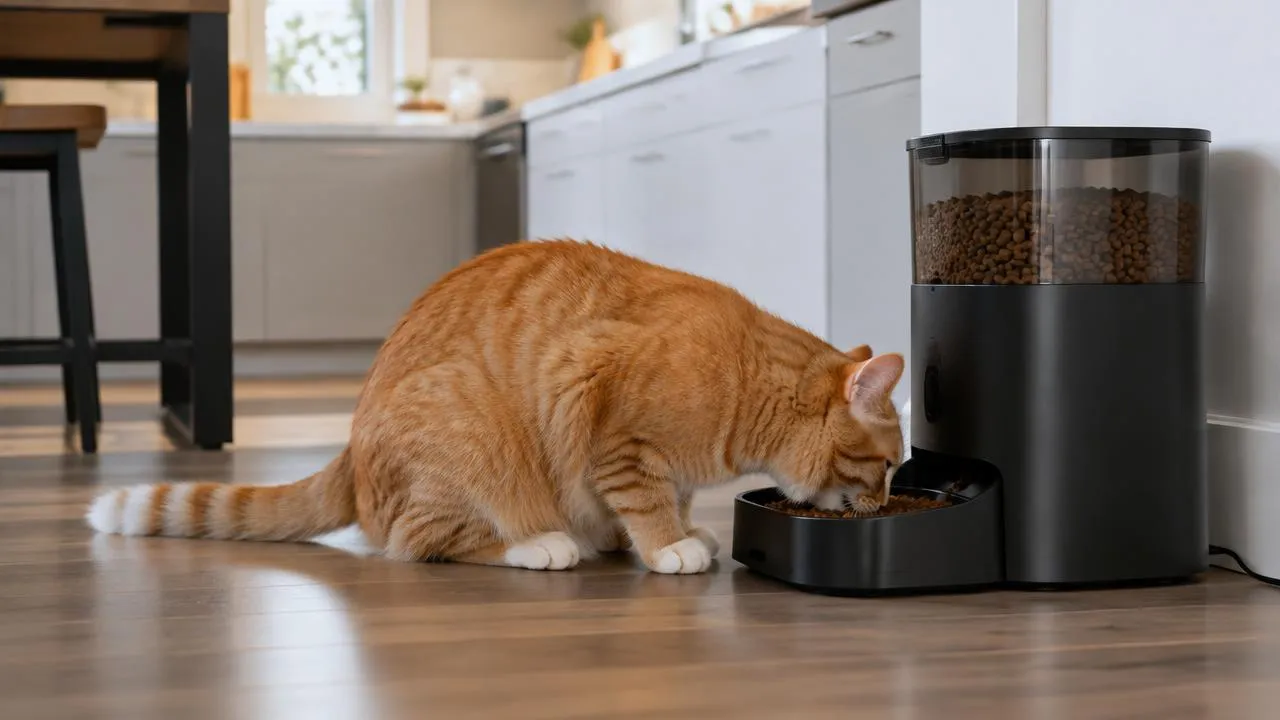
An automatic feeder can assist with scheduling specific meals, but it generally does not replicate natural foraging or predatory behaviour. Consult the manual for your exact unit, then confirm that your cat can access their food confidently. An automated device never replaces attentive observation of your pet. Household members can agree on a shared response to nighttime demands without providing extra food off-schedule. Regular timings and engaging daytime activities provide valuable structure to daily life.
Organising Daily Feeding Routines
Simple activity puzzles or kibble hidden in accessible spots can provide valuable foraging activity during daylight hours. The AAFP consensus recommends starting with straightforward devices that are easy for the cat to manipulate. Watch to ensure your cat successfully retrieves their food and does not become discouraged. Straightforward puzzles and concealed portions are practical foraging ideas highlighted in veterinary guidelines. Test these enrichments when you are present, verifying that food remains readily reachable.
Observe whether the feeding area remains quiet and undisturbed during both day and night. A companion animal can subtly block access to the food bowl without any active fighting occurring. Separate feeding stations help each pet eat according to their individual needs, while making actual food consumption much easier to monitor. If using an automated feeder, never assume a meal was eaten merely because it was dispensed. Check for leftovers and watch your cat's behaviour around the device.
Encouraging Foraging and Tracking Trends
Avoid introducing multiple sudden changes in response to a single difficult night. Maintain your written log consistently, sharing patterns and variations with your veterinary surgeon. If eating habits alter or cause concern, seek professional advice rather than interpreting meowing in isolation. Physical separation between cats can prove helpful if one pet approaches another's bowl. Distinct feeding zones allow you to confirm which animal has consumed their ration while reducing mealtime interruptions.
Foraging activities can help enrich your cat's waking hours, though they offer no absolute guarantee regarding nighttime vocalisations. Distribute portions according to your agreed plan and observe social interactions near feeding spots. The goal is a predictable routine that respects your cat's natural behaviour and home environment. Avoid shifting food bowls frequently, particularly if your cat hesitates to approach them. A calm, permanent location simplifies access; your observations will indicate whether adjustments are truly needed.
Adapting Resources and Veterinary Follow-up
Ensure that feeding locations remain easily accessible so that every pet in the household can reach their food without stress. Check food bowls regularly to monitor leftovers and determine the quantities genuinely eaten. This careful tracking forms an essential part of veterinary consensus recommendations to verify that your pet receives an appropriate food intake. If you feel worried about nighttime meowing or dietary habits, describe them clearly to your veterinary team. Full-day notes place nocturnal behaviour within a broader, helpful context.
At Accessoires Chat, a black automatic dry food dispenser with Wi-Fi is currently in development and not yet available for purchase. The retail price has not been validated, and the visual is illustrative; final technical specifications should be confirmed directly from the manual of the delivered model.
At Accessoires Chat, our black Wi-Fi connected automatic feeder is currently in preparation and is not yet available for sale. Its price has not been validated at this stage; the accompanying image is purely illustrative. Definitive features must be confirmed in the manual supplied with the model delivered.
Sources and further reading
This advice is for information only and does not replace your veterinarian's opinion.