
Cat can no longer urinate: emergency, how to react without delay
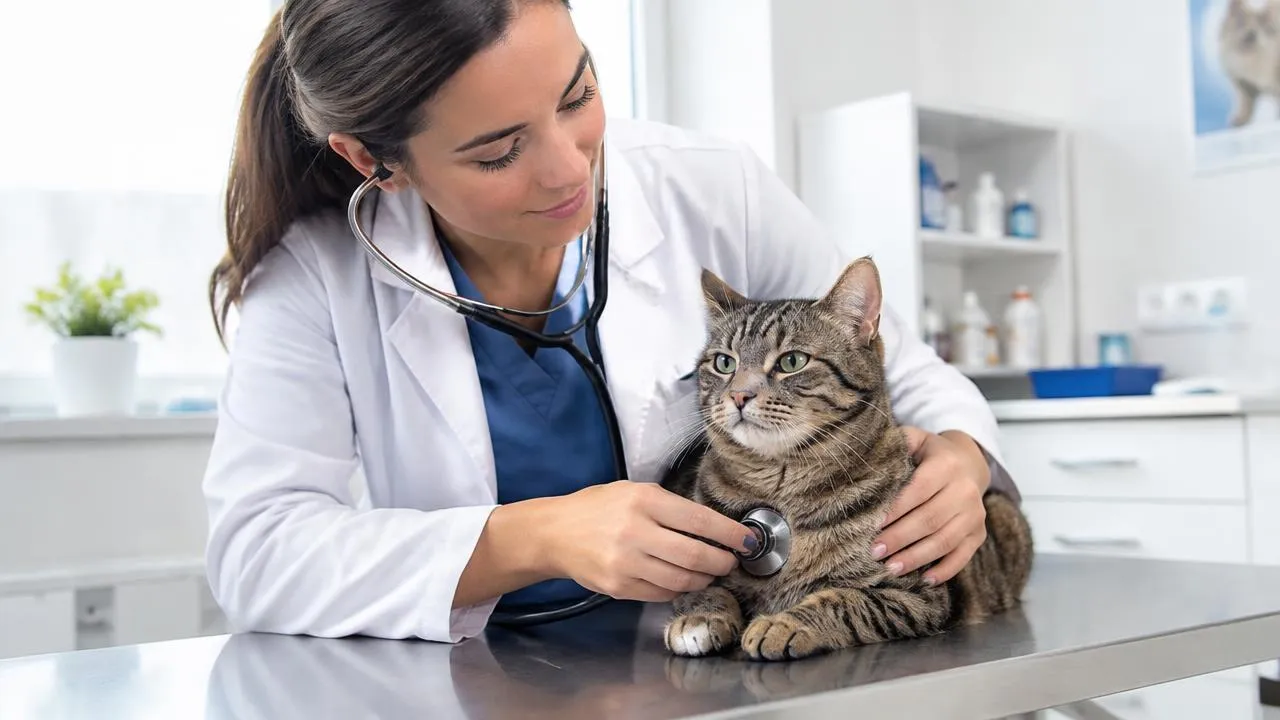
“My cat can no longer urinate: emergency or simple change in habits?” if you see your pet trying without managing to pass urine, contact a vet immediately. Do not seek to gain certainty by repeating checks for hours. An absence of traces in a litter tray and unproductive straining are not exactly the same observation; both must be reported clearly. If in doubt about urine production, ask for professional guidance rather than deciding alone.
Putting straining without results at the forefront
AAFP/ISFM guidelines state that feline idiopathic cystitis can be obstructive or non-obstructive. They also report that urethral obstruction affects males more frequently. This distinction forbids considering any urinary difficulty as a benign irritation that time or a tray change would suffice to resolve. When a cat attempts to urinate without result, the priority is veterinary evaluation, not the domestic identification of the cause. Act quickly to ensure the welfare of your cat in this situation.
On the phone, start with a concrete sentence: you have seen repeated attempts and have not observed any emission. Add what you know about the last episode where urine was actually seen. If this moment is unknown, say so without offering an estimate presented as certain. The call must not be postponed to find an exact time, inspect every tray or finish an internet search. Focus on providing the most direct observations to the professional.
Distinguishing missing data from an observed fact
Not finding urine in the usual toilet area does not prove by itself what is happening. The MSD Veterinary Manual includes elimination outside the litter box among the manifestations of urinary disorders. Indicate therefore if deposits have also been found elsewhere, without automatically using them as reassuring proof: the professional must understand their place in the chronology and link them to current attempts. Detailed reporting helps the vet determine the urgency of the medical condition presented.
In a household where several cats share trays, also specify if you know which one produced the traces discovered. This detail changes the reliability of the account. It is better to recognise missing information than to attribute a stain of unknown origin to the cat concerned. Seeking advice remains appropriate even if the observation is incomplete; you do not have to build a perfect file before requesting help. Prioritise the clinical reality over complete domestic data.
Do not reduce signs to a single disease
According to the MSD, blood, frequent urges, straining to urinate and urinating outside the box characterise lower urinary tract diseases. The manual mentions several origins, including stones, infections, urethral plugs and tumours. Manifestations that look similar can therefore correspond to different causes. A former diagnosis or the story of another owner does not allow for choosing the adapted response remotely. Professional diagnosis is the only reliable way to identify the specific issue affecting the animal.
Idiopathic cystitis, too, cannot be confirmed by looking at behaviour alone. The MSD explains that it is diagnosed after excluding other causes. It cites radiography, ultrasound, urinalysis and urine culture among possible investigations. In a worrying situation, this information serves mainly to understand why a consultation is necessary: it does not constitute a list of examinations to demand or try to replace with extra observations. Trust the clinical process to ensure your cat receives proper care.
Leaving treatment decisions to the veterinarian
Reference texts present management that can combine pain treatment, environmental adaptation and dietary measures depending on the case. This does not mean offering a backup recipe applicable to all cats. Do not turn these care categories into a personal prescription; the evaluation of the animal and its disorder precedes the choice of measures that actually suit it. Only a vet can determine the correct protocol after a physical examination and necessary tests are completed.
The AAFP/ISFM notably reserves the use of antibiotics for a positive urine culture in this context. A difficulty in urinating is therefore not an automatic indication for antibacterial treatment. The same caution applies to any product presented as intended for urinary comfort: no commercial presentation should distract from the immediate call when attempts are unproductive. Keep the discussion on treatments with the professional who examines your companion to avoid any potentially dangerous or ineffective self-medication.
Organising the next steps without confusing comfort and rescue
Once the situation is evaluated, toilet management remains important. AAFP/ISFM recommendations insist on their optimisation even when a medical disorder is present. Ease of access, cleanliness and interactions between cats will therefore need to be reviewed with the practitioner. This work prepares better living conditions; it is not intended to resolve an acute difficulty at home nor to prove that an obstruction is absent. Long-term management follows the initial emergency response to prevent future recurring issues.
A connected device does not change this hierarchy. For its information and methods of use, check the manual of the exact model; for straining without emission, call the vet. A recording can accompany your story, but consulting it must never delay contact. The correct sequence remains simple: report the problem, follow the guidance given, then organise the follow-up and environmental adjustments when they have their place. Safe outcomes rely on prompt professional intervention and advice.
Accessoires Chat announces only the preparation of a connected automatic litter tray in a round format. It is not yet offered for sale and its price is not validated. The visual has illustrative value. Specifications remain to be confirmed by reading the manual of the delivered model: no medical or technical characteristics are established by this presentation of a product in preparation. This draft is currently for illustrative purposes only for future planning.
Sources and further reading
- AAFP and ISFM Guidelines for diagnosing and solving house-soiling behavior in cats (Journal of Feline Medicine and Surgery, 2014)
- Manuel vétérinaire MSD — Lower Urinary Tract Disease in Cats
This advice is for information only and does not replace your veterinarian's opinion.