
Obese Cats and Physical Activity: Gentle Ways to Encourage Movement
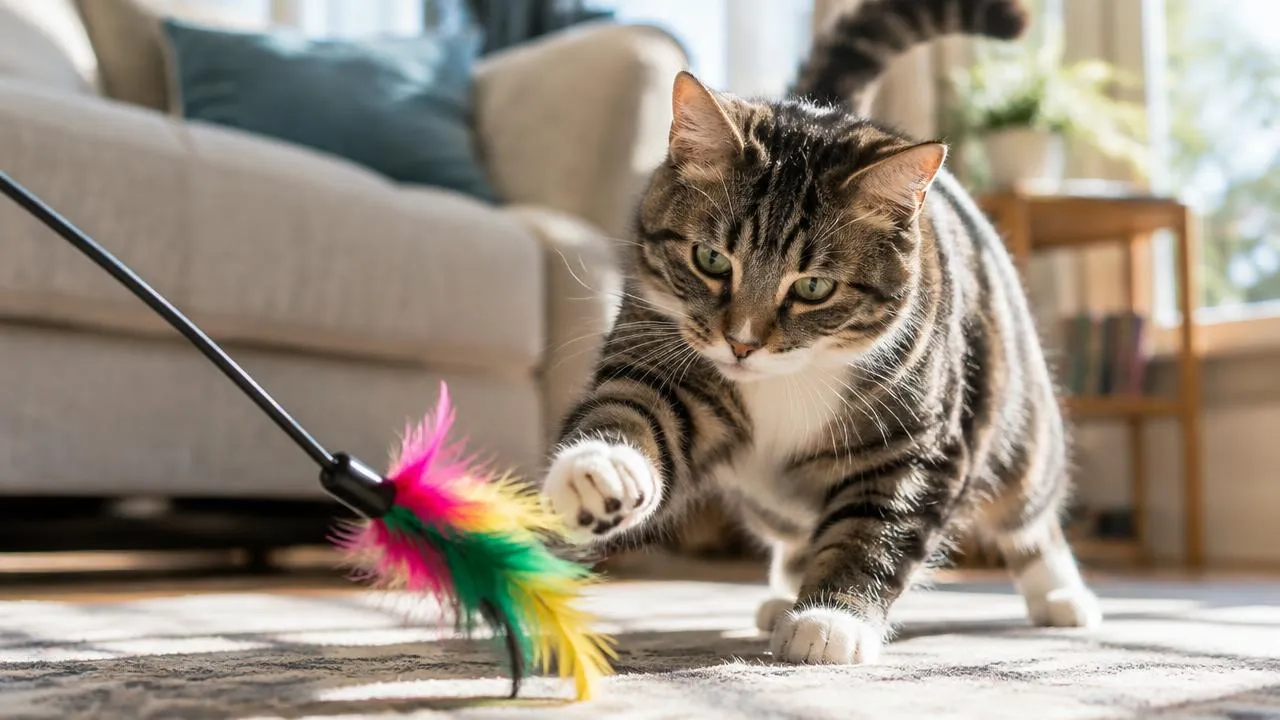
An overweight cat may find it more difficult to play and climb. Discover how to combine veterinary guidance, measured nutrition, and accessible physical stimulation. The AAFP consensus statement reminds us that meal scheduling, feline behaviour, and the home environment all play a crucial role. These general recommendations do not replace the personalised advice of the veterinary surgeon who knows your companion best.
Reviewing Current Routines and Daily Habits
An obese cat may encounter greater difficulty when jumping, climbing, hunting, or playing, as noted in the AAFP consensus statement. These physical constraints can further reduce their natural opportunities to move around the house. Arranging daily meals and activities must take their personal comfort into account rather than imposing sudden, strenuous exertion. The living environment can offer small, gentle moments of movement spread throughout the day, rather than one long, exhausting session. Allow your cat to approach and walk away freely, and always respect their visible physical limits.
Observe the movements that your companion chooses spontaneously: which toys they approach, which surfaces they prefer, and the moments when they choose to stop. These clues help you offer realistic, stress-free interactions. If any movement seems painful or unusual, ask your veterinary surgeon for advice before continuing. Some games can be played entirely on the floor, without requiring your pet to climb or jump. Choose an object that sparks their interest and tailor the duration to their participation; food-seeking games remain another useful option.
Measuring and Monitoring the Daily Food Ration
Weight management also involves daily feeding routines. Generous meals served once or twice a day can encourage physical inactivity and overeating, according to the consensus statement. Speak with your veterinary surgeon about the total daily quantity to offer and the most reliable way to measure it. Any mobility difficulty warrants professional veterinary advice rather than improvised home exercise. Describe the specific movements involved, any signs of stiffness, and the surfaces that your cat still navigates willingly and without obvious discomfort.
A digital kitchen scale is one of the accurate methods highlighted by the AAFP; volumetric measuring cups are also mentioned, though they tend to be less precise. Whichever tool you choose, record portions systematically so that you do not evaluate them merely by eye. Consistency makes ongoing monitoring much easier. Distributing small portions in different locations helps encourage exploration, according to the AAFP. Keep these feeding spots easily accessible and avoid hiding food in awkward corners that make retrieval unnecessarily difficult for your cat.
Organising Meal Times Throughout the Day
Dividing the daily food allowance into multiple smaller meals gives your cat several modest feedings across the day. This does not mean offering more food in total: the overall quantity must remain what is recommended for your animal. A feeding schedule helps members of the household follow this structure reliably. Food puzzles provide valuable mental stimulation alongside gentle physical activity. To keep the experience positive, start with simple handling and avoid putting the entire daily ration into a challenging puzzle that is hard to master.
Food puzzle toys encourage the use of paws, mouth, or tongue to extract individual pieces of kibble. The consensus statement suggests beginning with very basic designs. Place them in open areas where your cat can approach them without having to tackle obstacles they cannot manage easily. The frequency of these activities can vary depending on your cat's level of interest. A few regular, well-adapted opportunities are far preferable to demanding intense exertion that does not match their current physical capabilities.
Stimulating Natural Foraging and Exploration
It is possible to place small portions in several different spots or use low elevated areas whenever your cat's physical condition allows it safely. Select locations that are easy and comfortable to reach. Foraging should provide enjoyable stimulation, not transform access to nourishment into an exhausting trial. Keep an eye on your cat's comfort during play and stop promptly if they seem reluctant or tired. An enriching activity should always offer the animal a free choice, rather than forcing them to continue.
A calm, well-adapted game can provide another welcome occasion for gentle movement. Allow your cat to choose whether to participate and pause immediately if their interest begins to wane. The aim is to enrich their living space with accessible activities suited to their physical abilities. Providing separate access to resources can prevent your cat from being jostled or disturbed while eating. Make sure the arrangement is also convenient for measuring portions accurately and cleaning the area regularly.
Adapting Household Resources and Veterinary Follow-Up
If several cats share your home, ensure that each pet can eat their meals without feeling competition or stress. Distinct feeding stations can make it much easier to control individual rations and reduce troublesome interactions between animals. Keep note of any shifts in behaviour or feeding habits. Review your observations with your veterinary team, including changes in daily activity and food intake. The consensus underscores ongoing tracking of body weight and body condition score as key elements to monitor over time.
At Accessoires Chat, an automatic black kibble dispenser with Wi-Fi connectivity is currently in preparation, not yet available for sale. Its price is not validated, the picture is illustrative, and final specifications must be confirmed in the instruction booklet of the model actually delivered.
At Accessoires Chat, our black Wi-Fi connected feeder is currently in preparation and not yet on the market. Its retail price has not been validated; the image is illustrative. Final product specifications will need to be confirmed in the instruction booklet of the model that is actually delivered.
Sources and further reading
This advice is for information only and does not replace your veterinarian's opinion.