
A Cat Begging for Food: Practical Guidance and Understanding
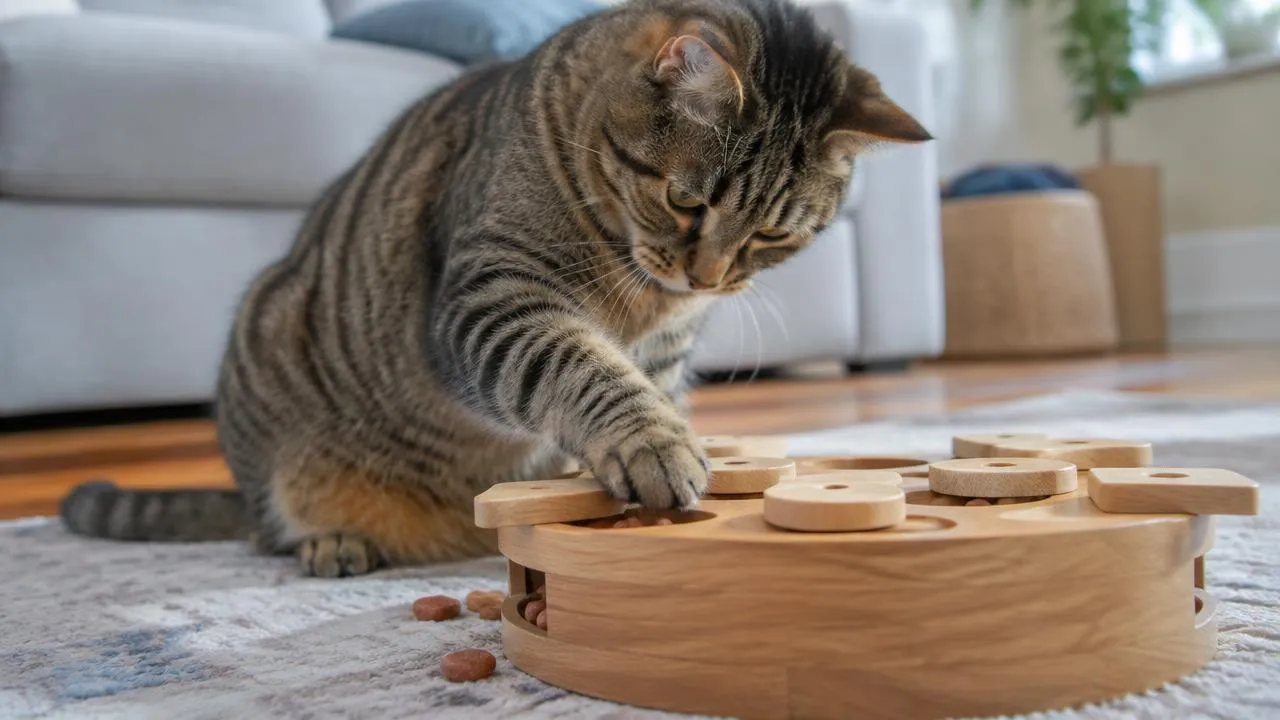
Repeated begging does not, on its own, indicate what quantity of food is genuinely required. Observing actual intake, accessibility, and the wider home environment helps re-evaluate your daily organisation. The AAFP consensus statement reminds us that meal scheduling, feline behaviour, and environmental circumstances play a fundamental role. These general guideposts do not replace personalised advice from the veterinary surgeon who knows your companion best.
Reviewing daily habits and feeding routines
When a cat begs for food, start by carefully observing what is happening around these requests. Boredom can easily turn feeding into an entertainment activity, whilst another pet in the household may complicate straightforward access to the food bowl. The AAFP consensus statement invites owners to consider these behavioural and environmental elements alongside the actual nutritional content being served. Do not respond to every single demand with food if doing so increases the overall ration beyond the agreed feeding plan. You can first check your notes and offer an alternative form of gentle interaction when the context allows.
Take note of the precise circumstances: location, time of day, previously offered meals, and the presence of another pet. An objective, neutral log avoids assuming that begging automatically signals acute hunger or mere stubbornness. It will provide your veterinary surgeon with precise, concrete examples if the behaviour is causing you concern. Some cats wait by their owners at specific moments linked to family routines. Observe whether the begging occurs just before a scheduled meal, following a calm resting period, or in the presence of another animal.
Measuring and monitoring the daily ration
Verify the existing feeding plan before offering any additional portion. A veterinary professional can advise on the appropriate daily caloric intake; the AAFP recommends dividing this total allowance into several small meals throughout the day. This distribution must strictly remain within the total planned daily allocation. Describing the exact frequency and context of begging helps the veterinary surgeon ask the most pertinent questions. Avoid attempting to draw definitive medical conclusions solely from the repetition of vocal begging behaviours.
Establishing predictable schedules shared amongst all household members significantly reduces forgotten meals and accidental double-feeding. Note down who fed the cat and whether any food was left behind. This practical tracking method helps connect begging behaviours to the actual household routine rather than relying on approximate memory. If you use an activity puzzle, supervise to ensure the cat successfully retrieves the kibble. Environmental stimulation must never compromise food accessibility or the actual quantity consumed.
Organising daily meals and enrichment
To provide a fulfilling alternative activity, consider introducing gentle foraging opportunities. An accessible puzzle feeder or a few pieces of dry kibble hidden in a safe, quiet location can stimulate natural hunting behaviours. The AAFP advises beginning with an easy-to-manipulate model and verifying that the food is indeed being retrieved. Playful enrichment should never be used to ignore established nutritional requirements. Keep the recommended daily ration as your central benchmark and record daily intake, even on busy days.
Offer suitable interactions, such as a short play session if your cat is receptive. While this does not guarantee an immediate cessation of begging, it provides an engaging activity other than eating. Always allow the animal to walk away freely; the goal is to enrich its everyday life, not to compel participation. Making feeding routines clear and legible for the entire family prevents multiple people assuming the cat has not yet eaten. A simple chart on the fridge can clearly indicate portions already served and any remaining food.
Encouraging natural foraging behaviour
In a multi-cat household, observe whether a cat begs after being disturbed or prevented from approaching the feeding area. Social friction between companion animals can often be subtle. Distinct feeding stations give each pet greater choice and allow you to monitor individual consumption far more accurately. If begging arises alongside other notable changes in behaviour, relay all of these observations to your veterinary surgeon. A structured chronological description is far more valuable than a hasty interpretation.
If the cat consistently leaves leftovers, record them accurately rather than adjusting portions by memory. Measuring the quantity offered and checking the remainder after a set duration helps clarify genuine nutritional consumption. Your veterinary surgeon will be able to interpret these findings in the context of your cat's health. A cat may avoid its bowl if another pet monitors the hallway. Observe quietly without sudden intervention, then consult your vet regarding the separation of feeding spaces.
Adapting resources and veterinary follow-up
Demands that change significantly warrant a thorough discussion with a veterinary professional, particularly if other routine habits shift concurrently. Do not deduce an underlying cause from a single isolated incident. The AAFP consensus guidelines recommend general vigilance regarding feline behaviour and dietary patterns. Re-evaluate your daily organisation if begging persists despite a measured ration and consistent meal times. The daily routine must respect individual requirements, social dynamics, and available activities.
At Accessoires Chat, a black automatic kibble dispenser with Wi-Fi connectivity is currently in development and is not yet offered for sale. Its price is unconfirmed, the image is purely illustrative, and technical specifications should be verified against the official instruction manual of the delivered unit.
At Accessoires Chat, the black Wi-Fi connected automatic feeder is currently in preparation and not yet available for commercial sale. Its retail price has not been validated; the image is for illustrative purposes only. The definitive technical specifications should be confirmed in the instruction manual of the model that is actually delivered.
Sources and further reading
This advice is for information only and does not replace your veterinarian's opinion.