
Cat refuses new litter: restoring familiarity without force
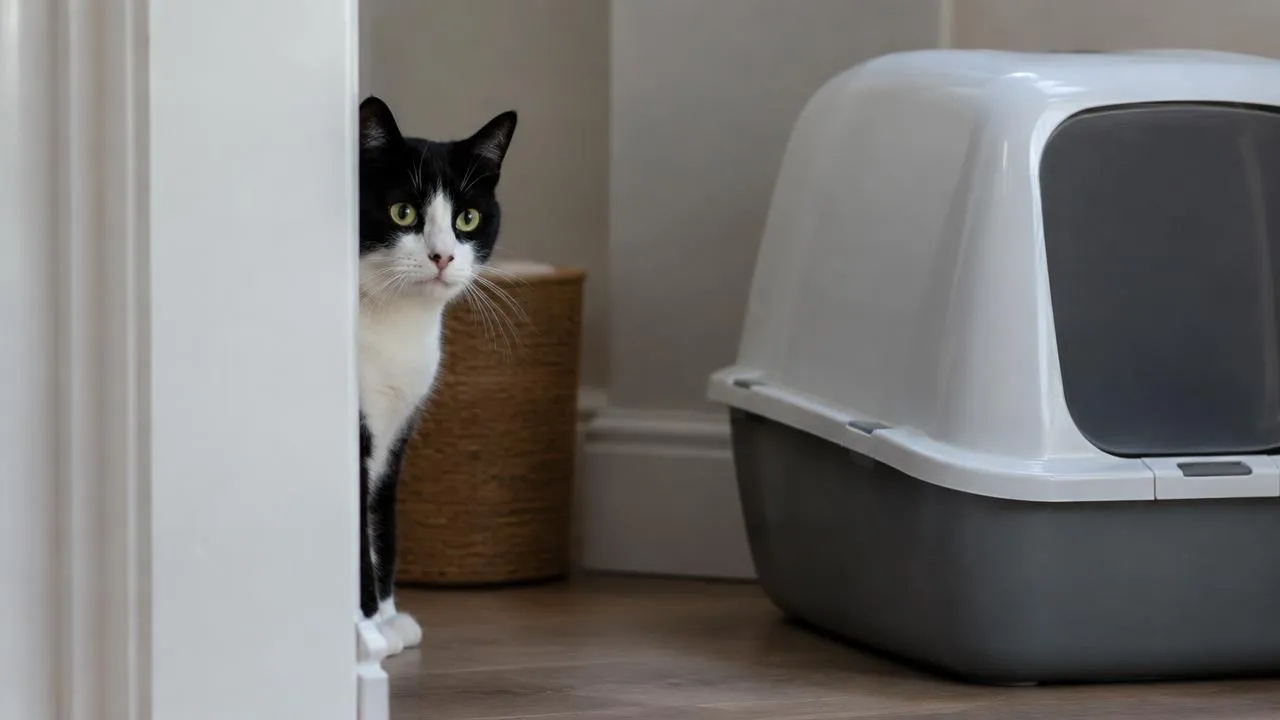
The new equipment seemed practical, yet your cat is not using it. When a cat refuses new litter, one must first clarify what has changed: the granules, the container, its location, or everything at once. AAFP/ISFM guidelines describe individual preferences and aversions related to usage conditions. They encourage offering choices. The goal is not to convince the animal your purchase is better, but to understand what difference makes the toilet unacceptable.
Precisely reconstruct the change made
Inventory the modified elements: material texture, potential scent, depth, dimensions, presence of a lid, and room placement. Include events occurring around the installation. The AAFP/ISFM recommended timeline helps avoid hasty conclusions: refusal appearing after a purchase may also coincide with social tension or daily routine changes. This global overview is essential to distinguish between a simple material dislike and a reaction to wider environmental stressors affecting feline well-being.
Clarify what "refusal" means. Does the cat stand in front of it, enter then exit, or eliminate elsewhere? Does it continue using another toilet? Authors emphasize the history and evaluation of elimination sites. These distinctions are useful when deciding with the veterinarian if the priority is material choice, access, or medical investigation. Documenting the frequency and exact location of accidents provides the clinical team with vital diagnostic data for management.
Do not attribute every difficulty to novelty
The MSD Veterinary Manual includes urinating outside the box among signs of lower urinary tract diseases. It also mentions frequent urges, straining, and blood in the urine. If these elements appear, the new product must not become an explanation that delays examination. In case of straining without identifiable urine output, call a veterinarian immediately. Prompt medical intervention is crucial to rule out life-threatening obstructions or painful inflammatory conditions requiring specific treatments.
Stool issues also require health considerations. AAFP/ISFM guidelines specifically require evaluating diarrhoea, constipation, and potential painful disorders when a cat defecates outside the toilet. Recent purchases do not allow these to be dismissed. The practitioner chooses investigations based on observations, examination, and symptom duration, rather than solely on the temporal relationship with the change. Physical discomfort often manifests as litter box avoidance regardless of the substrate quality or box design.
Present a material the cat can truly choose
For the AAFP/ISFM, promises aimed at buyers do not predict their companion's preferences. Aromatic materials and deodorants may be poorly accepted. The general recommendation leans toward a fine, unscented, clumping substrate. It remains a guideline: authors suggest testing several litters and different depths to recognise each animal's specific choices. Respecting these preferences reduces stress and promotes consistent use of the facilities provided, ensuring a cleaner environment for the household.
If an old toilet is still used, it provides a valuable comparison point. Offer another option without removing this landmark simultaneously, to observe a choice rather than an absence of alternative. This approach applies preference trial principles; it is not accompanied by a universal timeframe to impose. An unused setup deserves re-evaluation, not being made mandatory through insistence. Forcing a cat into a new substrate often leads to long-term elimination problems.
Reconsider the container and its environment
A container change can matter as much as a granule change. Recommendations describe shared preferences between large covered and open boxes, while favouring open models to facilitate monitoring and scooping. They note that a small covered volume can hinder large cats' posture and trapped odours can lead to avoidance. Proper sizing allows the cat to turn around and dig comfortably, which are essential components of their natural elimination sequence.
The new location must also allow access without necessarily encountering another cat, far from high-traffic areas and noisy appliances. Food and water should not be placed near the toilet, according to the AAFP/ISFM. If everything was grouped to save space, examine this organisation before deciding the substrate alone is responsible for the refusal. Cats require a sense of safety and multiple escape routes to feel secure during vulnerable moments.
Stabilise a usable solution before proceeding
Authors remind us that a bad experience at the box can foster aversion: administering medication, a child blocking the exit, or other unpleasant situations. Avoid making it a place of restraint. Monitoring can focus on used options, postures, and potential accidents. This provides a concrete basis for adjusting the proposal with a professional, without interpreting every hesitation as a final failure. Patience is key when rebuilding trust in the setup.
Maintain proper hygiene: the guide requires waste removal at least once daily and washing the box with soap and hot water. Novelty does not replace cleanliness. When an option works, do not immediately multiply other modifications; first document effective usage and any remaining symptoms to discuss the next steps. Consistency helps the cat stabilise its habits. Sudden changes in cleaning routines can disrupt the progress made with a new substrate.
For an automatic toilet, editorial and practical caution remains the same: check the specific model's manual. Do not infer compatibility or operation from a visual. Equipment does not become suitable just because it is recent or smart; the choice must consider observed preferences and access possibilities, while any medical cause remains a veterinary matter. Professional advice should always precede significant technological shifts in a sensitive cat’s core environment and routine.
The round-format smart automatic litter box announced by Accessoires Chat is still in preparation. It is not available for sale, and the price is not confirmed at this time. The visual remains an illustration. Regarding specifications, confirmation must be sought from the manual of the delivered model: they are not presented here as definitively established.
Sources and further reading
- AAFP and ISFM Guidelines for diagnosing and solving house-soiling behavior in cats (Journal of Feline Medicine and Surgery, 2014)
- Manuel vétérinaire MSD — Lower Urinary Tract Disease in Cats
This advice is for information only and does not replace your veterinarian's opinion.