
Cat defecating next to the litter box: understanding stools outside the tray
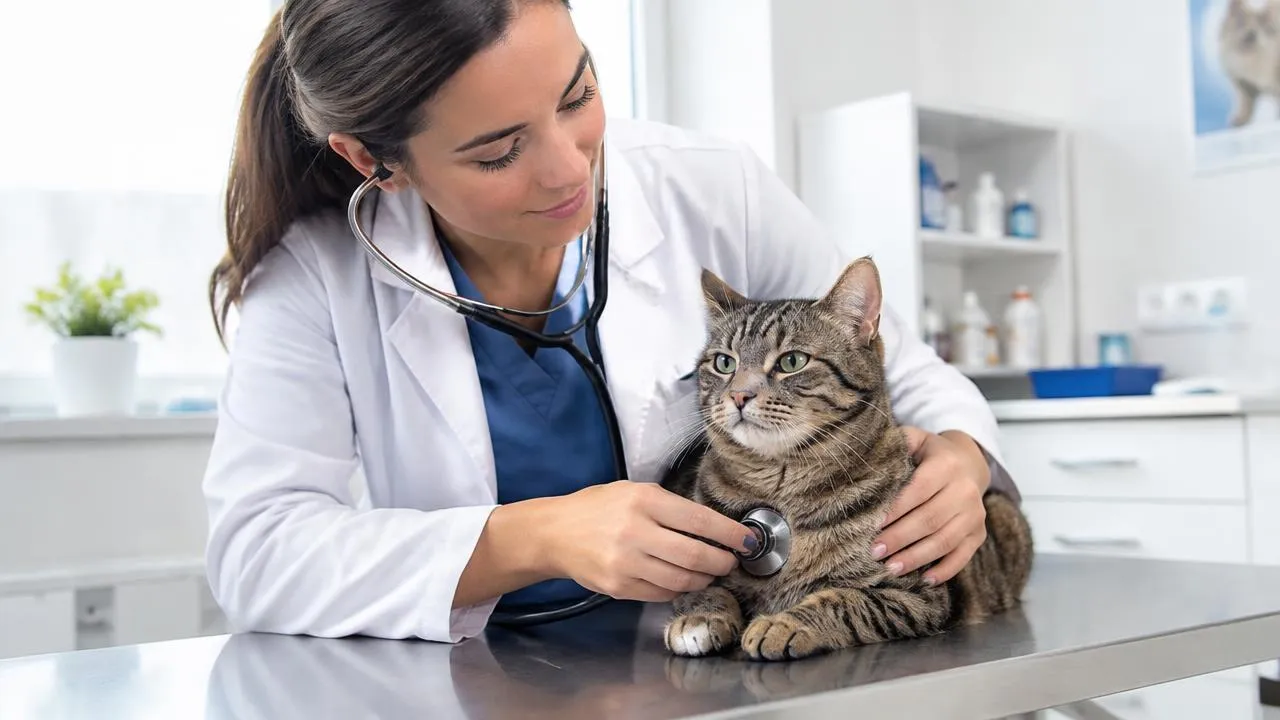
You find stools right in front of the cat's toilet, sometimes while their urine remains in the tray. This proximity makes one want to simply move the container. However, when a cat defecates next to the litter box, AAFP/ISFM guidelines recommend an evaluation including health and elimination conditions. We must specify here that we mean stools, without assuming every crouching effort is necessarily defecation. Here is how to prepare useful observations.
Distinguish what is found from what is observed
Begin by describing the deposits: their exact location, their usual or unusual character, and their appearance over time. Add what you actually saw during the cat's visit. Finding stools near the tray alone does not allow one to know if the animal entered, if it hesitated, or if it used another position. These details are essential for the veterinarian to determine if the issue is physical or environmental.
The AAFP/ISFM file suggests linking the history to a floor plan. Draw the toilet, its access points, and the areas where stools appear. Specify if other animals were moving nearby and if the container had just been changed. This description avoids transforming an interpretation, such as "he refuses his box," into an established fact before any evaluation. Objective records allow for a much more accurate clinical assessment by professionals.
Investigate a digestive or painful cause
Recommendations require the veterinarian to determine notably if constipation or diarrhoea is present, acute or chronic. Clinical examination, lifestyle habits, and the duration of signs guide the investigations. The causes considered include intestinal disorders, parasites, certain rectal conditions, and disorders that can affect continence. The proximity of the deposit does not exclude these medical issues. Physical discomfort often manifests as an inability to complete the process inside the tray.
Mobility also deserves its place: arthritis and spondylosis appear among the diagnoses to consider. Depending on the findings, the practitioner may suggest a stool analysis, blood tests, or other explorations. This is not a list of examinations to demand systematically, but an essential reminder: the layout of the toilets supplements medical research and does not replace it. Addressing pain is frequently the first step towards returning to the box.
Do not confuse defecation with urinary difficulties
When you only see a cat straining, you might miss crucial information: is it producing stools, urine, or nothing visible? The MSD Veterinary Manual describes urinary efforts, frequent urination, blood, and urine outside the tray among signs of lower urinary tract diseases. Therefore, report any uncertainty rather than automatically concluding it is constipation. Misinterpreting these signs can delay the management of potentially serious conditions that require urgent veterinary attention.
Repeated efforts without identifiable urine justify an immediate veterinary call. For the consultation, clearly separate episodes where stools were found from those where only an effort was observed. This report does not provide any diagnosis but prevents the word "needs" from masking two different functions requiring a tailored clinical assessment. Providing clear, segmented data helps the veterinarian differentiate between gastrointestinal issues and critical urinary blockages that need rapid intervention.
Provide toilets compatible with the posture
The AAFP/ISFM guide highlights that some cats desire separate locations for urinating and defecating. A second tray located elsewhere thus allows for exploring this preference, without claiming it explains all cases. For a single cat, the authors already recommend two trays in two different places; two containers squeezed side by side do not constitute two independent stations. Offering choice helps determine if the issue is purely a matter of location.
Also examine the available space inside. A small covered container can hinder the posture of a large cat. Recommendations generally favour a length equal to one and a half times that of the body, measured from the nose to the base of the tail. If joints limit movement, a very low opening and a location that is easy to reach may be necessary. Ensuring the cat can turn comfortably is vital.
Adjust conditions without punishing or rushing
The location must allow the cat to perform its needs without constant traffic or being forced to meet a housemate. According to the AAFP/ISFM, an unpleasant experience associated with the box can lead to its avoidance: noises, a child blocking the exit, or treatments administered there. Keep restrictive interventions away from this area and examine potential tensions between animals. Safety and privacy are fundamental requirements for a cat's elimination habits.
Cleanliness and material preferences remain to be verified. The authors advocate the daily removal of waste and suggest substrate trials to identify individual choices. A fine, unscented material is their general option, without a universal guarantee. It is better to compare accessible options than to immediately remove all toilets still being used. Gradual changes allow the cat to adapt without creating further stress or total avoidance of the area.
Finally, establish with the veterinarian what will be monitored: stool changes, frequency of external deposits, and use of each station. The AAFP/ISFM emphasises follow-up and household support. New equipment should not become the automatic response to every recurrence; if you consider a motorised model, check the manual of the exact model without attributing to it a role in digestive treatment. Consistent monitoring ensures that the chosen strategy remains effective.
Accessoires Chat is preparing a connected automatic litter box with a round format. At this stage, it is not for sale; no price is validated. The visual presented is illustrative and specifications must be confirmed on the manual of the delivered model. This information only describes a project in preparation, not the acquired characteristics of a device currently marketed. This draft serves to show potential future designs and functions.
Sources and further reading
- AAFP and ISFM Guidelines for diagnosing and solving house-soiling behavior in cats (Journal of Feline Medicine and Surgery, 2014)
- Manuel vétérinaire MSD — Lower Urinary Tract Disease in Cats
This advice is for information only and does not replace your veterinarian's opinion.