
Cat urinating outside the litter box: understand before changing trays
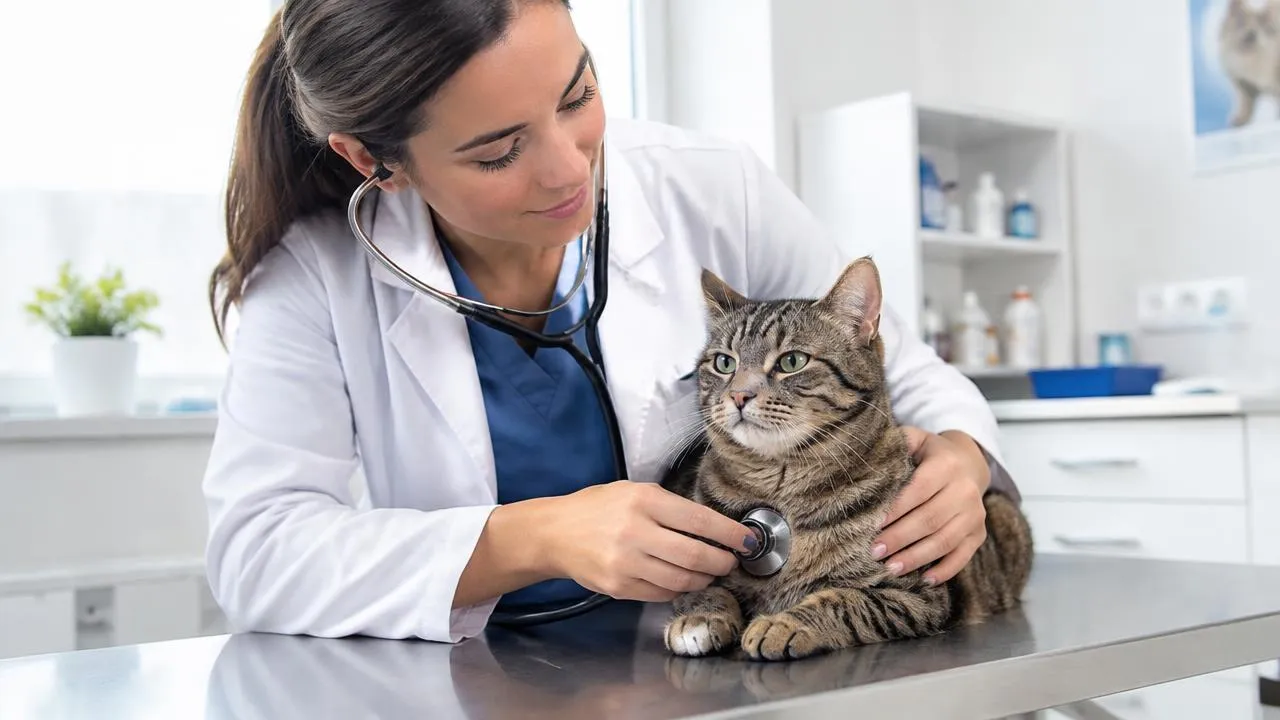
A puddle appears on the carpet while the litter box seems available. When a cat urinates outside the tray, the primary question should not be about its willpower. AAFP/ISFM guidelines distinguish several possible origins, sometimes combined: disease, idiopathic cystitis, marking, and environmental difficulties. This distinction guides a concrete approach: describe what is happening, have health evaluated, then adapt the toilet to the cat's needs rather than multiplying random changes.
Start with health, even when the box seems responsible
The MSD Veterinary Manual lists urination outside the box among the manifestations of lower urinary tract diseases, along with blood in the urine, frequent urges and straining to urinate. A recent change therefore warrants a veterinary discussion. The presence of new granules or a concomitant house move are not sufficient to medically explain the situation. Consult a professional to ensure that a physical condition is not being overlooked.
Calculi, infection, urethral plugs or other conditions can produce similar signs. According to the MSD, idiopathic cystitis is diagnosed after excluding other causes, using appropriate examinations. It would therefore be misleading to recognise cystitis simply by the location of a puddle. If the cat strains without visible emission, contact a veterinarian immediately for guidance on the required actions. Prompt medical attention is vital for these urinary issues.
Describe the scene rather than attributing an intention
AAFP/ISFM recommendations place significant importance on chronology and the home layout. Record the affected areas, circumstances, observed posture and any recent changes in the house. Also indicate if the cat still uses certain toilets normally. This information allows for a more precise discussion than the simple phrase "he is becoming naughty". Objective reporting helps the clinician differentiate between medical problems and environmental triggers within the cat's territory.
A small projection on a vertical surface with a raised tail suggests marking, but the authors specify that some marking occurs while squatting on a horizontal surface. Neither the volume nor the surface type constitutes isolated proof. Describe the facts to the practitioner without deciding yourself that the problem is exclusively behavioural. Professional interpretation of these feline communication signals is necessary to avoid misdiagnosis and ensure appropriate management.
Check the route to the toilet
For the AAFP/ISFM, a tray that is physically accessible may remain difficult to reach if another cat controls the passage. Draw the route from resting areas: must the cat cross an occupied corridor, pass near a noisy appliance or traverse a high-traffic zone? The problem may concern the path as much as the container itself. Assessing these environmental barriers is a crucial step in resolving elimination issues.
The text suggests two toilets in distinct locations for a single cat and several stations spread out when cats live together. The rule of the number of cats plus one tray serves as a guide, not a universal prescription. Two adjacent containers are perceived as one large unit: their distribution matters as much as their total. Ensure resources are separated to prevent competition or intimidation between cohabiting felines.
Review the container, material and maintenance
Guidelines generally advise a rectangular tray with a length representing one and a half times that of the cat, from nose to tail base. A low entry may be necessary in cases of joint disease. For a weakened animal, moving a toilet closer to its recovery area avoids maintaining a theoretical access that is not practical. Adjustments must prioritise the physical comfort and mobility of the individual animal.
The generally recommended substrate is fine, unscented and clumping, at a minimum depth of three centimetres. This remains a starting point, as preferences differ. Trials with several materials and depths allow these to be explored. Remove waste at least daily; to wash the container, the authors recommend soap and hot water, without ammonia-based cleaners. Cleanliness is essential to maintain the attractiveness of the designated elimination area.
Build a follow-up without turning the home into a laboratory
Note health observations and adjustments performed separately. For example, record the location of urine, tray visits and the opening of a new station. This organisation follows the methodical AAFP/ISFM approach: it helps link progress to interventions instead of simultaneously replacing the substrate, container and its location, then no longer knowing what worked. A structured diary provides clarity for both the owner and the attending veterinary surgeon.
The MSD includes toilet management within a framework comprising stress reduction and attention to interactions between cats. A cleaner tray does not replace an assessment or the resolution of access conflicts. Recommendations advise against punishments, which can increase stress. Maintain a calm attitude and report recurrences to the veterinarian, even if a temporary improvement seemed achieved. Consistently monitoring the feline environment supports long-term behavioural and physical health.
If you subsequently consider an automatic device, do not assume any characteristics from its appearance alone: check the manual of the exact model. The choice of equipment must remain distinct from the evaluation of the urinary episode. The immediate objective is to understand why this cat no longer uses its usual toilets, then to preserve solutions that are truly usable. Professional guidance should always precede changes to sanitation hardware.
At Accessoires Chat, a connected automatic litter box in a round format is in preparation. It is not yet offered for sale and its price has not been validated. The image serves solely as an illustration; characteristics remain to be confirmed in the manual of the delivered model. This presentation therefore does not constitute a definitive technical sheet or an available offer.
Sources and further reading
- AAFP and ISFM Guidelines for diagnosing and solving house-soiling behavior in cats (Journal of Feline Medicine and Surgery, 2014)
- Manuel vétérinaire MSD — Lower Urinary Tract Disease in Cats
This advice is for information only and does not replace your veterinarian's opinion.