
Your cat visits the litter box often: useful questions
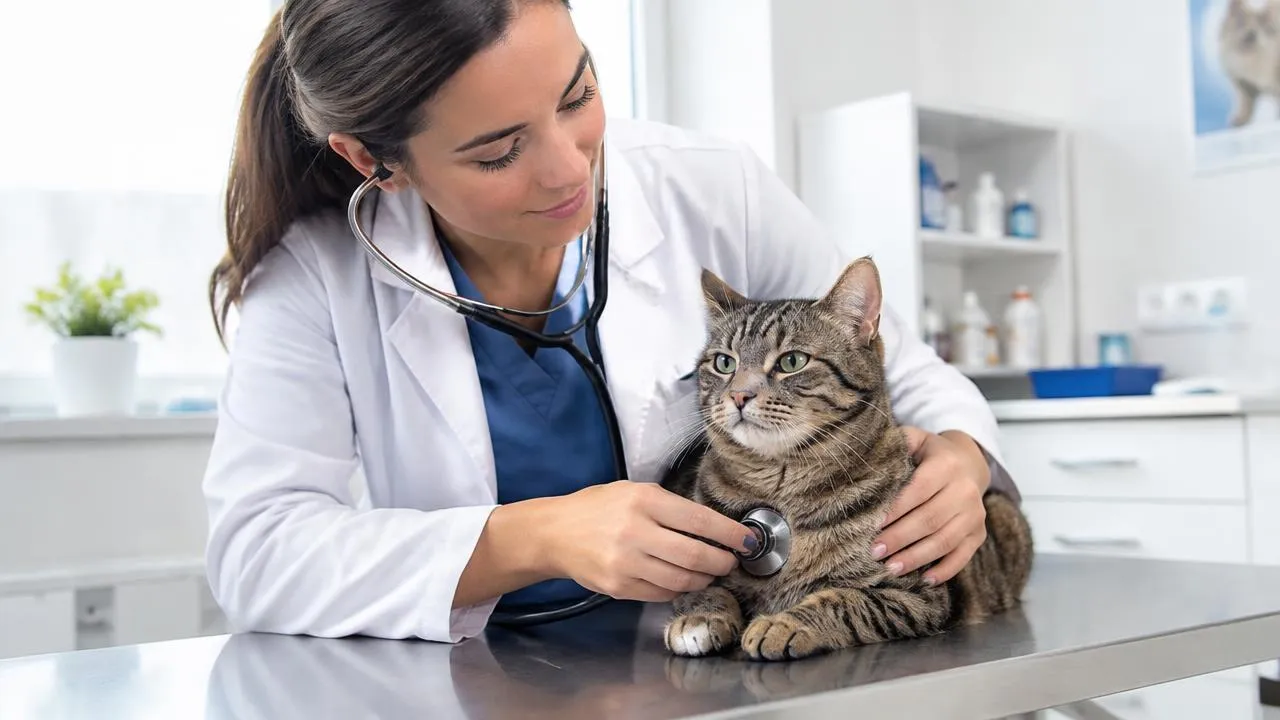
Your cat is visiting the litter box frequently and you are unsure if this new rhythm is concerning. Start by distinguishing a box visit from a truly observed emission of urine. This difference guides how to describe the problem, without allowing you to diagnose it yourself. New back-and-forth trips warrant veterinary advice, especially when accompanied by straining or unusual traces. These guidelines aim to prepare for that advice, not to set a daily quota.
Counting visits is not enough to understand
The MSD Veterinary Manual describes pollakiuria, meaning frequent urination, among the signs of lower urinary tract diseases. It also mentions straining, blood, and urine deposited outside the litter tray. A record of frequency becomes more useful when accompanied by a description of what actually happens: entry, attempt to urinate, confirmed urine, or departure without an identifiable result. Distinguishing these events helps the clinician focus on the physiological reality rather than just a simple count.
The texts used here do not suggest a universal number of visits to decide between normality and illness. Avoid inventing a reassuring threshold based on an average found elsewhere. Instead, compare current facts with the habits you know, then present the change to the practice. When you have not seen the emission, maintain this uncertainty instead of automatically transforming the visit into a successful urination. This accuracy prevents misinterpreting the severity of the clinical situation.
Identifying what makes the call a priority
If the animal makes multiple attempts without producing urine, contact a veterinarian without delay. AAFP/ISFM recommendations indicate that idiopathic cystitis can take an obstructive form. This is therefore not a situation to monitor until the next day to obtain a more complete count. You do not have to prove the existence of a blockage yourself before reporting unproductive straining and requesting an immediate evaluation. Prompt professional assessment is the only safe response to suspected urinary obstruction.
If you see urine, describe the other new elements nevertheless: presence of blood, deposits elsewhere, and repetition of episodes. The MSD groups these signs in the same clinical set but does not attribute them to a single cause. During the exchange, avoid shortcuts such as 'he is going again, so he is emptying well'. The visit and its result remain two pieces of information to be presented separately to ensure the professional can evaluate the full context.
Reconstructing changes around the toilets
The AAFP/ISFM approach starts notably with a chronological history and a complete examination. Prepare the approximate start date, modifications occurring since, and the location of any accidents. Moving the tray or a new household organisation can be part of the narrative but is not sufficient to explain urinary signs. Medical factors and living conditions can overlap in the same animal. Do not assume environmental stress replaces the need for a thorough medical investigation of symptoms.
Look also at whether the paths are free. Guidelines describe competition over resources and the possibility that one cat prevents another from approaching or leaving a tray. A simple plan of rooms, toilets, and meeting places can help the practitioner. Present it as a supplement to the clinical history, not as proof that only rearranging furniture is required to resolve the disorder. Behavioural observations must always support, rather than replace, the physical clinical evaluation.
Why causes are determined at the surgery
Among possible origins, the MSD cites urinary stones, infections, urethral plugs, and tumours. It specifies that many cats showing these signs have idiopathic cystitis. However, 'frequent' does not mean 'certain' for your companion. The identification of this condition relies on the exclusion of other causes through examinations, and not on the recognition of a particular sequence of visits. Each individual case requires specific testing to rule out life-threatening conditions before reaching a definitive idiopathic diagnosis.
Urinalysis and culture, radiographs, or ultrasound are among the explorations mentioned by this manual. The selection and interpretation of these tests belong to the veterinarian. Preparing your observations facilitates the interview but does not replace the assessment. If a previous consultation concluded idiopathic cystitis, recount this history without assuming each new trip necessarily corresponds to the same mechanism or requires exactly the same treatment. Professional re-evaluation is essential for every recurrence to ensure proper feline care.
Improving comfort without blurring monitoring
For trays, the AAFP/ISFM advises an easy entry, a location away from busy areas, and regular maintenance. The text reports varying preferences for covered or open toilets; it recommends the latter when possible to facilitate observation and cleaning. The choice must therefore consider the cat, and not only the visual comfort of the person wishing to count their visits. Adequate visibility is a significant advantage when monitoring health changes or the quality of output.
Collect waste every day at a minimum, without trying to mask the problem with deodorants. If connected data are available, check the specific model instructions for what they represent. Bring them as a secondary record, with your reservations regarding their interpretation. Improving the installation supports management, but a change in frequency must never be reduced to a matter of settings or equipment. Technical data remains supplementary to direct clinical observation and expert veterinary medical judgment.
At Accessoires Chat, the project for a round, automatic, and connected litter box remains in preparation. This is not yet a sale item, and the price remains unvalidated. The image is for illustrative purposes. To know the specifications, you must consult the manual of the delivered model; this preparatory presentation does not confirm any possibility of counting, identifying, or analysing the cat’s passages. This unit remains a draft not for sale or immediate purchase.
Sources and further reading
- AAFP and ISFM Guidelines for diagnosing and solving house-soiling behavior in cats (Journal of Feline Medicine and Surgery, 2014)
- Manuel vétérinaire MSD — Lower Urinary Tract Disease in Cats
This advice is for information only and does not replace your veterinarian's opinion.