
Cat vomiting after eating too fast: observing the meal
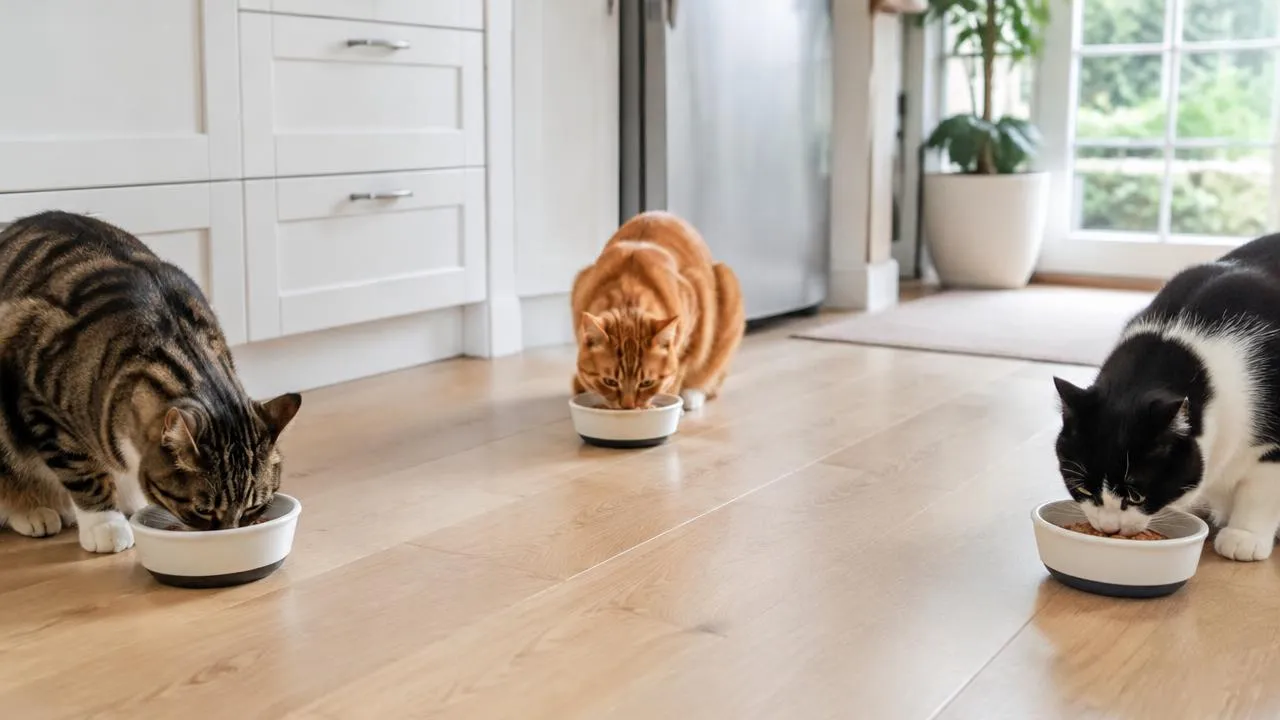
A cat that eats quickly and then vomits warrants careful observation, without automatically assuming that speed of eating explains everything. The AAFP consensus statement on feline feeding programmes describes a possible scenario: a cat seeking to avoid a stressful encounter may gorge on food rapidly and subsequently vomit. This observation does not constitute a diagnosis for an individual animal. If you are concerned, seek advice from your veterinary surgeon. Feeding habits, access to resources, and relationships between pets are useful details to describe during your discussion.
Observing what happens around the food bowl
Note when the behaviour occurs, what food was offered, and whether other animals or people were close by. Did the cat eat in a shared space, did they seem in a hurry to leave, or could they remain calmly beside their food? The AAFP consensus statement highlights that an animal avoiding a stressful encounter may gorge on food and then vomit. This general observation encourages looking at the wider context, but it does not determine the cause of an episode in your cat. Share the facts with your vet rather than formulating an explanation yourself.
Distinguish what you directly observed from what you assume. Record the date, approximate time, food offered, how the meal progressed, and the circumstances afterwards. If multiple cats have access to the same station, mention this clearly. An accurate description is far easier to interpret than a general summary like 'he eats too fast'. Ask the clinic what extra details might be helpful and what course of action to follow if the situation recurs or worries you. This text cannot sort through possible causes or replace veterinary assessment.
Reducing competition without presuming the cause
Cats usually prefer to eat alone and consume multiple small meals, according to the AAFP consensus. In multi-cat homes, pets may frequent different areas, and some avoid places where they do not feel safe. Tensions around food are not always obvious to owners. Watch whether one cat waits for another to leave, approaches and then retreats, or seems compelled to leave their station rapidly. These observations help describe how resources are accessed, without proving that conflict is responsible for vomiting.
The AAFP recommends multiple food and water stations, alongside small, frequent meals. Separate stations can make meals less competitive and help track individual quantities. Choose an arrangement that is practical in your home, then verify that each animal can genuinely reach their food. Do not present this change as a treatment or assume it will resolve a symptom. If the cat seems unwell or the episodes worry you, ask your vet for advice tailored to your exact situation, describing what you observed before altering their feeding regime.
Dividing daily meals with caution
Dividing a measured ration into several smaller portions can reflect a cat's natural feeding habits. The AAFP consensus recommends frequent small meals within a programme addressing behavioural needs. This does not mean increasing the total ration or switching food. Ask your veterinary surgeon what daily portion is appropriate, then discuss how to divide it. Keep track of what is offered and eaten so that you do not lose oversight of intake when several meals are arranged throughout the day.
A food puzzle can encourage foraging behaviour, but it must remain accessible and suited to the animal. Begin by watching whether the cat knows how to retrieve the biscuits and consumes an identifiable amount. If the puzzle makes intake difficult to track, revert to a simpler method and seek professional guidance. The goal is not to delay food at all costs; it is to establish a routine suited to the cat. The device manual provides instructions for the model, whilst dietary recommendations must come from the professional caring for the animal.
Tracking episodes and seeking professional advice
A feeding log can bring together meal times, portions, leftovers, and observed circumstances. Note whether the cat shares their feeding area and whether any recent change occurred. This log is not intended to establish a cause, but it helps convey a clear history to the clinic. The AAFP consensus also recommends monitoring weight and body condition; these details can be discussed with the vet when relevant. Ask what information they wish to receive and how to respond according to your cat's condition.
An automatic feeder can schedule several meals, but it cannot explain why a cat vomits and does not guarantee that they eat calmly. Models differ: consult the exact manual, monitor what is actually dispensed, and check who accesses the bowl. Do not use an appliance setting as a substitute for healthcare advice. If this symptom concerns you, contact the veterinary team rather than relying on an explanation found online. Careful observation and professional advice are complementary; no piece of equipment promises a medical solution.
At Accessoires Chat, a black automatic dry food dispenser with Wi-Fi is currently in preparation and is not yet available for purchase. Its price has not been validated; the image is illustrative. Features must be confirmed in the instruction manual of the delivered model. A device can help organise feeding times, but it cannot diagnose vomiting or replace professional veterinary advice.
Sources and further reading
This advice is for information only and does not replace your veterinarian's opinion.