
How Does a Cat Water Fountain Work? Pump, Filter and Circulation Explained
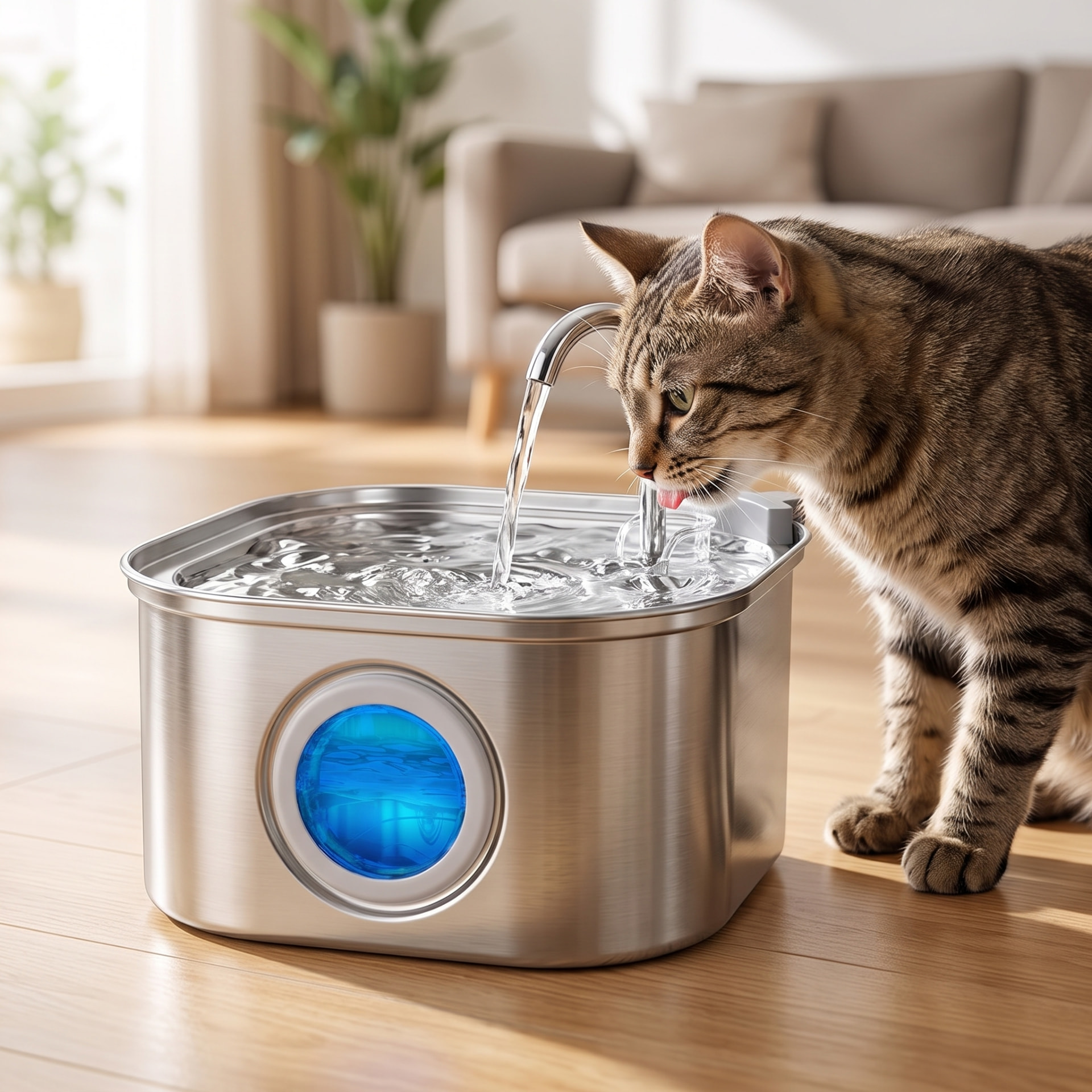
Cat water fountains have become a common sight in modern homes, yet how they work often remains unclear. What actually happens inside? What does the pump do, what does the filter trap, and why does the water circulate continuously? Understanding the mechanics of a pet fountain helps you choose the right model, maintain it properly, and quickly spot any faults. Here is a clear, component-by-component guide, completely free from technical jargon.
The basic principle: water circulating in a continuous loop
A cat water fountain operates on a simple principle: the same water circulates in a continuous closed loop. It sits in a reservoir, is drawn up by a small submerged pump, passes through a filter, and rises to an outlet where it flows as a trickle or stream before returning to the basin. This cycle continues unbroken for as long as the device is running.
This constant movement is the fountain's main attraction. Many cats seem naturally drawn to running water rather than a stagnant bowl. Feline behaviour specialists note that cats have distinct preferences regarding their drinking spots, including location, bowl material, and freshness. While a fountain will not suit every cat, it offers an appealing alternative for those who ignore still bowls.
One key fact must be kept in mind: the fountain does not create fresh water. It simply circulates what you have poured in. Completely refreshing the water and cleaning the parts remain essential, even with an effective filter.
The water pump: the heart of the fountain
The pump is a small, submerged component usually positioned at the bottom or centre of the reservoir. It draws water in and pushes it up towards the outlet. It is this mechanism that creates water movement and the faint trickling sound you may hear.
To work properly, the pump must always stay completely submerged. If the water level drops too low, it draws in air, becomes noisy, and suffers premature wear. That is why it is important to check the reservoir regularly and top it up before it runs nearly dry.
Over time, cat hair, food debris, and limescale can build up inside the pump and hinder the impeller. A reduced flow rate, an unusual hum, or a total stoppage usually indicate it needs dismantling and rinsing. Always follow your model's manual for disassembly, and never submerge electrical parts that are not designed for it.
The filter: what it traps and what it cannot do
In most fountains, water passes through a filter before flowing to the drinking surface. Depending on the model, it combines foam or mesh to trap hair and coarse debris, and sometimes other filter media specified by the manufacturer. Its primary purpose is mechanical: keeping the water visibly clean and shielding the pump from grit.
It is important not to overestimate what a filter can do. It does not sterilise water and is no substitute for washing the reservoir. A clogged filter is actually counterproductive: it restricts water flow and encourages bacterial deposits. Manufacturers provide a recommended replacement schedule, which you should follow closely or shorten in hard-water areas or multi-cat homes.
Rinse the filter according to instructions during routine cleaning, and replace it as soon as it looks worn, discoloured, or develops an odour. Keep a few spare cartridges on hand so the fountain never has to run with a spent filter.
Reservoir and water outlet: materials and shapes
The reservoir determines how much water is available between top-ups. A generous capacity is convenient for multi-cat households or to reduce daily refilling, but it does not remove the need to replace all the water regularly, as water that sits for too long loses its freshness.
Material choice also matters. Plastic reservoirs are lightweight but scratch easily, and those tiny scratches trap grime. Stainless steel and ceramic offer smoother surfaces that are much easier to clean thoroughly, each with its own pros and cons. A water-level window lets you check at a glance when it is time for a top-up.
Outlets come in various styles: a free-falling stream, a gentle cascade, a bubbling tap, or a softly rippling surface. Some cats prefer licking directly from the stream, while others drink from the calm basin. Watching your cat during the first few days will tell you which style they prefer.
Maintenance: routine habits to keep the fountain efficient
A fountain only performs well if it is properly looked after. Replace the water completely every two to three days on average, and more often during warm weather or with multiple cats. At least once a week, dismantle the unit and clean the reservoir, outlet, and pump with warm water and a mild, fragrance-free washing-up liquid, then rinse thoroughly.
A slippery or pinkish film on the surfaces indicates biofilm: clean more frequently and scrub all corners carefully. White deposits point to limescale, which can be cleared using diluted white vinegar followed by a meticulous rinse.
Finally, keep a closer eye on your cat than on the machine. A fountain is a comfort accessory, not a medical treatment. If your cat suddenly drinks much more or less, urinates more frequently, or appears lethargic, consult your vet: noticeable changes in drinking habits can signal health issues that only a clinical consultation can address.
If you want to offer moving water, the VEYRULIS fountain combines a 3.2-litre SUS 304 stainless-steel reservoir, filtration that captures hair and debris, quiet operation, and an illuminated window to monitor the water level. It does not replace a suitable diet or professional veterinary advice.
Sources and further reading
This advice is for information only and does not replace your veterinarian's opinion.