
Moving a cat's litter box: choosing a location and progressing gradually
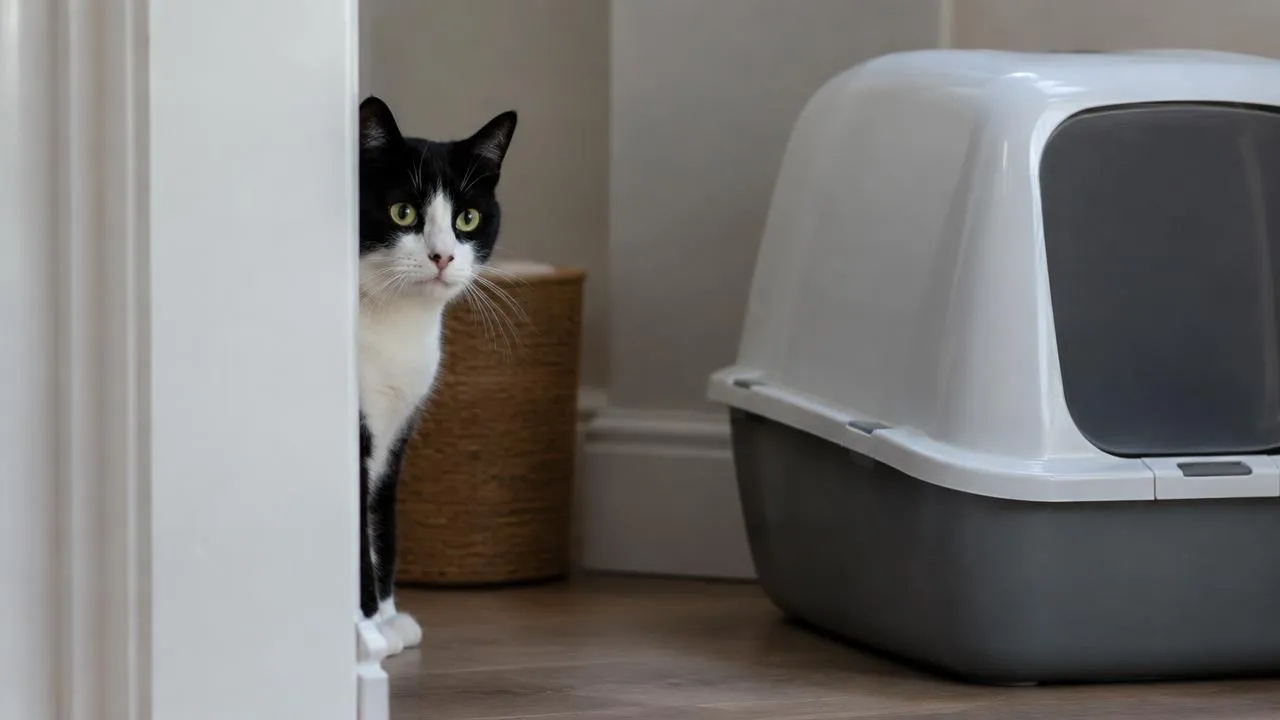
A tray obstructs a passage, a room changes function, or the home's layout evolves: moving a cat's litter box often seems trivial. However, choosing the new location deserves as much attention as the move itself. The 2014 AAFP/ISFM guidelines provide precise benchmarks for location changes, especially when a cat has started eliminating elsewhere. They primarily encourage verifying that the toilet remains accessible and is effectively used by the resident feline.
Define a suitable destination before moving the tray
Draw a basic floor plan with doors, feeding areas, water points, and existing toilets. This approach follows the use of home maps recommended by AAFP/ISFM to understand elimination problems. It helps distinguish a vacant space from a relevant one. Ask yourself how the cat reaches it, who might cross their path, and what happens in that zone daily. A location is more than just available floor space; it is a functional territory.
The text advises quiet locations rather than high-traffic zones. It also specifies that food and water must not be near the tray, as this proximity can discourage use. Therefore, do not choose based solely on visual discretion or storage ease. A nook located amidst other resources may remain a poor candidate despite its practical appearance for occupants. Prioritise feline psychological comfort over simple human convenience to ensure long-term success with the new layout.
Respect stability when a difficulty has just been resolved
The recommendations describe a specific situation: when a cat eliminates away from its tray, one can try placing it in a new spot to solve the problem. Once the cat restarts using it, the document advises maintaining this placement for at least two weeks, even if it inconveniences humans. This period concerns consolidating regained usage, not a universal guarantee of adaptation to any move. Stability is crucial for correcting established inappropriate behaviours.
Once usage becomes regular, the text suggests a gradual move of a few inches per day toward the desired location. It does not propose abruptly moving the tray to impose the final destination. Remember the principle of progression conditioned by actual usage. If your situation differs, particularly with persistent accidents, ask the veterinarian how to adapt this approach instead of mechanically following a calendar. Professional advice remains essential when behavioral changes do not follow expectations.
Preserve toilet possibilities within the home
AAFP/ISFM recommends two toilets in separate locations when a single cat lives in the household. Before moving the most used one, examine other available options. Moving is not necessarily reducing: an organisation can maintain several useful sites. Conversely, lining up multiple containers in the same zone does not create independent locations, as adjacent trays are perceived as a single large tray. Strategic spacing is required to meet feline environmental and biological needs.
In a multi-storey house, at least one tray per level is recommended. Transferring all toilets to a single room may thus contradict the desired distribution. With multiple cats, the document insists on the possibility of reaching a tray without having to encounter another animal. The destination must be examined across all pathways, not just from the room where the tray was previously located. Accessibility must remain constant throughout the entire territory to prevent territorial stress.
Note reactions rather than multiplying corrections
Establish a short chronology: former location, changes made, trays used, and sites of any deposits. The guidelines give significant weight to this history and its evolution. These notes prevent mixing several events into an imprecise memory. They can also reveal that a spot chosen for its calm is actually on another cat's path, or that another toilet remains preferred. Documentation helps identify patterns that might be missed during casual daily observation.
Do not automatically add a new scent or substrate to convince the cat. The text recalls that preferences vary and scented litters can be displeasing. Keeping issues distinct allows for better discussion of what has changed. Cleaning, access, and location must be evaluated, but a succession of undocumented trials makes understanding an improvement or worsening more difficult. Methodical changes are far more effective than random adjustments when trying to establish a permanent new routine.
Examine accidents that are not furniture-related
The MSD Veterinary Manual includes inappropriate urination among possible manifestations of lower urinary tract diseases, along with blood, frequent urges, and straining. If these signs appear during the move, do not conclude that the new location explains everything. Report observed manifestations to the veterinarian. The setup context provides useful information, but it does not establish the cause of symptoms on its own. Medical issues must always be ruled out before assuming behavioural causes.
AAFP/ISFM recommendations also require examining medical causes in the evaluation of house soiling. They do not present punishment as a solution and highlight its potential adverse effects. Your best endpoint is not simply a more practical room: it is a set of accessible toilets, habits that have become regular again, and a medical evaluation if necessary. Storage convenience remains secondary to these objectives. Ensure the feline's health is the primary focus throughout.
Accessoires Chat is developing a round-format connected automatic litter box; this project is still in preparation and not available for sale. No price has been validated at this stage. The visual must be considered an illustrative image, not a technical specification sheet. All specifications must be confirmed in the manual of the model actually delivered before considering installation. This product remains a draft not intended for current purchase or commercial use.
Sources and further reading
- AAFP and ISFM Guidelines for diagnosing and solving house-soiling behavior in cats (Journal of Feline Medicine and Surgery, 2014)
- Manuel vétérinaire MSD — Lower Urinary Tract Disease in Cats
This advice is for information only and does not replace your veterinarian's opinion.