
Automatic cat food dispenser: what to look for
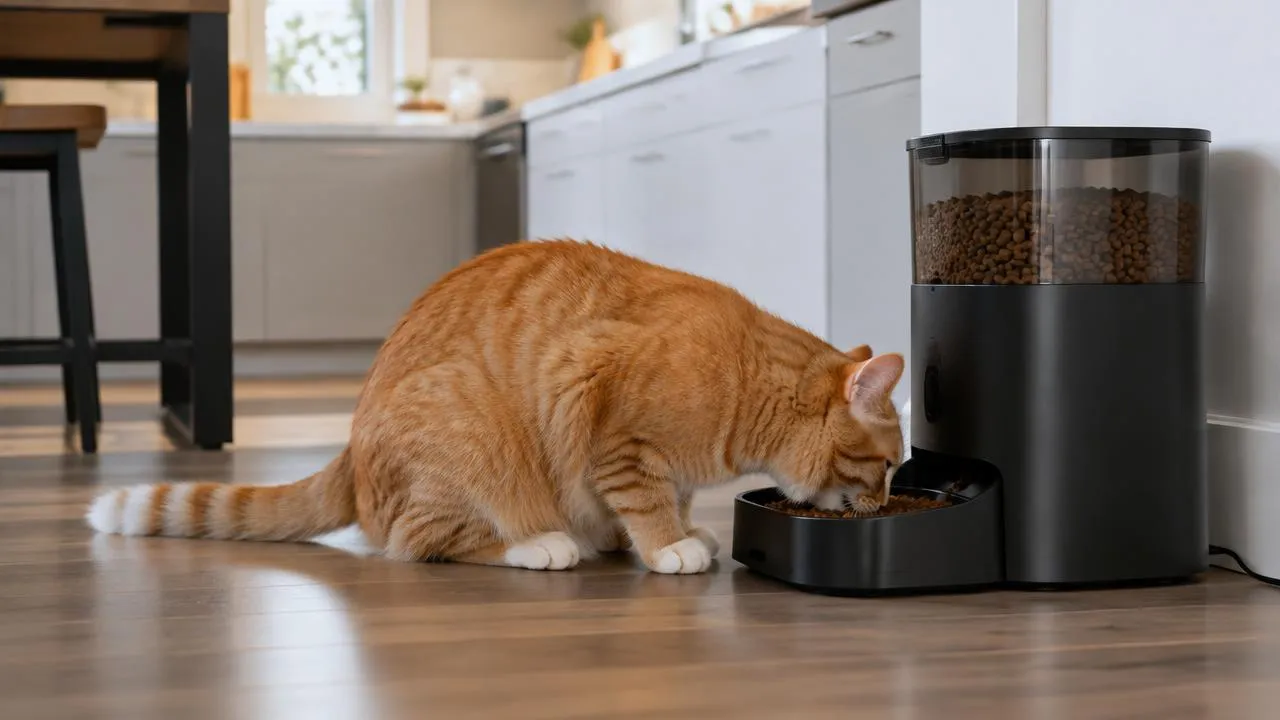
The AAFP consensus statement on feline feeding programmes reminds us that feeding a cat involves more than choosing its food. How meals are offered matters too. Cats generally prefer to eat frequent, small meals on their own, while a dispenser may not meet all their needs for foraging and predatory activity. This guide focuses on organising meals and making practical checks; technical capabilities vary from one model to another. Consider any device as one part of a feeding routine, rather than a substitute for understanding how your cat eats.
What an automatic dispenser can offer
In general, an automatic dispenser releases dry food according to a schedule or a command provided by the device. Mechanisms, settings and operating methods differ between models, so check the instructions for the exact model. Do not assume from its appearance alone that a device measures portions accurately or can identify an individual animal. Choose according to your cat’s needs, not convenience alone: the dispenser should fit into a routine you can monitor and should not prevent your cat from eating somewhere quiet and comfortable.
Dividing food into smaller servings can help organise several meals throughout the day. The AAFP statement notes that automatic feeders can be useful, but generally do not provide opportunities for foraging and predatory behaviour. A dispenser is therefore a tool for offering food, not a complete answer to a cat’s behavioural needs. Play and other suitable enrichment may still have a place in the daily routine.
Choose for your cat and its surroundings
Start by identifying where your cat feels safe eating. In a multi-cat household, access to space and resources may not be shared equally, and some cats avoid their companions. The AAFP recommends several feeding stations, separated so that cats cannot see one another, to provide distinct areas and help limit competition. Observe the cats at different times: a station that one readily uses may be avoided by another. Separate feeding points and manage access individually where needed, taking account of each cat’s relationships and preferred spaces.
Consider each cat’s mobility and individual needs when choosing a location. An elevated spot may suit some cats if their physical condition allows, but it should not create a barrier. According to the AAFP recommendations, feeding stations should not be placed near litter trays. Make sure the route to the food is easy to use and that other pets cannot routinely block access.
Timings and portions: start with a sound plan
Before setting a schedule, establish the appropriate daily amount to offer, with help from your veterinary team if needed. The AAFP recommends that a professional advises on calorie requirements and how to measure portions. A kitchen scale or a suitable volume measure can be used; keeping track of what is actually eaten helps you check the plan in practice. The aim is a routine that meets your cat’s needs and remains manageable, rather than simply making feeding more convenient.
Dividing an agreed daily amount into several meals is not a reason to increase the total without consideration. Measure food when filling the dispenser, then compare the amount offered with leftovers or what has been eaten. Monitor weight and body condition regularly, paying particular attention to older, frail or unwell cats and those with specific needs. Ask your veterinary team for guidance if you are uncertain about an appropriate amount.
Set the programme and check it works
Read the instructions before setting meal times, portions or any associated functions. Units and controls vary, so do not assume that the quantity released will be the same across different devices. Run a test while you are present, watch the food being dispensed and check that your cat can reach it comfortably. In a multi-cat home, observe how each animal behaves at different times; a station accessible to one cat may be avoided by another. Separate feeding points and individually managed access can help make the arrangement work for the household.
Make a note of the settings and expected meals, then check what remains and how your cat behaves. In a shared household, the device alone cannot tell you which animal has eaten. If your cat’s appetite changes or it has difficulty reaching the food, do not simply alter the programme; seek advice from a vet. Regular checks help identify problems that a timer or dispenser cannot assess for you.
Keep foraging and observation in the routine
Food-based play and searching for pieces of dry food can encourage physical and mental activity. The AAFP suggests starting with a puzzle that is easy to use and adapting the difficulty to the cat’s abilities. These activities may complement the dispenser, provided food remains accessible and the cat can successfully obtain it. Introduce any change gradually and make sure it does not leave your cat frustrated or without enough food. The device should support a considered feeding routine, not become its only source of stimulation.
The dispenser cannot tell you by itself whether a meal is a calm experience. Notice whether your cat approaches, eats and leaves without disturbance, and whether another cat monopolises the area. The consensus statement points out that tension between cats is not always obvious. Regular observation can help you spot changes in eating or interactions that are worth discussing with a professional.
At Accessoires Chat, a black Wi-Fi automatic dry-food dispenser is in preparation and is not yet available for sale. Its price has not been confirmed, and the image is illustrative. Features will need to be confirmed in the instructions for the model actually supplied. Do not assume that it has any particular function before checking.
Sources and further reading
This advice is for information only and does not replace your veterinarian's opinion.