
Automatic Cat Feeders and Holidays: Organising Your Cat's Meals
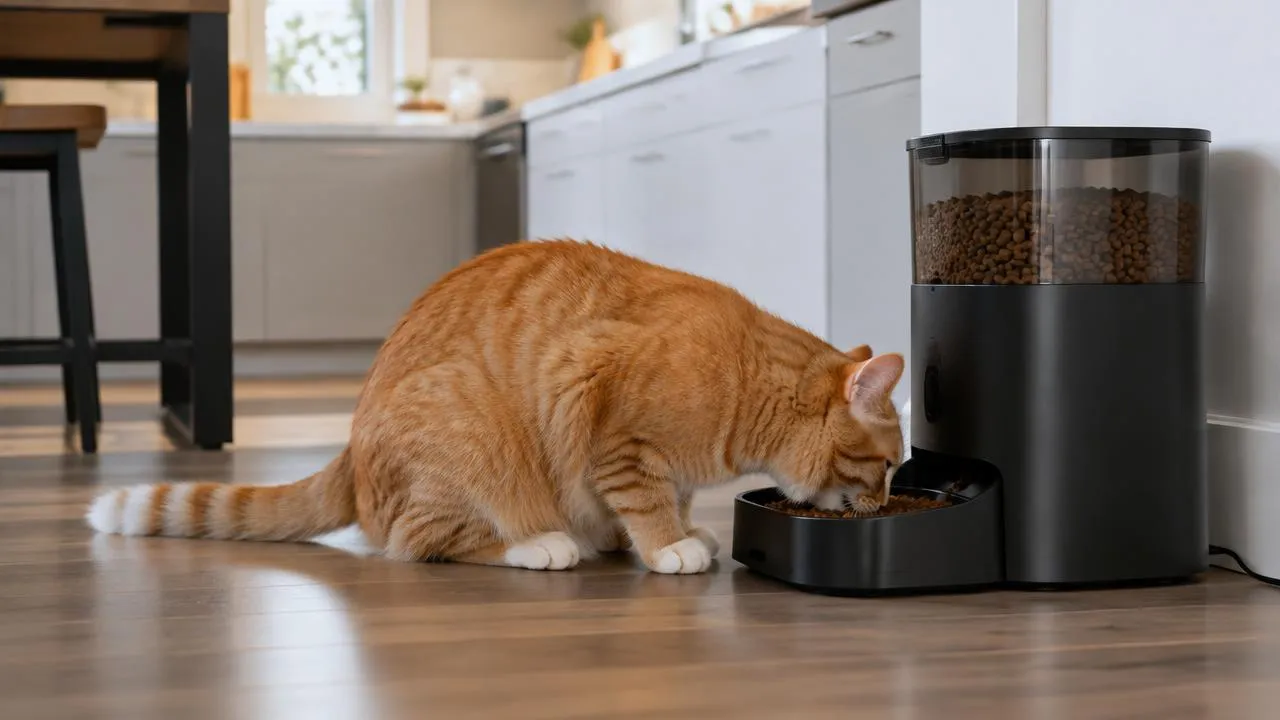
An automatic cat feeder can help maintain regular feeding schedules whilst you are away, but it cannot meet all of your cat's daily welfare needs on its own. A feeder does not verify whether the animal actually eats, nor can it replace a responsible person who can observe their physical condition. The AAFP consensus statement recommends ensuring that food remains accessible and that each cat receives an appropriate portion. Here are the key points to prepare before departure.
Testing feeder operation before departure
Familiarise yourself thoroughly with the schedule and the functions genuinely supported by the unit. Consult the exact model's instruction manual for programming steps, limitations during power cuts, and instructions for checking blockages. Never depart assuming that a mobile application guarantees every feed: remote commands and actual food consumption are two entirely different things.
Carry out a trial period over several days whilst you are present at home. Confirm that your cat recognises the machine, approaches the bowl without hesitation, and that the dispensed portions match what was agreed with your vet. Avoid changing your pet's feeding routine abruptly just before an absence. The AAFP recommends monitoring what the animal actually consumes, rather than merely relying on what the device was scheduled to dispense.
Avoid making multiple changes at the same time, as this makes it much harder to understand what is genuinely helping your cat. Introduce one adjustment at a time, maintain familiar routines that work well, and review the situation with your veterinary practice whenever your pet's needs or circumstances change.
Arranging regular checks with a trusted person
Even when using a programmable feeder, arrange for a reliable person who can visit and assess the situation in person. This caregiver can verify that your cat is present, that food remains accessible, and that no obvious problems disrupt their routine. Explain everyday habits clearly and leave your veterinary clinic's contact details. For a cat with specific medical needs, plan this care routine directly with your veterinary team.
The person checking on your cat must know how to serve a manual portion if the automated mechanism fails, adhering strictly to the planned amount. The AAFP advises determining the daily ration with your vet and measuring portions carefully; provide simple, consistent instructions that match this plan. Never encourage a friend or pet sitter to adjust food amounts arbitrarily because the cat begs or because a delivery seems uncertain.
Take the time to keep essential information in an easily accessible place: feeding times, agreed portion sizes, and contact details for your veterinary practice. Having this written record simplifies communication with your caregiver and makes it easier to spot changes in routine, rather than relying solely on digital settings stored in the machine.
Preserving calm and peaceful access to food
Cats often prefer to eat frequently and in privacy. In a multi-cat household, check that each animal can reach their own food without being chased away, blocked, or watched by another pet. The AAFP consensus statement recommends setting up multiple feeding stations, visually separated and located where cats feel safe. An identical arrangement for every cat is not always suitable.
Avoid hastily moving the food bowl to an unfamiliar place or an area your cat avoids. Take account of their habits and movement patterns around the home. The AAFP highlights that cats may use different spaces depending on their social relationships and individual preferences. A feeding station in a quiet, accessible spot well away from litter trays helps ensure peaceful mealtimes.
The layout of the feeding area deserves just as much attention as the equipment itself. Choose a stable, quiet, and easily reachable location, then observe whether your cat settles there contentedly. Your pet's reaction remains an invaluable guide: adjust the arrangement if meals seem rushed, interrupted, or avoided.
Thinking beyond dry kibble alone
An automatic feeder provides food, but it cannot offer mental stimulation or the full care required during your absence. The AAFP points out that puzzle feeders and foraging opportunities can encourage healthy activity and exploration. Seek advice on whether these methods suit your cat and how to introduce them without exceeding their daily food ration. Your pet must always be able to obtain food without unreasonable difficulty.
Before leaving, write down customary feeding times, portion amounts, and what to do if the device fails to operate. Ask your caregiver to report any change in appetite or behaviour without delay. The AAFP recommends regular monitoring of weight and body condition, especially for older, frail, or chronically ill cats. On your return, check that normal routines resume smoothly and consult a vet if you notice anything concerning.
Remember that feeding behaviour should always be viewed in its wider context. The presence of other animals, resource placement, and household activity can all influence access to the bowl. Keep track of concrete observations and seek professional veterinary advice if difficulties persist or if your cat's appetite changes.
At Accessoires Chat, a black automatic cat feeder with Wi-Fi is currently in development and is not yet available for sale. Its price has not been finalised and the image shown is purely illustrative. Final specifications remain to be confirmed against the instructions supplied with the delivered model; do not leave without checking its functions and arranging dependable human supervision.
Sources and further reading
This advice is for information only and does not replace your veterinarian's opinion.