
Automatic Cat Feeder: What to Do During a Power Cut or Network Outage?
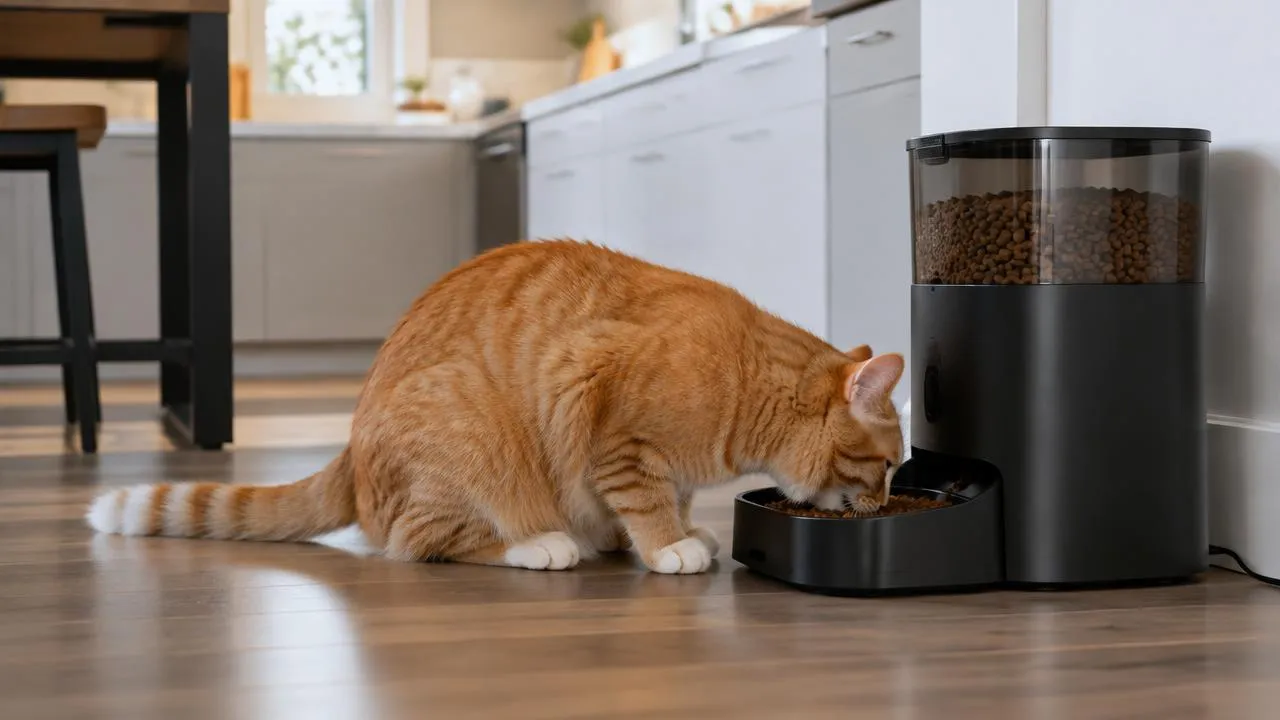
An automatic feeder is a helpful organisational aid, not an absolute guarantee that meals will be served under all circumstances. A power cut or an internet outage raises two distinct questions: can the appliance continue to operate, and can you reliably confirm that your cat has actually eaten? The AAFP consensus statement reminds caregivers that owners must ensure food remains accessible and the daily ration remains appropriate. Preparing a practical backup plan avoids relying solely on a smartphone application.
Distinguishing between network and electrical failures
A loss of Wi-Fi may prevent remote control without necessarily interrupting local scheduled distributions, whereas an electrical outage can have very different consequences. There is no single universal answer, as device behaviours vary considerably between models. Consult the user manual of your exact appliance to learn what occurs in each situation, whether your programmed settings are preserved in internal memory, and whether backup battery power is provided.
Do not rely solely on an indicator light or a push notification to conclude that a meal was dispensed and consumed. A notification may confirm a scheduled motor cycle, but the cat's actual access to the bowl and the quantity eaten must be assessed separately. If a failure occurs, check the physical installation in person as soon as possible and use an established manual method to provide the scheduled meal.
The physical arrangement of the feeding area deserves as much consideration as the device itself. Choose a stable, quiet, and easily accessible spot in the home, then observe whether the cat settles there willingly and calmly. The animal's immediate reaction remains a valuable indicator: adjust your domestic arrangement if feeding seems rushed, interrupted, or avoided altogether.
Establishing a straightforward manual routine
Keep the manufacturer's instruction manual, your cat's usual portion settings, and a reliable way to measure food within easy reach. The AAFP recommends agreeing the daily food quantity with your veterinary team and measuring it accurately, either by weight or with a suitable scoop. This practical preparation helps a friend or cat sitter maintain the routine smoothly if you are away or if the device stops responding. Avoid compensating for a missed distribution with an improvised quantity without professional advice.
Designate someone who knows exactly where the dry food and spare bowls are kept, and explain clearly how to verify that the cat can safely access its meal. Your instructions should describe what is normal behaviour for your pet, without mistaking a technical adjustment for qualified medical advice. For a cat whose dietary plan or health status requires close attention, ask your vet to help you anticipate unexpected situations.
Remember that feline feeding behaviour must always be interpreted in its domestic context. The presence of other pets, the location of core resources, and daily household activity can all influence how freely a cat approaches the bowl. Note concrete observations and consult a veterinary professional if eating difficulties persist or if appetite changes noticeably.
Regularity must not overshadow your cat's needs
Cats generally prefer eating small amounts frequently and in a solitary environment. The AAFP recommends dividing the total daily ration across the day and night, whilst noting that automation alone does not allow cats to forage or manipulate their food. Following an interruption, resume the familiar schedule by carefully checking portions rather than adding extra meals to catch up without knowing what was actually eaten.
Regularly observe your cat's appetite, weight, and overall body condition. The AAFP highlights the importance of routine monitoring, particularly for senior cats, frail animals, or those with chronic medical conditions or specific dietary requirements. If you notice a concerning change in eating habits or struggle to establish an appropriate ration, contact your veterinary team rather than modifying the diet on your own.
Avoid introducing multiple dietary or routine changes at the same time, as this makes it difficult to understand what truly helps your cat. Introduce one adjustment at a time, retain the familiar domestic habits that work well, and review the situation with your vet whenever your companion's clinical needs evolve.
Testing the device before relying on it
Before relying on the feeder during an absence, familiarise yourself thoroughly with its operation and test the failure scenarios described in the documentation. Check what the indicator lights mean, how to inspect the dry food hopper, and how to dispense a portion manually without the app if that function is supported. Do not invent improvised workarounds: the manufacturer's safety and operating instructions remain the definitive standard.
In a multi-cat household, a power or network breakdown can make individual monitoring considerably harder. The AAFP recommends providing multiple feeding stations that are visually separated and located in quiet areas where each cat feels secure. A manual contingency plan should preserve this separate access wherever possible. If one pet monopolises food or another appears underfed, rearrange the feeding spaces and seek veterinary advice.
Take time to record practical information in an accessible place: feeding schedules, agreed portion weights, and clinic contact details. Having this written down simplifies communication with a carer and helps you spot subtle deviations in feeding habits, rather than relying blindly on a saved digital setting.
At Accessoires Chat, a black automatic dry food dispenser with Wi-Fi connectivity is currently in preparation and is not yet available for sale. Its price is not finalised, and the image shown is illustrative. Definitive specifications must be confirmed in the manual supplied with the delivered model; consult it in particular to understand operational limitations during an unexpected power or network failure.
Sources and further reading
This advice is for information only and does not replace your veterinarian's opinion.