
Wi-Fi Pet Feeder with App: Making the Right Choice
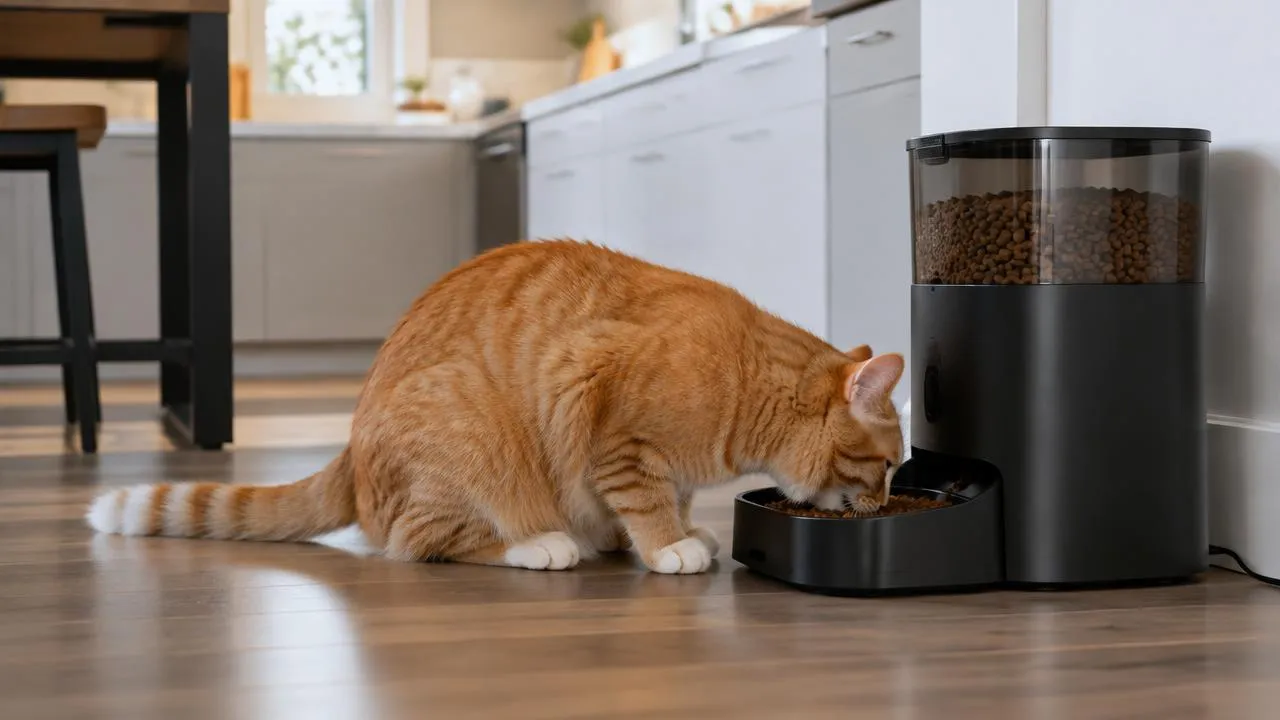
A connected pet feeder can help to structure meal times, particularly when human schedules vary. However, wireless connectivity cannot replace monitoring the ration itself or observing your cat. The AAFP consensus statement on feline feeding programmes reminds us that the manner of feeding matters just as much as the choice of food: small meals, undisturbed access, and opportunities to forage all contribute to feline wellbeing. Here is how to assess a smartphone application sensibly, without expecting more than technology can reliably deliver.
What the Application Can Truly Offer
Depending on the model, the application serves to schedule meals and consult specific device settings. Functionalities vary considerably: always verify those listed in the user manual for your exact unit, rather than assuming two connected devices operate identically. It is helpful to record the chosen feeding times and planned quantities, then regularly compare this data against what your cat genuinely consumes.
A wireless connection facilitates remote management, but it cannot prove that the kibble has actually been eaten. A cat might not approach, could be deterred from accessing the bowl, or may leave part of their ration behind. The AAFP highlights the need to ensure your pet receives an appropriate quantity and enjoys unimpeded access to food. Daily direct observation therefore remains essential.
Take time to store useful details in an accessible place: meal times, determined portions, and contact details for your veterinary clinic. Keeping this practical record simplifies communication with relatives or sitters and helps you spot changes in your cat’s routine promptly, rather than relying entirely on a setting saved within an application.
Scheduling a Routine Suited to Your Cat
Cats generally prefer multiple small meals throughout the day and night, typically choosing to eat alone. The AAFP recommends dividing the daily food ration into several meals across twenty-four hours, incorporating puzzle feeders where suitable. An automatic feeder can help maintain regular timing, though it cannot replicate hunting and capturing prey on its own. Device scheduling must form part of a coherent feeding plan.
Before adjusting any routine, determine with your veterinary team the daily quantity suited to your cat and the best way to measure portions. The AAFP mentions kitchen scales or measuring cups, noting that volumetric measurements can lack accuracy. Keep a record of settings and check your cat’s weight and body condition score regularly, especially if they are elderly, frail, or have specific needs.
The arrangement of the feeding area deserves as much care as the equipment itself. Choose a stable, quiet, and easily accessible location, then observe whether your cat visits it willingly. Your pet’s reaction remains an invaluable guide: adjust the setup promptly if meals seem interrupted, hurried, or avoided altogether.
Connectivity and Power: Planning a Contingency Mode
Wi-Fi depends on the local network, and the application depends on your phone and its associated operating service. The impact of an outage, available offline commands, and overall feeder operation must be checked in the manual for your exact model. Never assume an appliance will dispense under every circumstance simply because it is connected. Establish an alternative meal plan that you can readily implement.
Remote tracking can never replace someone checking the situation on site. If you cannot personally verify that your cat is eating, ask a friend or relative to check food access and your pet’s general wellbeing in person. This precaution is vital for a cat on a prescribed diet or managing a condition requiring monitoring; seek veterinary advice regarding suitable arrangements.
Remember that feeding behaviour must be interpreted in context. The presence of other pets, the placement of household resources, and home habits can all influence access to the bowl. Keep a note of concrete observations and consult a professional if difficulties persist or if your cat’s appetite changes.
Maintaining Mental Stimulation and Mealtime Peace
A bowl filled in the same spot does not necessarily satisfy a cat’s exploratory drive. The AAFP explains that puzzle feeders and foraging for dry kibble can provide valuable mental and physical stimulation. You can ask your vet whether part of the ration can be offered this way, introducing simple puzzles gradually. Ensure your cat can always retrieve food without undue frustration.
In multi-pet homes, a single feeding station can trigger subtle competition. Cats do not always share space comfortably and may avoid certain companions. Providing separate, visually distinct stations in locations where each pet feels secure can foster peaceful mealtimes. While an application helps schedule feedings, it cannot resolve physical access or relationships between cats.
Avoid introducing several changes simultaneously, as this makes it difficult to understand what genuinely helps your cat. Introduce one adjustment at a time, maintain familiar routines that work well, and review the situation with your vet whenever your pet’s health, life stage, or individual needs change.
At Accessoires Chat, a black automatic dry food feeder with Wi-Fi is currently in preparation and is not yet available for sale. Its price has not been finalised, and the image shown is purely illustrative. Final specifications must be confirmed on the user manual supplied with the delivered unit; check the connection features and operating conditions detailed there before relying on automated scheduling.
Sources and further reading
This advice is for information only and does not replace your veterinarian's opinion.