
Helping your cat lose weight: building a tailored plan
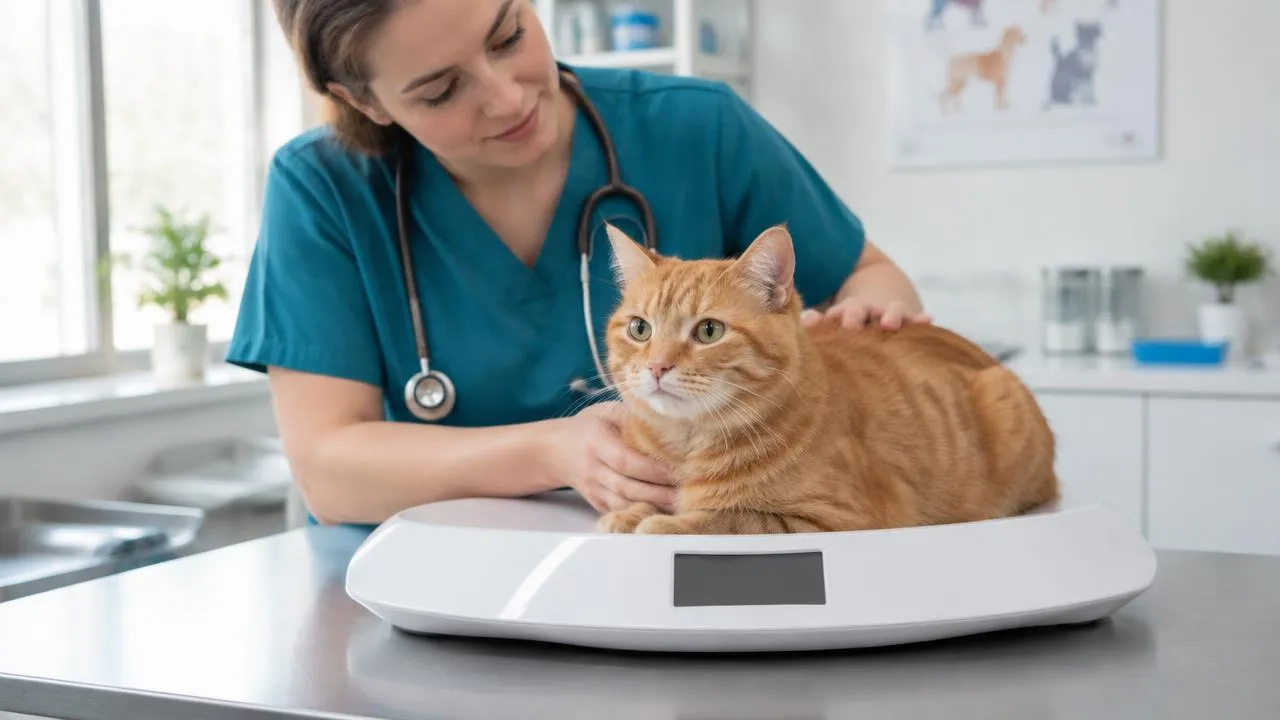
Helping your cat lose weight requires a structured, closely monitored approach rather than an arbitrary reduction in food intake. Calculating daily rations, dividing meals into multiple smaller portions, and introducing environmental enrichment are decisions to make alongside your veterinary surgeon. The AAFP consensus statement reminds us that meal scheduling, feline behaviour, and the wider home environment play an equally vital role. These general guidelines do not replace the personalised advice of the veterinary surgeon who knows your companion.
Reviewing your cat's current daily habits
Helping your cat slim down should never mean reducing their food ration at random. Begin by asking your veterinary surgeon for a tailored plan that takes account of your pet, their physical condition, and their routine habits. The AAFP consensus statement addresses how to feed and the overall living environment; it does not provide a single universal numerical diet. A weight management plan must remain compatible with your cat's overall health and wellbeing. Ask your vet how to recognise positive progress and when to get in touch again. Do not alter the daily quantity simply because the scales fluctuate over a short timeframe.
Gather relevant details before altering the household routine: note feeding times, exact quantities, table scraps, and who in the home fills the bowl. Note down when your cat plays or moves about spontaneously as well. This behavioural overview helps the professional assess nutrition, activity, and living space together. Progress is not merely a matter of weight: ease of movement and interest in play can also be reported to your veterinary team. However, you should always avoid trying to interpret these signs without clinical context.
Measuring and monitoring the daily ration
Your veterinary surgeon can advise on an appropriate daily food intake and how to measure portions accurately. Digital scales or volumetric measuring cups are mentioned by the AAFP, though volumetric measurements can often be less accurate in practice. By sticking to a single consistent method, you can compare amounts reliably without relying on visual estimates. Keep an accurate record of portions actually served, not just the intended quantity. Another household member might offer an extra treat or top up the bowl; noting these extra servings provides a true reflection of daily intake.
Dividing the daily allowance into several meals does not create additional food for your pet. Prepare portions in advance and note down when they are served so nobody inadvertently doubles up on a meal. The AAFP recommends offering several small meals across the day, tailored to the cat’s advised allocation. Set aside part of this allowance in advance for foraging or feeding activities if your vet approves this setup. This prevents extra kibble being added during play sessions without knowing the total amount given.
Structuring daily feeding and physical activity
Play can encourage natural foraging behaviour, provided it remains accessible to the animal. Puzzle feeders hold kibble and require physical manipulation to release it; the clinical consensus recommends introducing them with easy models first. Keep an eye on your companion's reaction and check that they can actually retrieve the food. A puzzle feeder does not replace measuring the ration or attending follow-up checks. It is simply a way to make obtaining food more active, combined with regular meals and careful observation.
An overweight cat may find it difficult to climb or jump during play. Never turn physical activity into an exhausting ordeal: focus on opportunities that match their current abilities and review the situation if any movement appears uncomfortable. Your vet can help adapt activities for underlying illness or limited mobility. Progress can be gradual: start with a few kibbles in an easy device, then review your cat's level of interest. If manipulating the object causes difficulty, return to a simpler feeding solution.
Encouraging foraging and mental stimulation
In a multi-cat household, make sure one animal is not monopolising the available food resources. The fact that two cats eat side by side does not prove they feel completely comfortable. Separate feeding stations can make individual portions much easier to monitor effectively. Feeding recommendations must always remain strictly individualised. An older, frail cat or one living with a chronic condition warrants special attention during weight management and regular check-ups, as emphasised throughout the AAFP consensus statement.
Record the exact amounts served and any leftovers to see what is genuinely happening from day to day. The AAFP suggests checking the food offered and inspecting the bowl after twenty-four hours have passed. Share these practical observations at veterinary check-ups, along with any difficulties you might encounter. Ask anyone who looks after your cat to respect the agreed quantities and feeding times. Clear instructions help avoid unintentional overfeeding and maintain a consistent routine.
Adapting feeding resources and veterinary follow-up
Progress on a weight management plan cannot be judged from the outcome of a single meal. Monitor the indicators agreed with your veterinary surgeon and report any unusual changes promptly. Daily consistency makes it easier to discuss what is working without changing several variables at the same time. Weighing and body condition scoring should form an essential part of the agreed veterinary follow-up. Record the dates and results so you can compare measurements taken under similar, consistent conditions.
At Accessoires Chat, an automatic black Wi-Fi kibble feeder is in preparation and not yet on sale. Its price is not validated; the image is illustrative and the final characteristics are to be confirmed in the instruction manual for the delivered model.
At Accessoires Chat, the black Wi-Fi-connected pet feeder is in preparation and not yet marketed. Its price has not been validated; the image is illustrative. Definitive features will need to be confirmed in the instruction manual for the model actually delivered.
Sources and further reading
This advice is for information only and does not replace your veterinarian's opinion.