
Cat Water Bowl: Which Dish to Choose to Help Them Drink More?
We often pick a cat water bowl based on its color or price, without realizing that it can affect how much our pet drinks. Yet the shape, size, and material of the dish matter greatly for such a sensitive animal. Knowing which cat water bowl to choose is an easy way to encourage better daily hydration. The specific issue of whisker discomfort is explored in our article on whisker fatigue.
Wide and Shallow: The Ideal Shape
For water, a generous diameter matters far more than depth. A wide dish holds a decent amount of liquid even when shallow, giving your cat the broad water surface they naturally prefer, much like a puddle or stream.
Many cats dislike having their whiskers brush against the sides of a container. These highly sensitive hairs transmit detailed sensory cues about their environment, and repeated contact can quickly become unpleasant.
A wide, shallow bowl allows your cat to drink without touching the rim. It also gives them a clear view of the water level, which helps them feel safe while drinking.
Fill the bowl generously, almost to the brim. This way, your cat will not have to push their head down into the dish to reach the water.
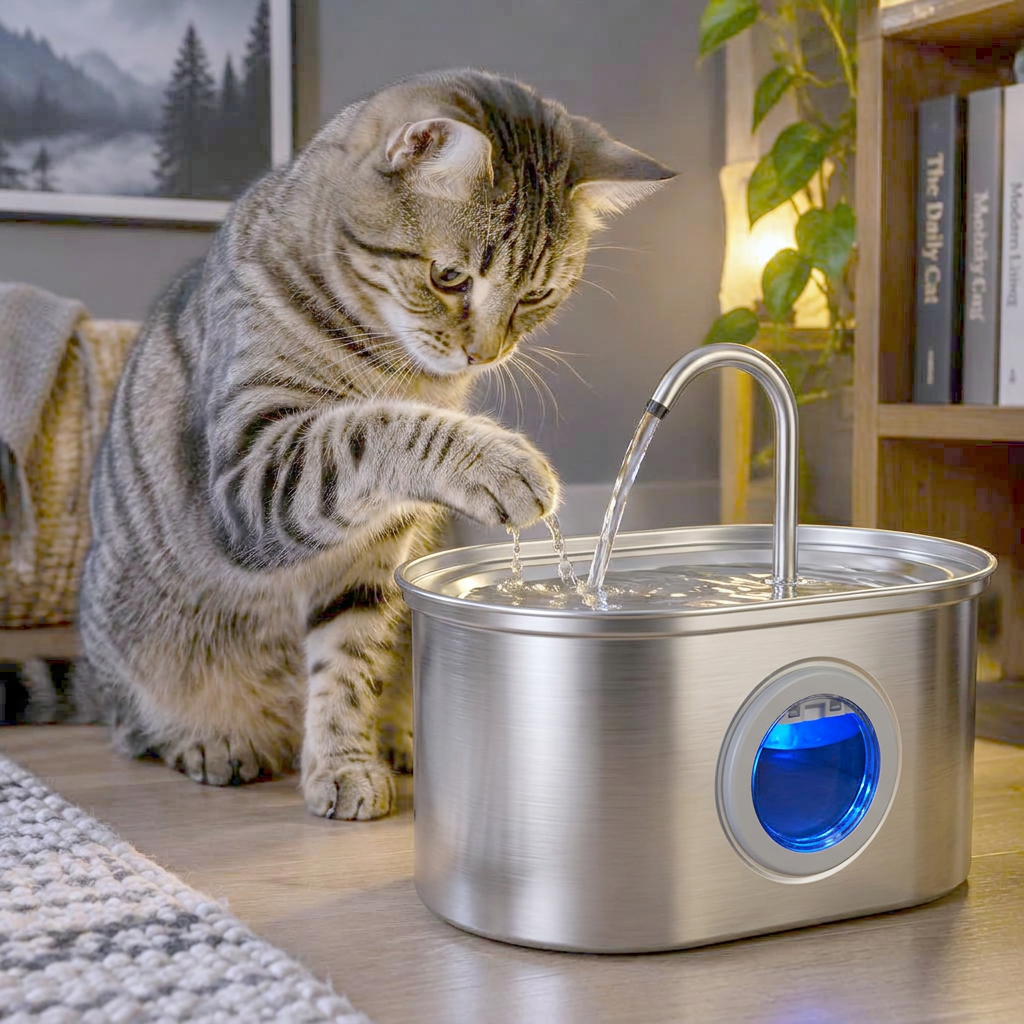
If your cat dips a paw into the bowl before licking it, this behavior often signals that their dish is too narrow or much too deep.
Materials to Favor
Glass offers the clear advantage of showing immediately if the water is cloudy or collecting debris, giving you an obvious cue for a refresh. It simply needs to be thick and sturdy enough not to break.
Glazed ceramic, glass, and stainless steel are easy to clean, resist lingering odors, and do not impart any strange taste to the water. They are the most commonly recommended materials.
Plastic is lightweight and inexpensive, but it scratches easily over time. These small grooves harbor buildup and bacteria, and some cats are sensitive to chemical smells from the material.
If you use plastic, choose high-quality, BPA-free dishes, and replace them as soon as they become scratched or look dull.
Ceramic must be glazed for food use. Make sure to replace any bowl that becomes cracked or chipped to prevent bacteria from accumulating.
Weight and Stability
A bowl that is too light will slide around or flip over at the slightest nudge. A heavier container or one equipped with a non-slip base stays firmly in place, preventing spills and reassuring your cat.
Playful felines, active kittens, and homes with dogs will especially benefit from choosing a solid, stable water bowl that cannot be knocked around easily.
A silicone mat placed beneath the bowl also shields your flooring from unexpected splashes while keeping the dish from sliding during drinking sessions.
Avoid double bowls that hold food and water directly side by side. Crumbs often fall into the water, and many cats prefer drinking well away from their feeding area.
Do You Need an Elevated Bowl?
Slightly raised bowls are sometimes marketed as being more comfortable. They can be helpful for certain older cats or those with arthritis who find bending down uncomfortable or painful.
For a young, healthy cat, height makes little difference. The main priority is that they can drink comfortably in a relaxed, natural posture without straining.
If you decide to try an elevated stand, check that it is completely stable and that your cat can access it effortlessly.
Watch your pet closely over a few days: if they drink more readily from an elevated dish, keep it as their regular station.
How Many Bowls and Where to Place Them
Avoid placing the water bowl under a sunny window or right beside a radiator. The water warms up, evaporates faster, and becomes unappealing. A shaded, temperate spot works much better.
A single dish is often not enough. Provide multiple water stations across the house in different rooms, kept far from the litter box and somewhat separated from food.
In a multi-cat home, set out at least one bowl per cat plus one extra, which prevents tension and competition around drinking spots.
Pick quiet locations where your cat can drink peacefully while still being able to observe their surroundings and feel secure.
Try out different kinds of containers. Some cats prefer glass, others like ceramic, and many enjoy moving water from a fountain.
Maintenance Is Just as Crucial
Even the best bowl loses its value if the water is stale. Change the water at least once a day, emptying the dish completely rather than simply topping it off.
Wash the bowl every day or two using hot water and mild dish soap, then rinse thoroughly. Any leftover soap residue or scent can discourage your cat from drinking.
A pet fountain can serve as a great addition to regular bowls for cats who prefer running water to still pools.
If your cat suddenly drinks much more or much less despite an appropriate bowl, consult your veterinarian promptly to check their health.
If you want to offer moving water, the Veyrulis fountain features a 3.2-liter SUS 304 stainless steel reservoir, filtration that captures hair and impurities, quiet operation, and an illuminated window to monitor the water level. It does not replace a suitable diet or the advice of your veterinarian.
Sources and further reading
This advice is for information only and does not replace your veterinarian's opinion.