
Ice Cubes for Cats: Are They a Good Way to Hydrate Pets in Summer?
When summer heat sets in, some pet owners drop ice cubes into their cat's water bowl or offer them across the floor as a simple toy. But is this really a good idea? Ice cubes can be an effective way to encourage cats to drink, provided they are used correctly. Here is what you should know to enjoy their benefits safely, along with their practical limits.
Are Ice Cubes Dangerous for Cats?
Simply observe your cat's reaction: if they ignore their water dish as soon as an ice cube floats inside, do not insist. Every cat has personal preferences, and some simply dislike cold sensations.
A persistent rumor claims that cold water or ice cubes are dangerous for animals during hot weather. However, there is no evidence that fresh, cool water or a couple of ice cubes cause any harm to a healthy cat.
On the other hand, large amounts of icy water can feel unpleasant, and cats with sensitive teeth often avoid very cold drinks. The goal is always fresh, pleasantly cool water, rather than freezing liquid.
The real danger lies elsewhere: a cat suffering from heatstroke must be cooled down gradually and seen urgently by a veterinarian, without applying ice directly to their skin.
Why Some Cats Love Ice Cubes
For an indoor cat, this simple game provides great environmental enrichment. It stimulates curiosity and hunting instincts, helping them cope with hot afternoons when they naturally move around much less.
An ice cube floating, spinning, and sliding in the bowl instantly catches a cat's attention. They bat at it, chase it, and lick it. This playful interaction often encourages them to visit the water dish more often.
As it melts, the cube keeps the water pleasantly cool for longer, which many felines appreciate during the summer months when stagnant water quickly becomes unappealingly warm.
Some cats also enjoy licking an ice cube placed directly onto a saucer. This provides a small, refreshing source of additional hydration throughout the warmest parts of the day.
How to Use Ice Cubes Properly
Larger ice cubes melt more slowly and are much easier for your cat to track visually. Avoid tiny, crushed pieces that could be swallowed accidentally during play, and do not offer them to cats with dental problems.
Prepare the ice cubes with clean drinking water in a fresh tray reserved solely for this purpose. Add just one or two to a wide bowl, never more, to chill the water without making it freezing.
Offer iced water strictly as an additional option, always keeping other water sources available at room temperature. Your cat must always have the freedom to choose what they prefer to drink.
Supervise your pet during the first few attempts. A particularly energetic cat might flip the water bowl over or slide melting ice under nearby furniture.
Flavored Ice Cubes: Proceed with Caution
Many online recipes suggest freezing commercial broth or wet food into cubes. Be careful, as commercial broths often contain high levels of salt, onion, or garlic, which are toxic to cats.
If you want to make flavored treats, use only plain cooking water from boiled chicken or fish, without added salt or seasonings, or a little wet food diluted in water. These should remain occasional treats offered in moderation.
Never leave melted broth cubes sitting out in warm weather, as animal proteins spoil very quickly in the heat and can harbor harmful bacteria.
The Limits of Ice Cubes
Keep in mind that melting ice merely dilutes existing water rather than refreshing it; old water that has been chilled is still old water. Always empty and clean the bowl first, then add fresh water and ice.
Ice cubes cannot replace continuous access to clean, fresh water that is renewed at least once a day, and preferably twice during the summer.
They are also not enough to protect a cat from overheating. Keeping blinds shut during peak heat, airing rooms during cooler hours, and providing access to cooler areas remain essential.
A cat that chronically drinks very little needs broader solutions, such as incorporating wet food into their diet, placing multiple bowls around the home, or offering moving water.
Watching for Summer Warning Signs
If you leave home for several hours during hot weather, place multiple bowls in cool rooms, close window blinds, and make sure your cat cannot get trapped in an overheated space.
A cat panting with an open mouth, appearing weak, drooling, staggering, or vomiting may be suffering from heatstroke. This is an emergency: move them to a cool place, dampen their coat with cool water, and call your vet immediately.
A cat that stops drinking, ceases eating, or urinates very little during a heatwave should also be evaluated promptly by a veterinary professional.
Elderly felines, sick pets, and flat-faced breeds require particularly close attention as soon as hot temperatures begin to rise.
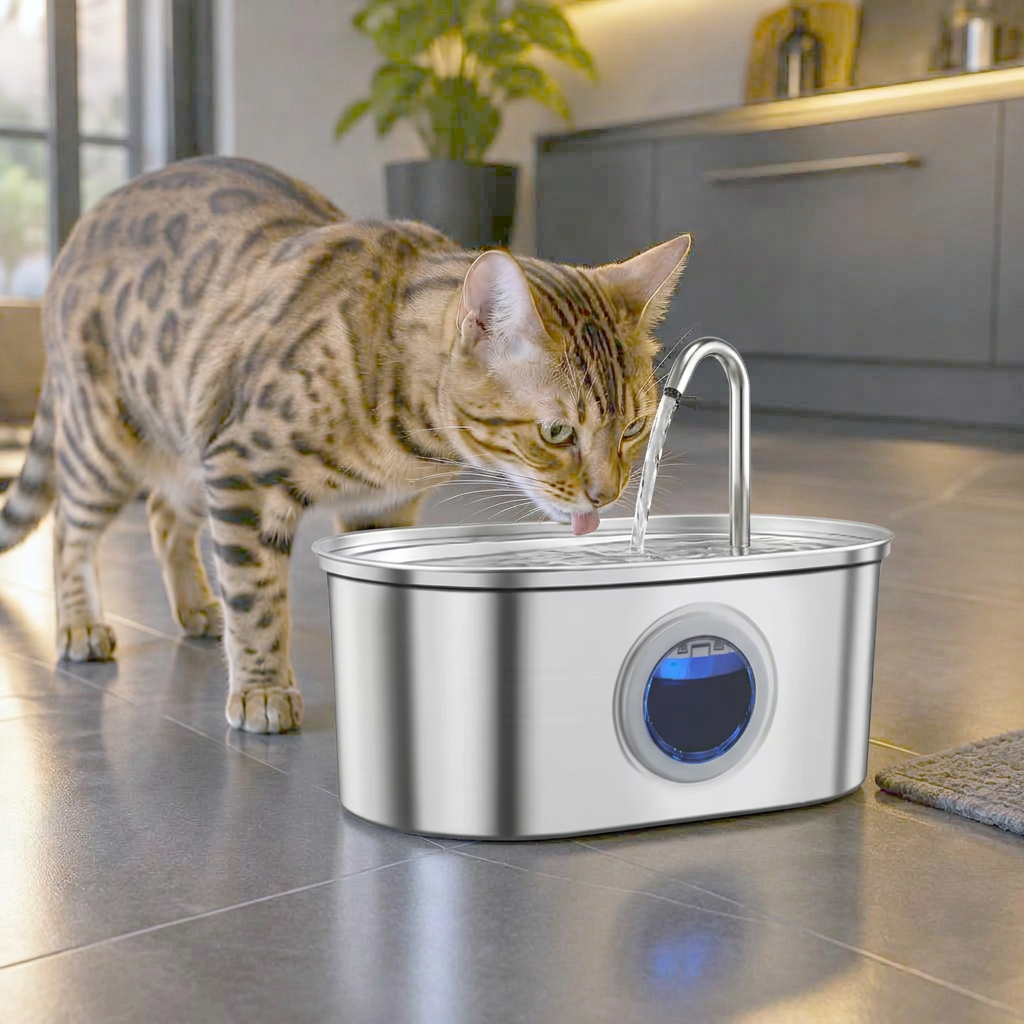
If you wish to offer moving water, the Veyrulis fountain features a 3.2-liter SUS 304 stainless steel reservoir, filtration that captures hair and impurities, quiet operation, and an illuminated window to monitor the water level. It does not replace a suitable diet or the advice of your veterinarian.
Sources and further reading
This advice is for information only and does not replace your veterinarian's opinion.