
Large cat litter boxes: choosing a truly spacious tray
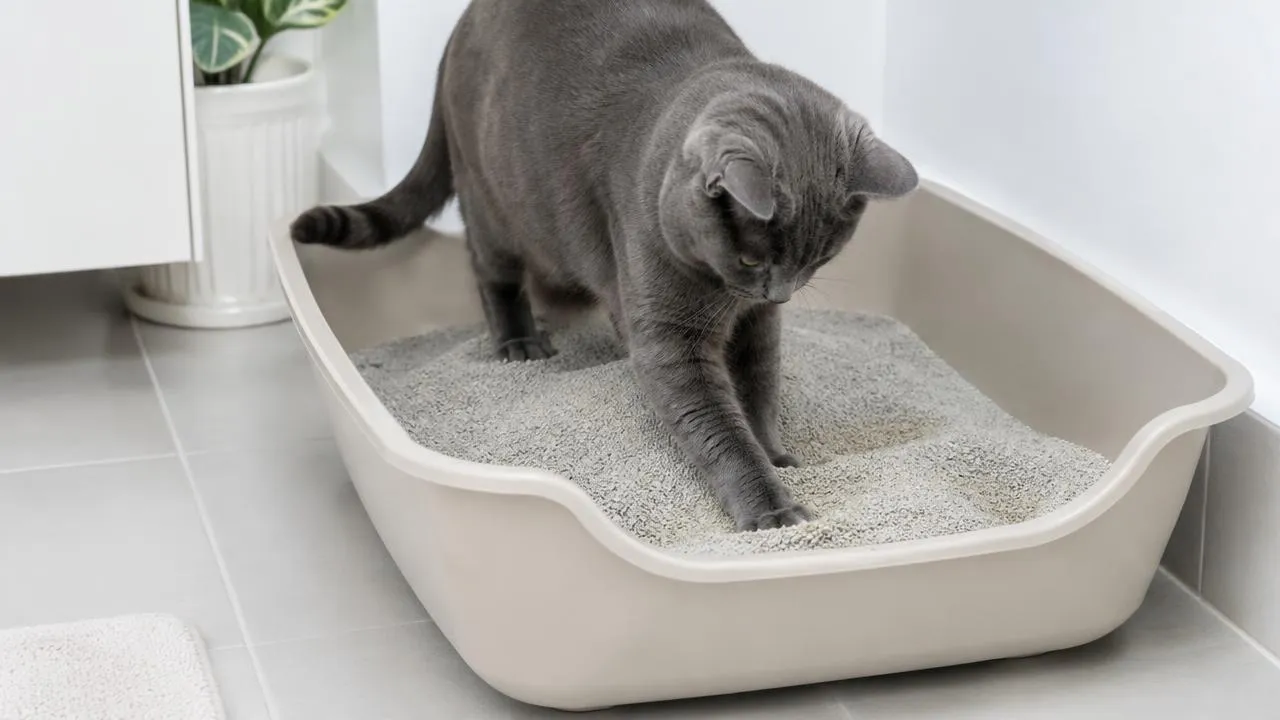
The search for a 'large cat litter box' can mean a spacious tray or a significant quantity of substrate. Here, the focus is the container and space offered to the animal. AAFP/ISFM guidelines insist on the benefits of generous dimensions but do not propose a single model for all homes. To examine a large box, better distinguish what serves the cat from what occupies room space, then check access and maintenance.
Defining the large format based on its user
AAFP/ISFM recommendations propose a rectangular box where the length represents one and a half times that of the cat, measured between the nose and tail base. This rule directly links choice to the animal concerned. It avoids trusting the word 'large' alone, which does not indicate the measurement you are comparing. Start with this benchmark rather than the commercial designation. Natural phrasing ensures all original numerical facts and veterinary attributions remain intact.
In research cited by authors, adult cats preferred a tray measuring 86 by 39 centimetres over a smaller option. This data illustrates the importance of space without prescribing these dimensions to every home. The text emphasises that size matters as much as the number of trays. A very small additional purchase does not answer the same question as a space truly adapted to the cat's posture. Ensure the volume matches the physical requirements of your specific cat.
Comparing internal dimensions, not just the object
The case of covered litter houses reminds us why footprint and usable space should not be confused. AAFP/ISFM notes that a small closed box can prevent a large animal from positioning itself normally to eliminate. Ask which dimensions describe the container accessible to the cat. If you only have a photograph or overall measurement, keep this uncertainty in your comparison. Internal volume determines comfort more than external shell size for the resident feline.
The source does not allow calculating a universal minimum interior volume for all shapes. Therefore, do not invent an ideal capacity in litres from the length benchmark. A large tub, a lid, and an opening correspond to different characteristics. For an automatic device, check the exact model instructions for what is specified, rather than converting a general presentation into a space guarantee for your companion. Always refer to official documentation for safety and capacity specifications.
Looking wider without being confined to one category
When pet shops do not offer sufficient dimensions, guidelines mention storage containers, particularly those designed to fit under a bed, as well as mixing trays. These examples show that a simple solution can be examined for its shape and size. They do not constitute a product ranking or a recommendation to buy specific equipment without considering the animal who will use it. Practical alternatives provide the necessary surface area for larger domestic cat breeds.
The document also presents a container where part of the side has been lowered to facilitate entry for elderly cats or those with degenerative joint disease. Remember this dissociation: increasing interior space does not require increasing passage difficulty. A high, vast tray must always be evaluated at its opening. An impressive silhouette does not prove your cat can use it easily. Access height remains critical for senior animals with mobility issues or chronic pain.
Do not replace distribution with a giant box
For a single animal, AAFP/ISFM recommends two trays in two separate locations; for several cats, the historical benchmark is the number of animals plus one tray, adapted to social groups. A very large box does not create multiple locations. The authors indicate that juxtaposed trays are perceived as a single large toilet. Resource dimension and distribution are therefore two complementary decisions. A single oversized station cannot replace the requirement for separate environmental resources.
In multi-storey homes, a minimum of one tray per level is also expected. Organisation must allow cats to reach toilets without an imposed encounter with a housemate. Before removing other boxes because a new format seems sufficient, recheck these accesses. The principle to preserve is not just a total surface area: it is about offering toilet sites available in several areas of the dwelling. Social dynamics dictate the placement and quantity of these resources.
Maintaining a cleaning routine and medical oversight
Large dimensions do not remove the necessity to remove waste at least daily, as required by AAFP/ISFM. One must also add substrate as needed and wash the container every one to four weeks. The indicated products are hot water and soap, excluding ammonia-based or strongly chemical products. Keep these actions in your choice, even if the box seems to have plenty of reserve. Hygiene remains paramount regardless of the total litter volume used.
Finally, a cat urinating outside the box does not necessarily require a larger format. The MSD Veterinary Manual classifies urination outside the litter box among signs of lower urinary tract diseases, along with frequent urination, blood, and straining. Report these manifestations to the vet. The setup can be re-examined in parallel, but buying a large box is not a diagnosis or treatment for possible causes. Professional medical consultation is mandatory for all elimination changes.
At Accessoires Chat, the connected automatic litter model in a round format remains in preparation, not currently for sale. Its price is not validated and the visual is illustrative. Dimensions and other specifications remain to be confirmed on the instructions of the delivered model. For any information specific to automatic equipment, check the exact model instructions. The product is a draft not for sale with illustrative imagery and no fixed price.
Sources and further reading
- AAFP and ISFM Guidelines for diagnosing and solving house-soiling behavior in cats (Journal of Feline Medicine and Surgery, 2014)
- Manuel vétérinaire MSD — Lower Urinary Tract Disease in Cats
This advice is for information only and does not replace your veterinarian's opinion.