
Kibble Dispenser Toy: Choosing a Food Puzzle for Your Cat
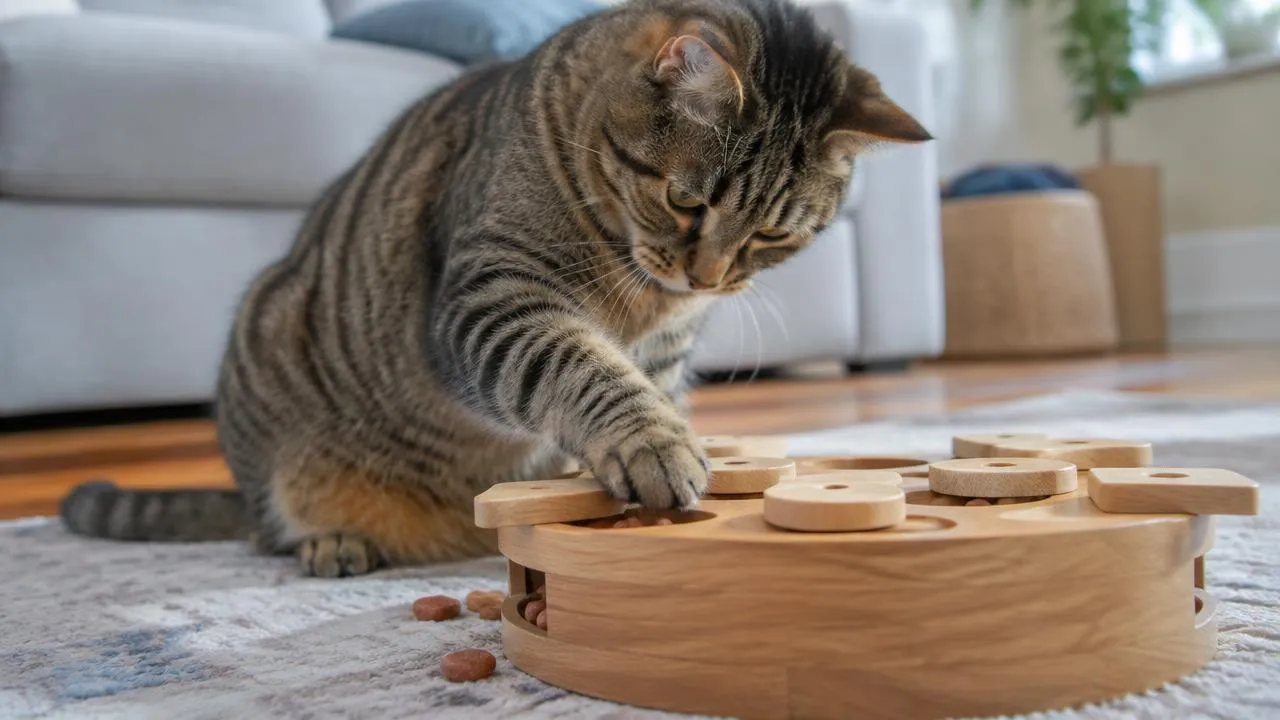
A kibble dispenser puzzle toy can transform an ordinary meal into an engaging opportunity to manipulate, explore, and forage. The AAFP consensus statement describes these items as devices that hold food, which is subsequently released through the cat's physical actions. They can provide valuable mental and physical stimulation, yet they do not suit every animal in quite the same way. An easy starting point, a carefully measured food portion, and attentive observation provide sensible guidelines for a smooth, gradual introduction into your pet's routine.
Understanding the principle of the food puzzle
A food puzzle holds a specific quantity of food and requires deliberate action from the cat to retrieve it. Depending on the model, the cat might use its paws, mouth, or tongue, move a sliding piece, or roll the toy across the floor.
This way of serving food differs substantially from a traditional bowl where everything is immediately accessible. It can encourage physical activity and foraging, two natural behaviours that indoor living does not always sufficiently stimulate or accommodate.
A toy is not inherently better simply because it appears complicated or sophisticated. The consensus recommends starting with a simple, easy-to-manipulate model. If the level of difficulty exceeds the cat's abilities or interest, the animal risks being unable to access its allocated ration.
Selecting the first foraging activity
Begin with a small amount taken directly from the daily food allowance and present a puzzle with an obvious, straightforward mechanism. Allow the cat to examine it at leisure and watch carefully how it attempts to reach the kibble.
Some cats are naturally drawn to moving objects, whilst others prefer a stable base where the food remains easily visible. The animal's size and physical mobility also matter. You can certainly try a different device if the first fails to spark interest, but avoid changing multiple aspects of the routine at once: you will better understand what genuinely helps your cat.
Keep a familiar feeding option, such as their customary bowl, available during the learning phase. The puzzle must not become the sole access to food before the animal has fully mastered how to use it. The primary objective remains that it consumes an appropriate amount of nutrition.
Integrating the puzzle into daily food rations
The consensus statement recommends dividing daily food intake into several small meals and using food puzzles wherever possible. To avoid unintentional overfeeding or extra calories, measure the planned ration before setting aside a portion specifically for the toy.
A puzzle can replace part of a scheduled meal or offer a portion at another time of day, depending on your household routines. An automatic feeder helps deliver frequent, timed meals, but does not typically provide searching or predatory foraging activity.
Weigh your cat regularly and monitor its body condition score, as advised by the AAFP, especially for an older, frail, or medically vulnerable animal. If you observe any unexpected changes in weight, discuss its diet and nutrition with your veterinary surgeon.
Trying a homemade version with care
Making a homemade kibble puzzle is an option cited in the consensus statement, which notes that homemade enrichment solutions can be simple and inexpensive. The reference does not prescribe a specific design or blueprint. One can therefore look for an elementary idea where kibble remains visible and accessible through easy manipulation, without making unsubstantiated claims regarding a particular material or shape.
Before offering a homemade item, inspect its stability, cleanliness, and overall condition. Supervise the cat closely during initial trials to see whether it chews, tears, or dislodges parts instead of searching for the food. Any damaged or hazardous toy must be removed immediately.
Place the item in a quiet, low-traffic spot, safely away from other pets likely to take the food. In a multi-cat home, separate, visually partitioned resources are especially helpful, as cats do not always share their domestic territory or feeding areas equally.
Combining toys, foraging, and close observation
Hiding kibble in different places can complement the puzzle toy by encouraging further exploration of the surroundings. Distribute only a strictly measured quantity and choose spots your cat can reach comfortably without difficulty or strain.
Observe your cat's interest over several feeding sessions, not just on first contact. Can it reliably retrieve the food, does it return willingly to the game, or does it quickly seem to give up in frustration?
The puzzle is one way among others to satisfy a cat's innate foraging needs. It pairs well with split meals, separate feeding stations, and consistent portion measurement. The vet helps determine the daily ration and monitor weight, whilst household observations guide activity choices.
Consider ease of cleaning and practical storage when choosing a feeding device. The specific product manual outlines recommended care instructions and suitable food types; never assume a model accepts all kibble textures. An item kept clean and in good condition is far easier to use in a regular routine.
At Accessoires Chat, a black automatic kibble dispenser with Wi-Fi is currently in preparation and is not yet available for sale. The retail price remains unconfirmed and the photograph is purely illustrative. To discover the exact features and technical specifications, please refer to the user manual of the model that is actually delivered.
Sources and further reading
This advice is for information only and does not replace your veterinarian's opinion.