
Automatic litter boxes in flats: choosing a cat-friendly location
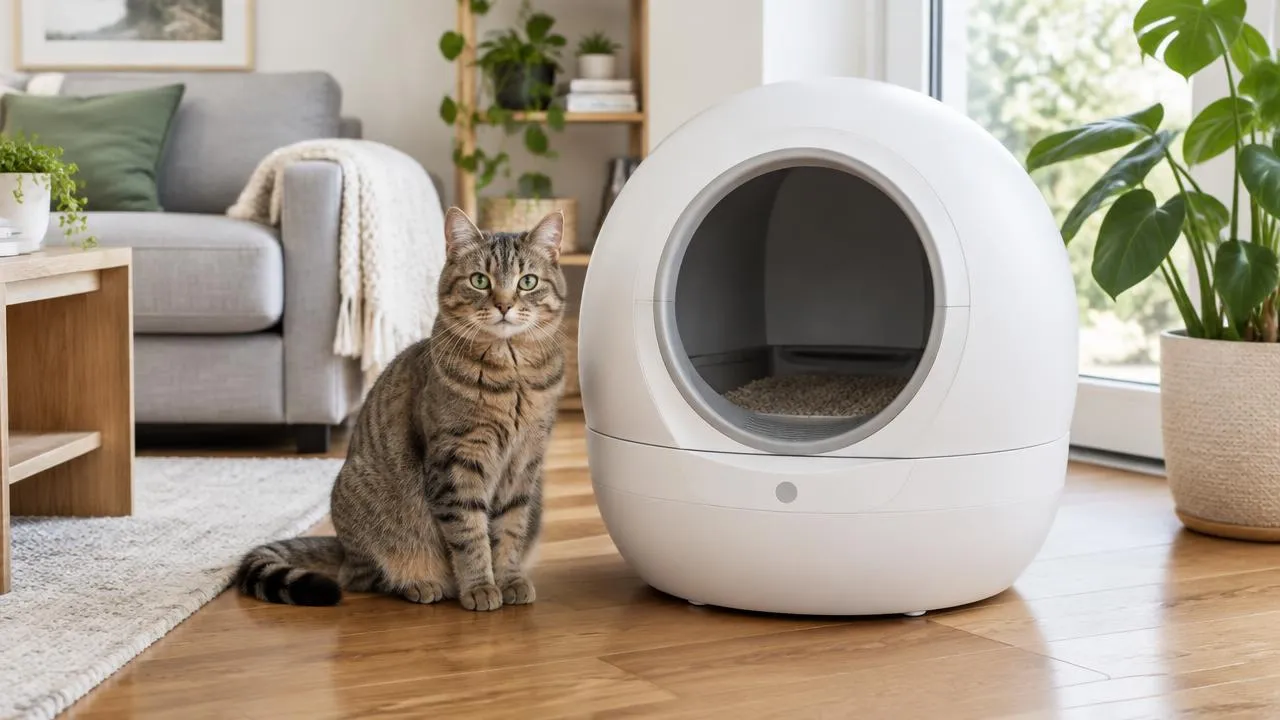
Installing an automatic litter box in a flat begins with a usage plan, not by finding a corner where the device is least visible. Where can the cat enter, turn around and exit? What other toileting areas are available? AAFP/ISFM guidelines provide benchmarks on these needs. They do not compare devices or guarantee solutions for a given area. Technical choice requires consulting the specific model's manual.
Mapping resources before measuring the shell
AAFP/ISFM recommendations suggest two trays in separate locations for a single cat. They also state food and water should be kept away from litter, as proximity can discourage use. On your plan, start by placing these resources distinctly. Simply fitting a machine between two pieces of furniture does not define a good location. Consider the cat's perspective on territory and safety before prioritizing your own floor space.
The text specifies that two adjacent trays are perceived by the cat as one single large tray. In a flat, counting objects can thus give a misleading impression of choice. Examine the actual spots offered and the routes to reach them. The goal is to reflect on the distribution of toilets rather than concentrating the entire organisation around the newest device. Ensure the cat has multiple paths to its resources.
Measuring what the cat can actually use
For tray size, AAFP/ISFM authors provide a benchmark: a length approximately one and a half times that of the animal, from nose to tail base. This recommendation concerns rectangular trays. It does not allow declaring a commercial volume or external dimension as equivalent. Request relevant internal measurements before comparing different formats. Do not assume the outer shell reflects the usable surface area available for the cat's comfort.
Access must be easy, according to the same guide. An elderly cat or one with joint difficulties may require a very low opening and a location closer to its usual areas. Evaluate the entrance with its user in mind. The space-saving sought in the home must not lead to ignoring a physical constraint already present in the animal. Accessibility remains a priority over the aesthetic integration of the machine.
Regarding the device, check the exact model's manual for installation dimensions and clearances required for maintenance. Ask the manufacturer about any unspecified points, particularly conditions for removing elements to be serviced. These checks are specific to a reference; no universal measure of free space can be deduced from the two veterinary texts used here. Technical compliance depends strictly on the manufacturer's documentation for safe and effective daily use.
Examining paths when several cats coexist
AAFP/ISFM guidelines remind us that one individual can prevent a housemate from entering or exiting the tray. They recommend separate stations for socially unaffiliated cats. In your flat, observe interactions around the toilets. An arrangement acceptable for two close companions might not suit two animals that usually avoid crossing paths. Social dynamics dictate the success of any equipment installation within a shared living environment for your pets.
The historical tray count is the number of cats plus one, but the document notes this rule is not absolute. Social groups and actual usage should guide adjustments. Do not view an automatic device purchase as proof that resource grouping has become appropriate. The question remains each individual's access to different locations. Strategic placement helps reduce potential conflicts and ensures all cats feel secure when using the facilities.
Making room for maintenance and preferences
No product eliminates the need to clean trays, state AAFP/ISFM recommendations. These require waste removal at least daily. Before fixing the final location, think about the operations you must perform and check their procedure in the manual. A spot chosen only for its discretion does not necessarily meet this practical organisation for monitoring and maintenance. Convenience for the owner must facilitate, not hinder, the required daily hygiene.
The guide reports shared preferences between large open and covered trays, without designating a universal choice. It favours open trays where possible to facilitate monitoring and scooping. It also notes the role of odours and cleaning. Do not assume a closed format will be automatically accepted because it fits better with your interior decor. The cat's sensory experience and preference for ventilation should guide the final placement decision.
Do not attribute all accidents to the home
The MSD Veterinary Manual includes urinating outside the tray among possible signs of lower urinary tract disease, along with frequent urination, straining and blood in urine. If your cat begins eliminating elsewhere after an installation, this timeline deserves to be shared with the vet. It does not allow, on its own, the conclusion that the problem stems from the location. Medical issues must be ruled out before blaming environment.
The assessment proposed by AAFP/ISFM guidelines combines searching for medical causes with environmental analysis. Prepare a record of areas used, changes and interactions. You can then discuss concrete adjustments without reducing the situation to the small size of the flat. The goal is an organisation adapted to this cat, not a promise of results linked to equipment. Holistic evaluation ensures the well-being of the cat remains the focus.
For Accessoires Chat, the round connected automatic litter box project is still in preparation. This product is not for sale and no price is validated. Its image remains illustrative. Before any precise description of its installation in a flat, its specifications must be confirmed by the manual of the delivered model, without deducing dimensions or functions from the visual presented alone. It remains a technical draft.
Sources and further reading
- AAFP and ISFM Guidelines for diagnosing and solving house-soiling behavior in cats (Journal of Feline Medicine and Surgery, 2014)
- Manuel vétérinaire MSD — Lower Urinary Tract Disease in Cats
This advice is for information only and does not replace your veterinarian's opinion.