
Smart litter boxes and visit tracking: limits you must know
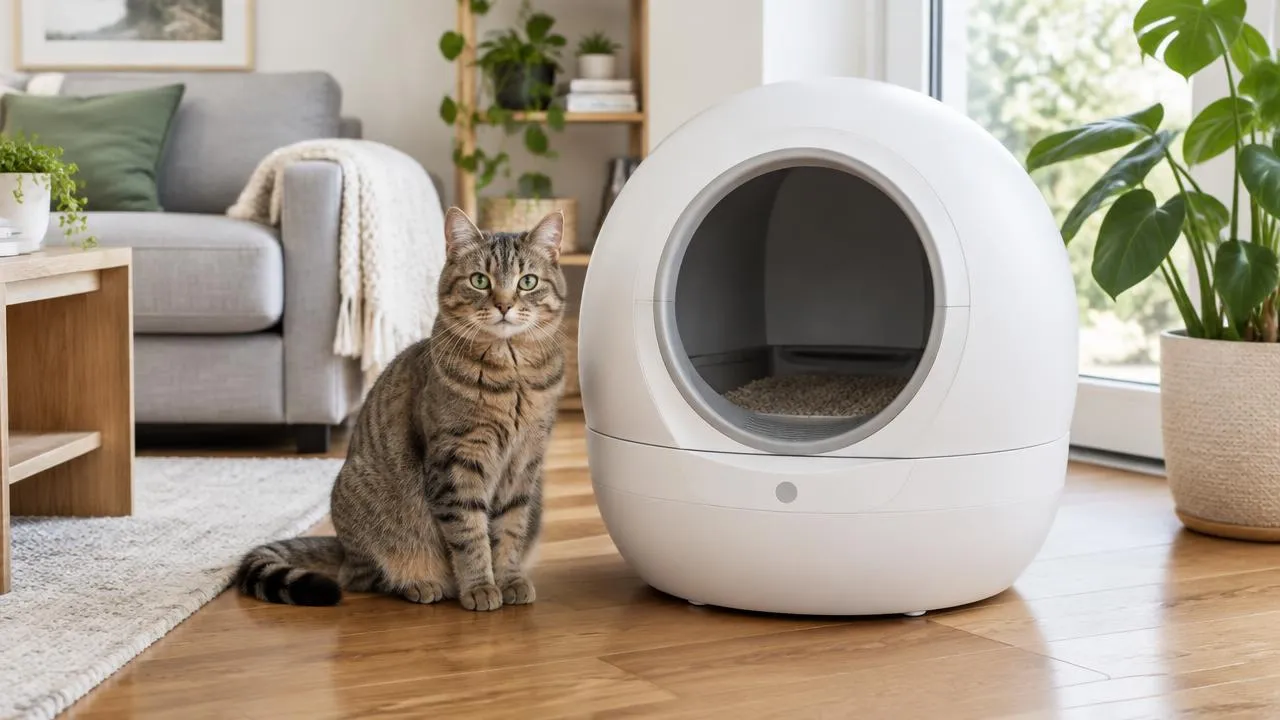
A smart litter box and visit tracking can raise significant expectations when one wishes to better understand their cat's habits. However, one must start with a distinction: information displayed by a device is not, by itself, a medical result. Without knowing the exact model or what its data signifies, no function should be presumed. This guide does not compare equipment; it proposes a cautious way to place visit records within daily monitoring.
Defining what the record claims to measure
Before any interpretation, check the manual of the exact model to see what information is available and how it is defined. The word 'visit' must not be spontaneously translated as 'successful urination'. Ask exactly what each data point represents if the documentation does not explain it clearly. In the absence of an answer, maintain this limit instead of attributing a capacity to the hardware for which you do not have confirmed proof.
The veterinary sources used here do not validate any particular connected device. They do not allow for the announcement of accuracy, individual recognition, or disease detection. This lack of validation in the texts is important: the article cannot transform commercial expectations into facts. The eventual record must remain presented for what it is documented as measuring, with its uncertainties, without any additional promises added at the time of purchase or during its daily use.
Do not confuse frequency with diagnosis
The MSD Veterinary Manual cites frequent urination among the characteristic signs of lower urinary tract diseases, alongside straining, blood, and urinating outside the box. This framework does not mean that counting entries is sufficient to recognise a condition. It suggests instead connecting different manifestations and describing what the cat actually does, including when you do not know the result of an attempt. Context remains vital for any clinical assessment by a qualified professional.
The manual indicates that several causes can produce these signs: stones, infections, urethral plugs, tumours, or idiopathic cystitis. The investigation of the latter relies on excluding other origins, notably through urinalysis and imaging. A visit curve does not provide these examinations. It can accompany a clinical history but does not allow for selecting the cause nor deciding on the necessary treatment on its own. Only a veterinarian can provide a definitive medical diagnosis.
Maintain direct observation and a clear alert rule
If you see a cat trying to urinate without producing urine, contact the veterinarian immediately, regardless of the contents of a tracking chart. AAFP/ISFM guidelines indicate that idiopathic cystitis can have an obstructive presentation. It is therefore not appropriate to wait for an application to display an alert or for a figure to exceed a personal threshold before requesting an evaluation in the face of these unproductive efforts. Immediate clinical action is essential.
During ordinary observations, distinguish the traces you have seen from the conclusions suggested by the interface. AAFP/ISFM recommendations favour open trays when possible to facilitate monitoring and scooping, while recognising individual preferences. This advice recalls the importance of human observation. Choosing a device must not lead to abandoning all attention paid to behaviour, access to the tray, and eliminations elsewhere. Manual checks remain the primary method for ensuring the well-being of the animal.
Sharing information with its uncertainties
For the appointment, prepare a readable chronology: appearance of changes, direct observations, available data, and elements you cannot confirm. The AAFP/ISFM places particular importance on history and its progression. A record becomes more understandable when accompanied by this context than when transmitted alone as if it provided a definitive answer. Specifically report periods for which you have no personal observation. Transparency regarding the data's origin helps the vet reach an accurate clinical conclusion.
With multiple cats, do not assume the user is identified: check the manual of the exact model for what is intended and documented. Otherwise, keep the attribution as unknown. Also examine relationships around the toilets, as guidelines describe animals that control access to them. Social events and movements within the home can thus complete the file without being visible in a simple digital history of attendance. Environmental factors are often just as relevant as frequency.
Evaluating comfort and maintenance independently of figures
The AAFP/ISFM recommendations remind us that no product removes the necessity for regular maintenance. They suggest removing waste daily at a minimum and using soap and hot water for washing. For the selected equipment, check the manual of the exact model for applicable operations. An interface without a specific signal must not serve as a reason to neglect the actual state of the toilets or to assume that all checks have been performed.
Finally, the MSD places tray management among several dimensions of treating idiopathic cystitis, along with stress reduction and attention to interactions between animals. The device does not represent the entirety of care on its own. Good usage consists of respecting the cat, soberly documenting changes, and consulting when facts require it, without asking data to resolve a medical question it cannot decide. Balance technology with traditional care to ensure your cat's health.
Accessoires Chat is working on a round automatic smart litter box: this product is in preparation and is not yet for sale. The price remains unvalidated, with an illustrative image. Specifications must be confirmed from the manual of the delivered model. This announcement specifically does not confirm any tracking functions or any medical use of the information potentially offered. The final design and features may vary significantly from these preliminary conceptual descriptions.
Sources and further reading
- AAFP and ISFM Guidelines for diagnosing and solving house-soiling behavior in cats (Journal of Feline Medicine and Surgery, 2014)
- Manuel vétérinaire MSD — Lower Urinary Tract Disease in Cats
This advice is for information only and does not replace your veterinarian's opinion.