
Cat litter and stress: understanding the links while prioritising health
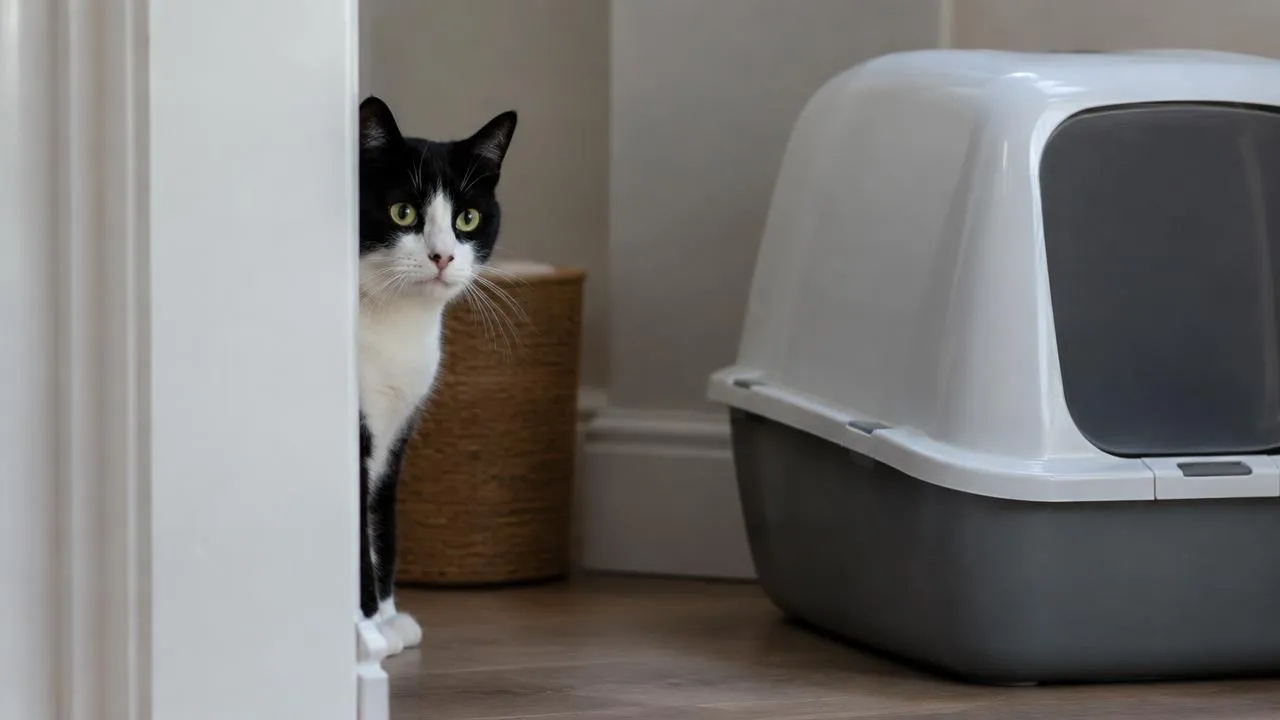
If a cat avoids their tray after household changes, is stress to blame? The link between cat litter and stress requires a nuanced answer. Environment and social interactions matter, but they do not provide a home diagnosis. AAFP/ISFM guidelines and the MSD Veterinary Manual help separate useful observations from hasty explanations, allowing for an organised veterinary discussion. Understanding these connections is essential for identifying whether the issue is behavioural, medical, or environmental.
Recognising several possible causes behind the same accident
AAFP/ISFM guidelines distinguish between medical causes, idiopathic cystitis, marking, and environmental or social factors. A puddle found in a room is insufficient to select a category. The document recommends a detailed history and clinical examination. It specifically invites studying the problem's chronology, the locations involved, and relationships between animals to build an assessment rather than an accusation. This thorough approach ensures that every potential factor is considered before concluding on a specific cause.
The idea of spite does not provide a useful framework for deciding what to do. Punitive interventions can worsen difficulties, these recommendations highlight. Instead, note concrete circumstances: recent changes, frequently used or avoided trays, the presence of another cat, and the locations of deposits. Describing what is visible allows for the transmission of actionable information without attributing an intention that observation does not prove and without neglecting possible pain. Professional guidance remains the safest way forward.
Understanding what MSD says about idiopathic cystitis
The MSD Veterinary Manual indicates that the cause of feline idiopathic cystitis remains unknown. Interactions between the lower urinary tract, stress, and modified neurohormonal factors are involved. This phrasing means neither that every stressed cat develops cystitis, nor that every urination outside the tray is due to stress. The diagnosis relies on excluding other causes, with tests chosen within a veterinary setting. Professional diagnostics ensure that physical ailments are not overlooked during any assessment.
MSD describes management aimed at decreasing the frequency and severity of episodes. It can integrate environmental management, litter organisation, cat interactions, dietary adaptations, and treatments. No single isolated adjustment should be presented as a guaranteed remedy. If a disease is suspected or already diagnosed, environmental choices accompany medical monitoring; they do not replace it and do not justify self-medication. Holistic care requires balancing medical treatment with proper home adjustments to support the cat's overall health.
Seeking sources of tension around toileting areas
For the AAFP/ISFM, access to the tray must be possible without a forced encounter with a housemate. Look around the container as carefully as inside it. An animal may monopolise a resource, and high-traffic areas might be avoided. The home floor plan recommended by the text allows for linking accident sites to walkways, noises, and conflict zones, instead of examining each puddle separately. Mapping these incidents helps reveal patterns hidden by isolated events.
The quantity of toilets does not explain everything: their distribution matters. Recommendations suggest two distinct sites for a single cat and, in multi-cat households, use the benchmark of one tray more than the number of cats, adapted to social groups. Several toilets placed together do not constitute independent resources. Spreading sites out aims to provide genuine usage options, not simply to increase a total on a list. Logical placement ensures every cat feels secure.
Reviewing material comfort with simple criteria
The AAFP/ISFM document recommends a sufficiently large container and an opening that is easy to cross. It also highlights individual preferences for covered or open trays. To compare options, it is better to watch posture and actual usage than to assume a lid necessarily reassures all cats. Open trays specifically facilitate monitoring and waste removal; this ease of observation is among the reasons given in the text. Observing the cat's comfort is paramount.
Scented granules and deodorants may be poorly accepted, according to the same guidelines. Their general recommendation covers a fine, unscented, clumping material, while recognising variable preferences. Regular maintenance remains necessary, regardless of the product. Also, avoid placing food and water near toilets: the text specifies that this arrangement can discourage elimination in that spot, even if it seems convenient to humans. Maintaining distance between resources respects the cat's natural hygiene instincts and requirements.
Knowing when to move beyond behavioural reasoning
Frequent visits, straining to urinate, or blood are not simply mood indicators. MSD describes these among the characteristic signs of lower urinary tract diseases, just like urinating outside the tray. Have these manifestations evaluated by a veterinarian without just settling for a substrate change. Specify their appearance and evolution; the practitioner can decide on appropriate investigations to avoid prematurely attributing difficulties solely to the environment. Prompt medical intervention is vital for resolving potential underlying health issues.
After this evaluation, continue observations in a structured manner: which sites remain used, where do incidents occur, and what interactions surround them? The AAFP/ISFM provides for follow-up and adjustments to the management plan. This approach allows for nuance: improving toilets can reduce certain constraints without guaranteeing the disappearance of all symptoms. Progress is judged by the cat's actual situation, not by purchasing specific equipment. Consistency in monitoring ensures the most effective long-term results.
A round automatic connected litter box is among the projects in preparation at Accessoires Chat. It is not yet for sale; its price remains unconfirmed. The provided image is for illustrative purposes only. To learn specific details, you must confirm them on the manual of the delivered model, without deducing its characteristics from this visual or attributing any medical promises to it. All features remain subject to final verification and formal testing.
Sources and further reading
- AAFP and ISFM Guidelines for diagnosing and solving house-soiling behavior in cats (Journal of Feline Medicine and Surgery, 2014)
- Manuel vétérinaire MSD — Lower Urinary Tract Disease in Cats
This advice is for information only and does not replace your veterinarian's opinion.