
Cat litter box: covered or open, how to choose?
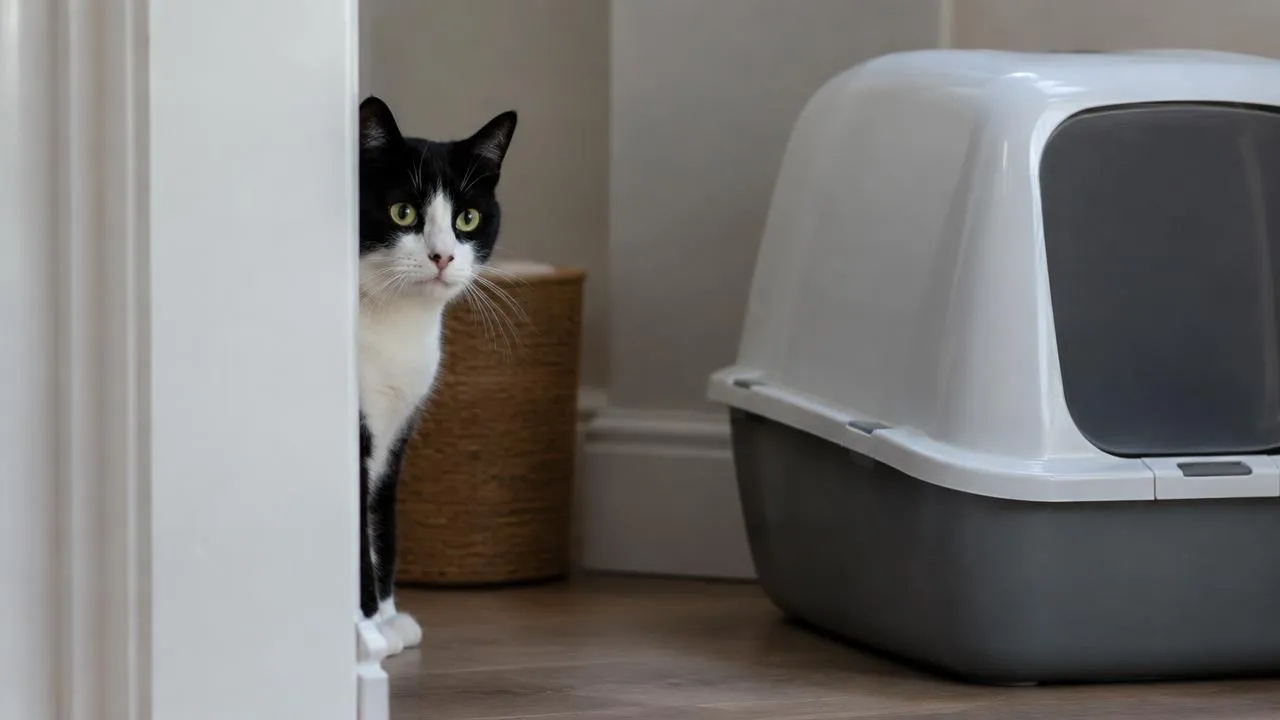
Choosing between a covered or open cat litter box often pits two human expectations: hiding contents or easier cleaning. For the animal, the question deserves another interpretation. AAFP/ISFM guidelines describe individual preferences, giving significant weight to dimensions, odours and access. No lid dispenses with maintenance, and no shape alone guarantees acceptance. Here are the points to compare before replacing a working setup or searching for why a tray is being avoided.
Preferences do not designate a universal winner
The AAFP/ISFM text reports research where preferences were split between large covered trays and open trays. It specifies that regular cleaning could weigh more in the choice than the presence of a roof. This nuance is essential: one cannot deduce that all cats seek a closed cabin, nor that each will necessarily refuse a litter box. Preferences vary greatly between individuals, and no single design satisfies the specific needs of every domestic feline.
For your own comparison, keep several distinct questions in mind. Does your cat have enough space? Does the container remain clean? Can they enter and exit easily? The answer "covered" or "open" does not summarise these parameters. The recommendations allow for the construction of an examination grid, not for attributing a preference to an animal that has not been observed in the proposed conditions. Consider the physical constraints and the animal's mobility first.
The practical advantage of an open tray: visibility and cleaning
The authors recommend open boxes when possible, to facilitate monitoring and the frequent removal of waste. This argument concerns daily tracking as much as the design of the container. If you easily see what must be removed, you have a more direct framework to accomplish the planned maintenance. It is not a matter of claiming that an open model cleans itself. Visibility ensures that hygiene standards are maintained consistently for health.
The guidelines also explain that an open tray avoids trapping odours inside. Some cats may desert a covered box containing an odour or perfume, then reuse it after cleaning once the scent has become neutral again. A disaffection does not always prove a definitive rejection of the roof. It can invite an examination of what is underneath and how the installation is maintained. Neutrality of the environment remains a key factor for cats.
Under the roof, posture must remain possible
A small covered space can hinder the normal posture of a large cat when eliminating, according to the AAFP/ISFM. The apparent volume of the unit is not enough to answer this question. Examine the dimensions available inside and do not consider the lid as a decorative detail. The general benchmark given for a rectangular tray is a length equal to one and a half times that of the cat, from nose to tail base.
This size criterion remains useful even if your priority is to hide waste. Postural comfort is not measured by the discretion of the object in the room. Conversely, a large open box maintains other requirements: easy access, appropriate location and regular maintenance. Comparing two designs therefore assumes examining the entire installation rather than isolating the visual effect of a lid alone. The animal's ability to turn around freely inside is essential for its comfort.
Entering, exiting and not being blocked by a housemate
Whatever the format, the opening must allow easy access. The recommendations point out that within a multi-cat household, one animal can prevent another from entering or leaving the tray. The question of passage does not disappear with a prettier or more closed container. Observe relationships around the toilets: equipment that is acceptable on paper may remain difficult to reach in this organisation. Security of access is a priority in social feline environments.
The authors also mention high-sided trays, which can offer some security and collect urine from cats that urinate standing up. This role of the walls should not be confused with a requirement to close the top. For an ageing cat or one hindered by its joints, the source shows instead the value of lowered access. Walls, entry and covering respond to different questions, to be treated separately according to the specific feline user.
Maintenance and health remain the true checkpoints
Soiled substrate must be removed at least daily, then topped up as needed. The AAFP/ISFM advises washing the tray every one to four weeks with soap and hot water, without ammonia products or strong chemicals. Perfumes and deodorising powders are not a replacement solution: the authors recommend avoiding them. These principles concern both toilet designs. Cleanliness and the absence of harsh chemical scents are fundamental for long-term use and acceptance.
A sudden change in habits requires more than a debate about the lid. The MSD Veterinary Manual describes urine deposited outside the tray among signs of lower urinary tract diseases, as well as straining, increased frequency of urination and the presence of blood. Have these manifestations examined by a veterinarian. Modifying the container may be part of environmental reflection, but it does not allow for the identification of a potential medical cause. Health always takes precedence.
The Accessoires Chat project concerns an automatic connected litter box in a round format, currently in preparation and not yet for sale. The price has not been validated; the image remains an illustration. No characteristic should be taken for granted before verification in the manual of the model actually delivered. For an automatic device, check the manual of the exact model for the points that interest you.
Sources and further reading
- AAFP and ISFM Guidelines for diagnosing and solving house-soiling behavior in cats (Journal of Feline Medicine and Surgery, 2014)
- Manuel vétérinaire MSD — Lower Urinary Tract Disease in Cats
This advice is for information only and does not replace your veterinarian's opinion.