
Weighing your cat: tracking weight and food portions accurately
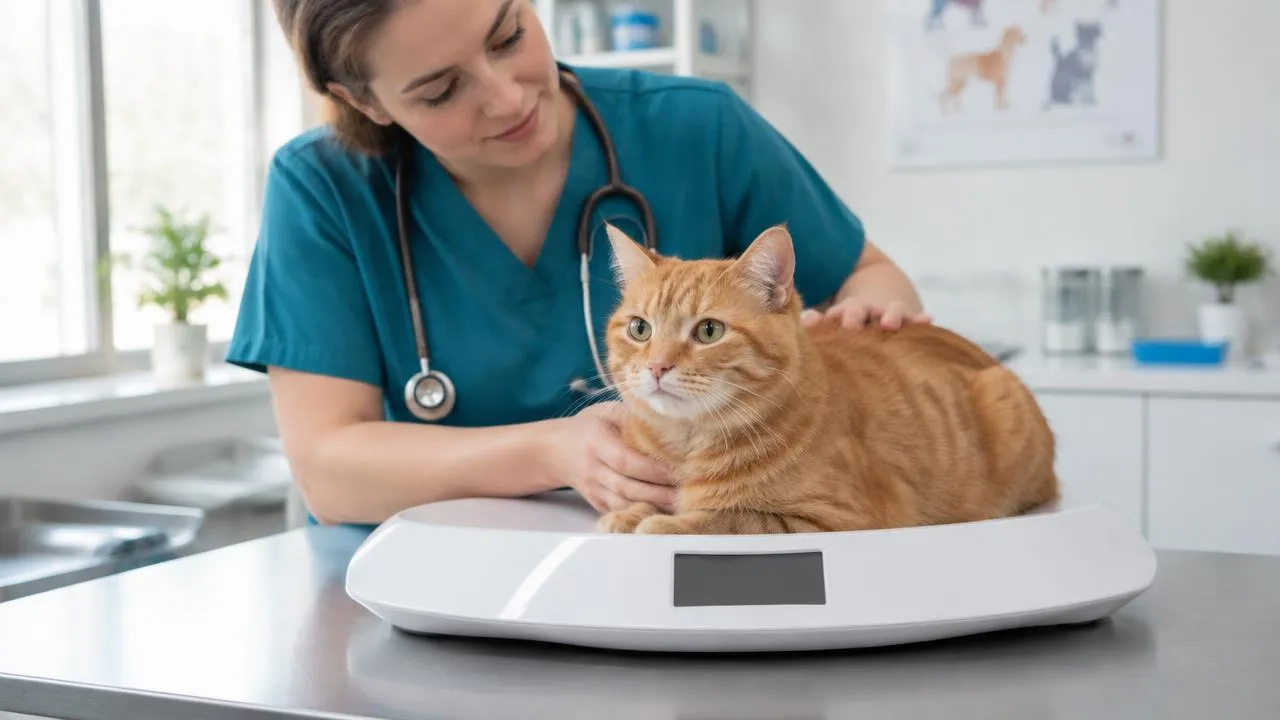
Weighing your cat can help you monitor their development over time, provided that you view each measurement as an observation rather than a medical diagnosis. The AAFP consensus statement on feline feeding programmes recommends regular monitoring of weight and body condition score, especially for senior, fragile, or chronically ill cats. It also advises asking your veterinary surgeon about appropriate calorie intake and the most reliable way to measure meals. A consistent logbook makes clinical discussions far more concrete, ensuring you avoid relying solely on subjective visual impressions.
Making weigh-ins truly comparable
A single measurement does not allow you to understand an ongoing physical trend. Record the date, the figure obtained, and the method used; try to maintain comparable conditions from one session to the next. Your veterinary surgeon can tell you whether home weigh-ins are appropriate and how often to carry them out. Body condition should also be assessed with the practice team, as weight alone does not provide all necessary clinical insight. The AAFP consensus recommends regular monitoring, but deliberately does not set a universal timetable for every individual animal.
If your cat does not settle calmly on the scales or if the equipment produces unstable results, do not force an experience that distresses them. Instead, report this difficulty to the clinic and ask for a suitable alternative. Remember that an apparent change can have multiple explanations, and an owner cannot diagnose illness from home records alone. Present your figures alongside observed circumstances: daily routines, meal access, and household changes. Your vet will place these in perspective alongside a clinical examination and the wider medical history.
Measuring portions consistently
A cat's body weight and the amount of food dispensed are two distinct measurements. For portions, a digital kitchen scale allows you to weigh what is offered accurately. The AAFP consensus highlights that standard measuring cups can easily be used inaccurately. Note the food type, the quantity served, and any leftovers when you can distinguish them. Ask your vet which daily portion is appropriate and which measuring method to adopt. A measured portion is not automatically nutritionally sound: the objective is to follow tailored veterinary recommendations rather than selecting a target yourself.
In a household where several people feed the cat, a shared log can prevent accidental double portions and missed meals. Write down who gave which amount and when, noting whether another pet had access to the dish. The consensus statement advises checking what is actually consumed, not merely what is offered. If your cat grazes at different times, a cumulative daily record offers a clearer picture than a single snapshot. The veterinary team can help you decide which details are truly necessary and which simply overcomplicate your tracking routine.
Linking weight, feeding habits, and resource access
Monitoring takes on greater meaning when examined alongside natural feeding habits. Cats generally prefer eating small amounts frequently and in solitary conditions, according to the AAFP consensus. A single large meal or a shared bowl can make it difficult to identify individual food intake. Record whether your cat accesses their food easily and whether other pets are present. In a multi-cat home, competition is not always outwardly obvious. Describing feeding stations and behavioural interactions helps your vet understand the realistic conditions under which measurements were gathered.
The AAFP recommends considering multiple distinct food and water stations, alongside frequent, small portions throughout the day. This general guidance must be adapted to your home layout and individual pets. Separating feeding stations can make it easier to observe each cat, but does not guarantee that every difficulty is resolved. Avoid changing too many variables at once if you wish to track the impact of an adjustment. Keep dated notes on locations, portions, and weight, then ask your veterinary professional whether your setup remains suitable.
Using an automated feeder as a tool, not a scale
An automatic pet feeder can help schedule meals, but its settings cannot replace weighing the portion actually dispensed or monitoring any uneaten food. Features and mechanical precision vary between models; always check the instructions for your specific unit. If your pet shares access with another cat, a programmed timer cannot confirm which animal ate. Record what you can directly verify and bring your questions to the clinic. An automated tool manages a domestic chore; it does not determine an individual animal's specific nutritional or energy needs.
The most useful monitoring routine is one you can maintain easily over time: dated measurements, transparent portion records, and relevant observations. Bring this logbook to consultations rather than attempting to draw medical conclusions from figures alone. Ask the practice how they wish you to track weight and body condition score, and when to report concerning changes. AAFP guidance encourages regular surveillance, but the professional who knows your cat will determine how best to apply it. Regular weigh-ins support clinical dialogue, but never replace it.
At Accessoires Chat, a black automatic kibble dispenser with Wi-Fi is currently in development and is not yet marketed. Its price has not been validated; any promotional image is illustrative. Technical specifications should be verified in the user manual of the delivered model. While a dispenser can help divide meals, it does not weigh the cat and cannot replace checking the portions actually eaten.
Sources and further reading
This advice is for information only and does not replace your veterinarian's opinion.