
Litter depth: what thickness should you provide for your cat?
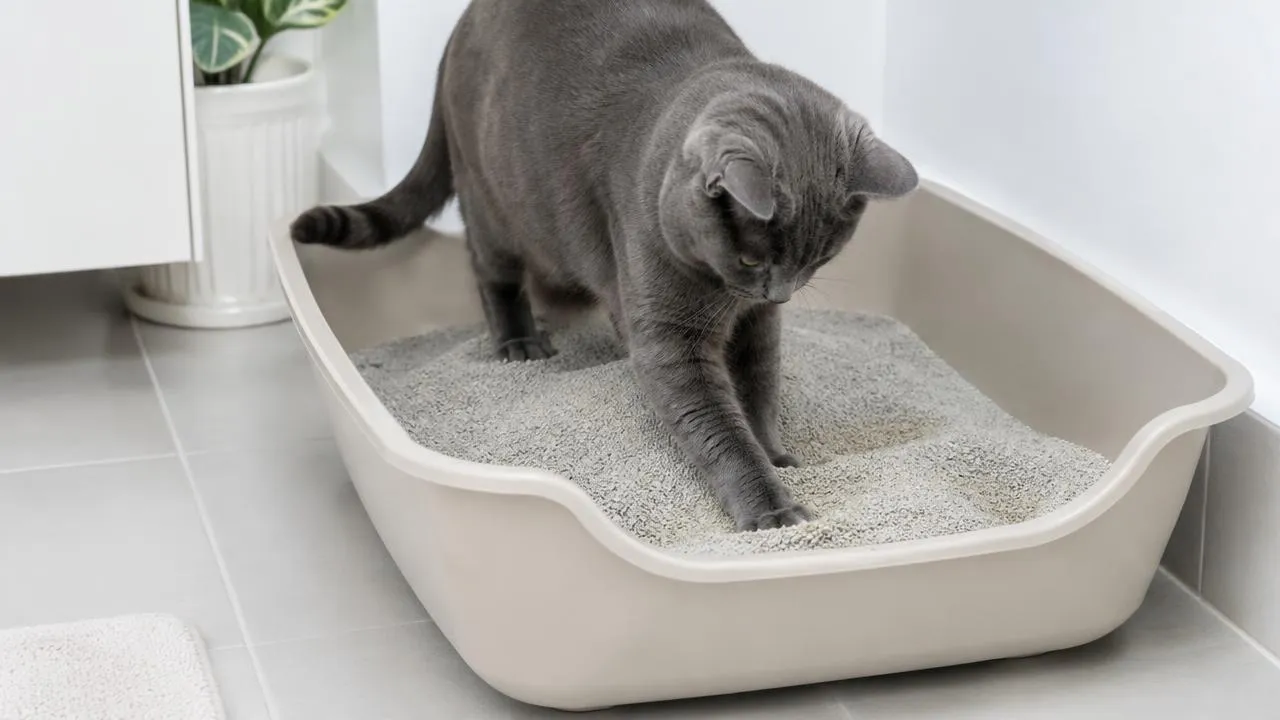
Litter depth here refers to the thickness of material in the tray, not the height of the walls. This distinction matters: a large box might contain little substrate, while a lower container could be filled more generously. AAFP/ISFM guidelines provide a starting point and remind us that preferences vary between cats. The goal is not to find a magic amount, but to offer an appropriate substrate, consistent thickness, and regular maintenance, then observe your animal.
The published benchmark: at least three centimetres
In most cases, AAFP/ISFM guidelines recommend a fine litter, comparable to sand, unscented and clumping, at a depth of at least three centimetres. This figure does not stand alone: it accompanies a material description. Retaining only the thickness while ignoring texture or scents would lose an important part of the recommendation given by the authors. It provides a foundation for feline comfort within the home environment, ensuring digging and covering behaviours remain possible.
“At least” signifies neither a mandatory exact value for every cat nor an instruction to increase thickness without limit. The same passage highlights the diversity of preferences regarding depth. Therefore, use this benchmark as a basis for thinking about your setup. The source does not set a universal maximum and does not allow for the claim that an ever-increasing layer will necessarily be better accepted by all animals. Individual responses to the depth remain the priority.
Do not confuse thickness, walls and entry threshold
Measuring what the bottom contains answers a different question from that of the container's dimensions. AAFP/ISFM also recommends a rectangular box one and a half times the length of the cat, from nose to tail base. A substrate thickness complying with the benchmark does not compensate for a box that is too small. Each parameter must be examined for what it actually brings to the installation. Size and depth work together for feline hygiene.
The opening must also allow easy passage, regardless of the design. The source shows a container with a lowered entry for an older cat or one suffering from degenerative joint disease. This advice concerns accessibility, not a particular depth imposed on all seniors. Avoid transforming an example of an adapted threshold into a numerical recommendation on filling: the text does not provide this equivalence. The structural accessibility remains distinct from the amount of litter poured into the tray.
Observe choices without assigning a cause too quickly
To evaluate preferences, the authors suggest several trays with different substrates and different depths. It involves leaving selection possibilities to the cat rather than assuming its preference. If you undertake a comparison, clearly record what was offered and which toilets were used. These notes can then support a discussion about the environment, especially if acceptance remains difficult to understand. Documentation helps identify patterns that may not be immediately obvious during daily cleaning routines.
The recommendations indicate that a cat balancing on the edges, with only one or two paws in the tray, may be showing an aversion to the substrate or to soiled litter. This behaviour does not automatically indicate an incorrect thickness. Before removing or adding material, also examine its cleanliness and nature. A useful observation opens several questions instead of providing a single explanation immediately. Multiple factors, including smell and texture, influence how a cat uses its box.
Adding substrate does not replace its maintenance
AAFP/ISFM envisages removing waste at least once a day and adding material when it becomes necessary. The filling level and the removal of soiling are two complementary actions. Accumulating substrate on top of what is dirty is not the routine described. Return to these simple steps when you seek to maintain an acceptable setup, without waiting for a large quantity to solve the problem. Cleanliness remains the primary factor for consistent feline usage.
Washing the container is recommended every one to four weeks, with hot water and soap. Strong chemical and ammonia-based products should be avoided. The text also advises against liners, perforated grids, and deodorising powders; it notes that aromatic litters may displease cats. An annoying odour is therefore not a sufficient reason to add a scent in the hope of making the box more attractive. Simple hygiene practices are preferred over using masking agents or additives.
Keeping the limits of adjustment in mind
For an automatic device, check the instructions for the exact model regarding filling indications. General veterinary benchmarks do not alone confirm the specifications of a given piece of equipment. Neither should you convert a commercial volume into substrate thickness without appropriate information. This recommendation concerns feline needs and preferences; it does not provide the technical data for every device available. Always refer to the manufacturer's guidelines for mechanical systems to ensure safe and correct operation.
If urinary habits change, thickness is only one element to examine. The MSD Veterinary Manual describes blood in the urine, frequent urination, straining, and urination outside the box among the signs of lower urinary tract diseases. Show these changes to a veterinarian rather than only continuing depth trials. A re-evaluated setup can accompany management, but it does not allow for the determination of a possible illness. Medical concerns require professional diagnosis beyond simple environmental changes.
Accessoires Chat has a round-format connected automatic litter box in preparation; it is not yet commercially available. The price remains to be validated and the image must be considered illustrative. Specifications, including those concerning its use, must be confirmed in the manual of the model actually delivered. For advice specific to an automatic device, check the instructions for the exact model. Product remains a draft not for sale with illustrative imagery.
Sources and further reading
- AAFP and ISFM Guidelines for diagnosing and solving house-soiling behavior in cats (Journal of Feline Medicine and Surgery, 2014)
- Manuel vétérinaire MSD — Lower Urinary Tract Disease in Cats
This advice is for information only and does not replace your veterinarian's opinion.