
When to replace a cat tree: the signs that matter
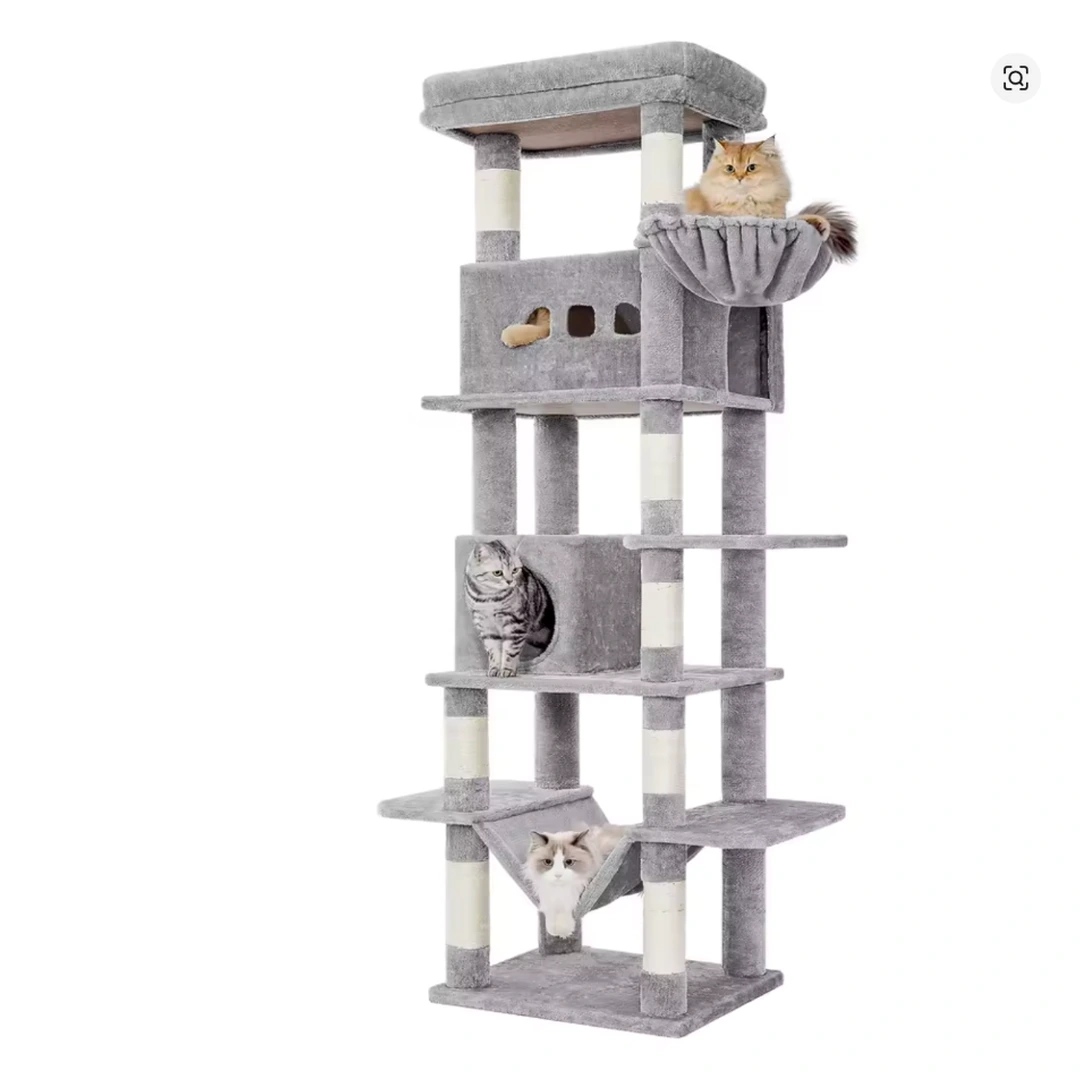
Faded fabric or scratch marks do not necessarily mean a cat tree has reached the end of its life. Conversely, one that still looks presentable may conceal damaged supports. If you are wondering when to replace a cat tree, the important question is therefore its actual condition rather than its appearance. The aim is to keep what remains safe and useful, without artificially extending the life of equipment whose safety is uncertain. Here is how to decide between maintenance, replacing individual parts and complete replacement.
When to replace a cat tree: look beyond appearances
Start by separating signs of use from loss of function. Flattened plush fabric, faded colouring or a few superficial marks may simply show that it is a favourite spot. Provided the surfaces remain intact, nothing is coming loose and the supporting parts are sound, these flaws alone do not justify replacement.
However, a worn area becomes a different concern when it exposes a fixing, an edge or crumbling material. Dangling threads or peeling coverings are no longer merely unsightly. Prevent access to the affected part and check the manufacturer's instructions to see whether an approved repair is possible.
There is no universal replacement timetable to follow blindly. Use, materials and conditions in the home all affect ageing. Examine the whole structure rather than deciding by age: an old cat tree may remain usable, while a damaged recent model may need removing. Appearance alone never settles the question.
Recognising damage that affects the structure
Complete replacement becomes preferable when several essential parts are affected or their integrity can no longer be established. Look particularly for a warped base, cracked platform, disintegrating panels or joints where the supporting material has torn away. Do not encourage your cat to climb on it to test its strength.
An isolated defect does not automatically mean throwing everything away, but any partial solution must be explicitly compatible with the model. Consult the instructions and, if necessary, the manufacturer. If no documented solution can restore safe use, replacing the whole tree is preferable to repeated improvised repairs to a weakened structure.
Also check whether damage is accumulating: a damaged covering may conceal a deteriorated panel, and a faulty joint may strain other parts. Unless safety can be established, take the equipment out of use. Following a fall, or if your cat limps or shows pain, consult a vet, even if the furniture looks intact.
Identifying hygiene problems that justify removal
A stain does not necessarily mean the entire cat tree needs replacing. The decision depends on what is affected and whether the materials can genuinely be maintained according to the instructions. A soiled removable cover has different implications from a deeply soaked porous panel that suitable cleaning can no longer reach.
Materials that remain damp, have swollen or show visible mould are reasons to stop using the tree. If several layers are affected, or the relevant areas cannot be replaced in accordance with the manufacturer's guidance, complete replacement is preferable. Avoid hiding the problem beneath a new covering.
A persistent smell calls for investigating the cause, not automatic disposal or a promise of disinfection. If parasites are present, consult a vet: replacing the furniture may not be enough to resolve the situation. Their advice helps determine what to do with the equipment, without confusing replacement with care for the animal.
Preserving useful functions and familiar reference points
The AAFP and ISFM guidelines on feline environmental needs (2013) highlight the importance of hiding places, elevated perches, scratching, separate resources, familiar smells and respectful interactions. They help explain why replacing a cat tree involves more than simply exchanging a shabby piece of furniture for a new one.
Before removing the old tree, identify what your cat actually gains from it: a lookout point, a scratching surface or somewhere to retreat from unwanted attention. The replacement should preserve these useful opportunities. A more visually impressive model is not necessarily a better replacement if those functions are lost.
Where the existing tree remains safe, a gradual transition avoids abruptly removing every familiar reference point. If it presents a structural or hygiene hazard, do not retain it for that reason: offer safe temporary alternatives instead. Any behavioural change warrants a veterinary consultation rather than immediately attributing it solely to the furniture change.
Deciding whether to keep, partly replace or completely renew
To reach a conclusion, put your decision into one of three categories. Keep a tree whose flaws are purely cosmetic. Consider targeted replacement where damage is localised and a manufacturer-approved solution exists. Prefer complete replacement if the structure, several essential components or permanently deteriorated materials make the whole tree's condition uncertain.
Take a few photographs of the concerning areas and find the model reference before contacting the manufacturer. This should produce a more useful answer than simply describing the tree as ‘worn’. Every technical question must be checked against the instructions: do not transfer guidance from furniture that merely resembles yours.
Finally, do not let a future purchase delay removing dangerous equipment. A tree deemed unfit for use must become inaccessible, even if its replacement is not yet available. Conversely, there is no need to replace a sound model over a few visible marks: the decision rests on identified defects, not a demand for newness.
VEYRULIS is preparing a 210 cm tall, multi-level tower cat tree, currently a draft product not yet for sale. Its price has not been approved, and the colour variant remains to be confirmed. Where replacement is justified, its specifications must be checked in the instructions for the model delivered: height alone cannot establish whether it is suitable.
Sources and further reading
This advice is for information only and does not replace your veterinarian's opinion.