
Repairing a Cat Tree Post: Loose Fixing or Broken Tube?
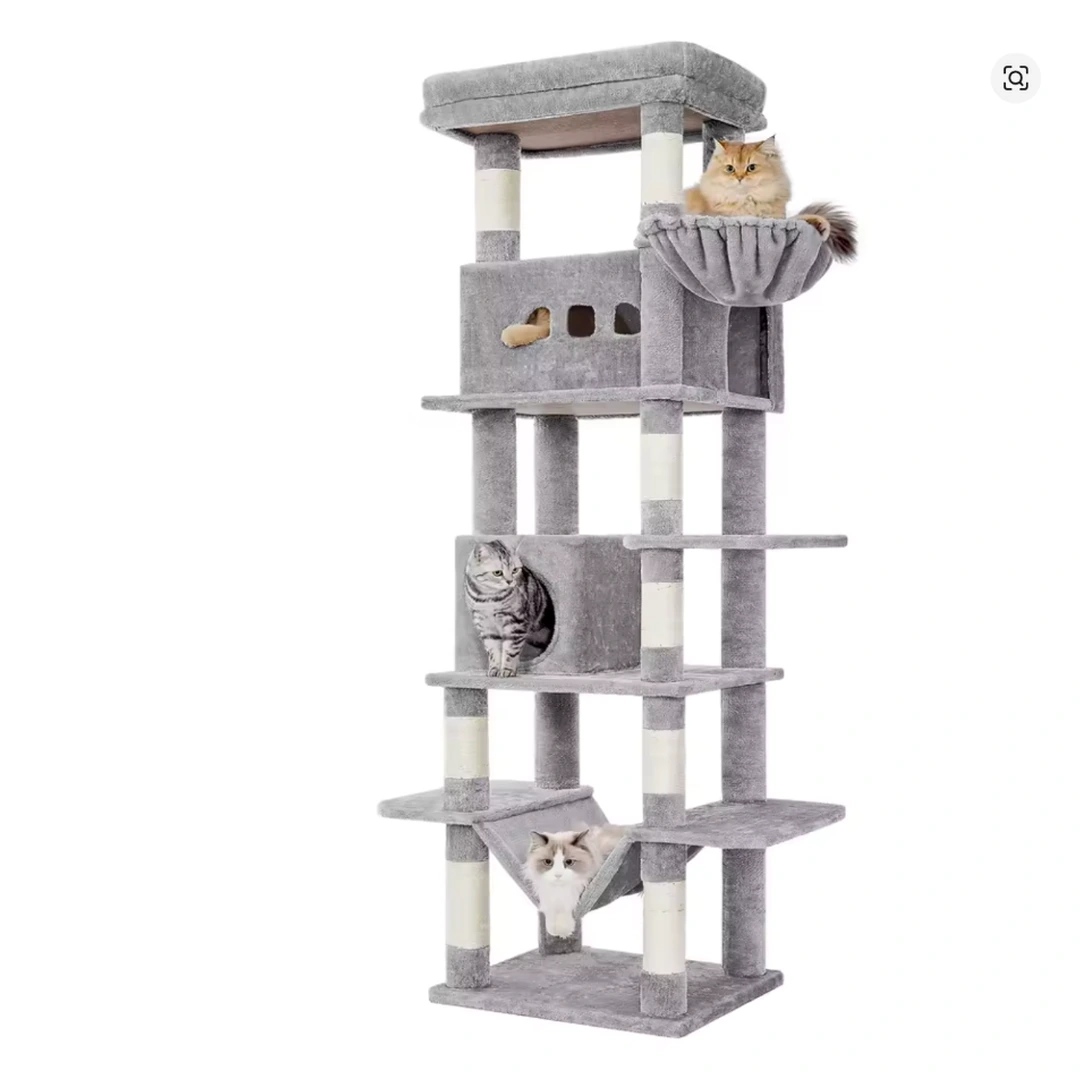
A post leans, wobbles, or pulls away from a platform: should you tighten a bolt or order a replacement part? Behind the search to repair a cat tree post lie two very different scenarios. A joint may simply have developed play whilst its components remain intact; conversely, the load-bearing tube may be fractured beneath rope that still looks acceptable. Before any intervention, make the tree inaccessible to your cat. The objective is never to mask a defect, but to establish whether the component can still safely perform its role according to the manufacturer’s instructions.
Repairing a cat tree post: pinpointing the fault
Begin by identifying the affected area precisely, without letting your cat climb the tree to see what happens. Does the movement come from the junction between the post and the platform, or from the body of the post itself? This distinction guides your inspection, but does not settle the issue: a torn internal fitting can easily mimic simple loosening.
Consult the manual before removing any component. If dismantling is permitted, work on an unloaded structure, preventing upper sections from toppling. Photograph every joint before separating parts. Do not cut open the covering to inspect the tube unless instructed by the manufacturer; doing so may cause further damage or complicate any assessment.
Examine accessible ends, fixings, and contact surfaces for separation, crushing, cracks, or debris. When upholstery prevents a direct check, send photographs to the manufacturer. A concealed area must never be presumed sound: if in doubt, keep the equipment out of use.
A loose fixing can sometimes be corrected
A fixing issue can be considered when the parts are intact and only their connection has loosened. The screw, its recess, and the threaded insert inside the post must be inspected together. A spinning screw, a damaged socket, or an insert moving within the tube indicates more than a routine tightening task.
If the manual permits reassembly, use only the specified hardware and tools, applying the prescribed torque. Never attempt to overcome play by forcing fixings. Using a longer screw, adding extra washers, or applying arbitrary adhesive alters the joint; any such measure must be expressly approved for that specific model.
After adjusting the fixing, inspect the joint according to the manufacturer’s guidelines, always keeping pets away. If movement persists or returns, stop testing immediately. Repeated tightening offers no security and can worsen a weakened fitting. Inquire whether you should replace the fixing hardware alone or the entire post.
A fractured load-bearing tube requires replacement
The load-bearing tube is the structural core beneath the exterior wrap. Frayed sisal rope should not be confused with tube failure. Conversely, a post that is bent, split, crushed, or detached from its end collar requires immediate withdrawal from use. Even if it stands straight when repositioned, appearance alone does not confirm load-bearing capacity.
Avoid improvised fixes using duct tape, fillers, glue, or splints. These methods hide structural damage without restoring original safety performance. Wrapping fresh rope over the fault does not turn a damaged tube into a sound support. Structural repairs are only viable if the manufacturer provides an explicit procedure for that component.
Without an approved repair procedure, replace the post rather than attempting to reinforce it. If the end insert has torn out, ask the manufacturer whether it forms part of an inseparable assembly. Retain the removed component to document the fault, but do not refit it temporarily to give your cat their perch back.
Determining what truly needs to be replaced
A broken post does not necessarily require replacing the entire cat tree. The decision also hinges on the condition of adjoining parts. Inspect the contact zones of both lower and upper platforms: pulled fixings may have ruined their mounting holes. A new post cannot fix an assembly fitted into a damaged shelf.
Send the manufacturer the tree’s model reference, the post’s exact location, and clear photographs of the damage. Request the specific replacement part designed for that position rather than selecting one based on outward appearance. Visible dimensions alone do not indicate internal fittings or internal structural design.
If no suitable spare part is available, do not simply discard the post while leaving higher tiers in place. A reduced configuration must be documented or confirmed by the manufacturer. Otherwise, keep the unit decommissioned and consider a full replacement. The key criterion is restoring an authorised configuration, not preserving individual elements.
Maintaining environmental stability during downtime
While the tree is out of service, provide a secure hiding place, scratching surfaces, and, if possible, an independent, stable perch. The 2013 AAFP and ISFM environmental needs guidelines highlight the value of safe retreats, elevated spaces, separated resources, scratching posts, familiar scents, and respectful human interactions.
After completing any replacement, check the structure according to the manual before allowing your cat back, then let them explore freely. Never use your pet climbing the tree as a load test. For any sign of pain, limping, falls, parasites, or behavioural changes, consult a vet. Repairing equipment never replaces professional veterinary advice.
VEYRULIS is preparing a 210 cm multi-level cat tree tower, which is not yet on sale. Its price has not been validated and its colour variant remains to be confirmed. To anticipate any future post repairs, technical specifications and replacement options should be checked against the manual supplied with the delivered model.
Sources and further reading
This advice is for information only and does not replace your veterinarian's opinion.