
Blood in Cat Urine: Observing Without Delaying Veterinary Consultation
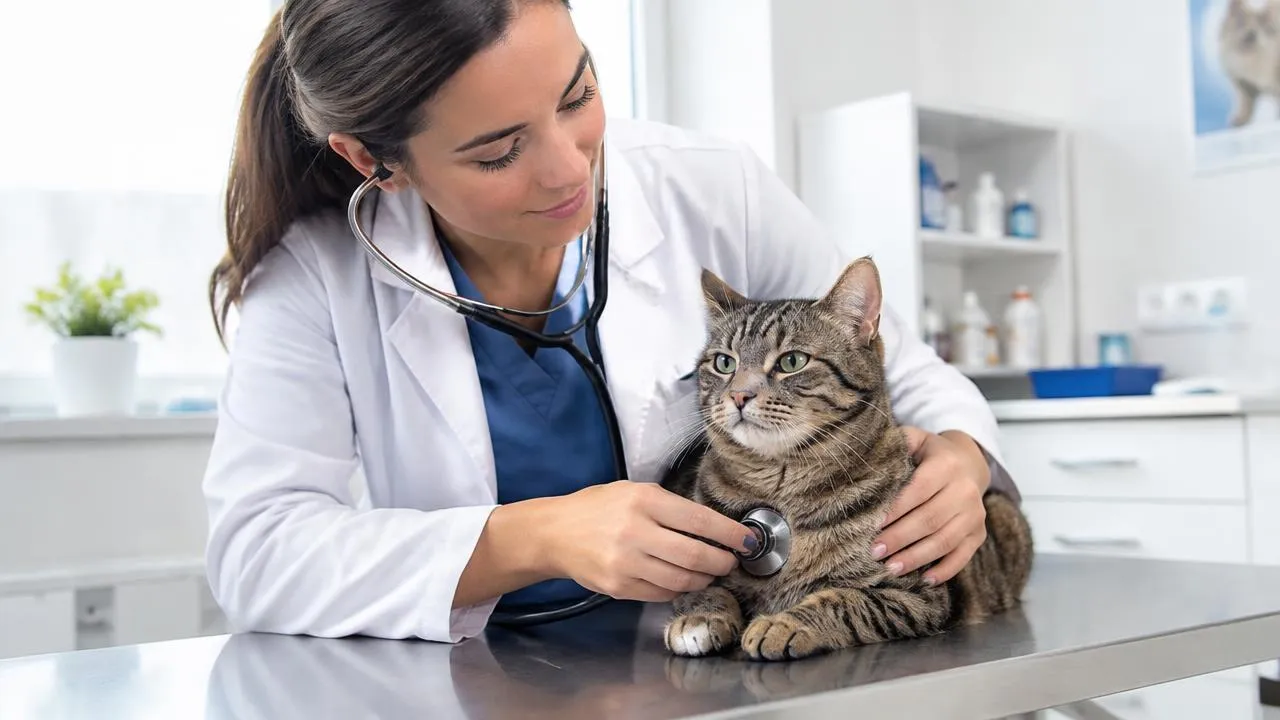
Discovering blood in your cat's urine naturally causes concern. The first useful reaction is not to change kibbles or search for a 'urinary' product, but to contact your vet. A coloured trace indicates a problem to explore without identifying which one. How your cat urinated and other observed changes matter as much as this discovery. This guide helps prepare the discussion and explains why examination cannot be replaced by litter inspection.
A common manifestation of different conditions
The MSD Veterinary Manual uses the term haematuria to designate blood in urine. It presents it among the characteristic signs of lower urinary tract diseases, along with frequent urination, straining, and elimination outside the usual box. These manifestations can combine, but their presence does not allow for the identification of a specific disease from a simple description made remotely. Veterinary professionals must conduct physical exams to differentiate between the various possible clinical origins.
The text mentions stones, infections, urethral plugs, and tumours, while highlighting the significant role of idiopathic cystitis. It would therefore be misleading to equate every bloody trace with a bacterial infection. Keep these possibilities as context to understand the proposed assessment, not as a list from which to choose the explanation that seems least worrying to you. Professional diagnosis remains essential to ensure the appropriate management of these serious and painful conditions.
Saying what you saw, with its limits
Before calling, gather the available facts: timing of discovery, location concerned, frequent visits, and any straining. If you do not know which animal used the shared tray, say so. A simple phrasing, such as 'I found this trace and observed these attempts', provides more than an uncertain medical conclusion. It is not necessary to have elucidated the entire situation to ask for professional advice on the best course of clinical action.
The AAFP/ISFM guidelines suggest reconstructing the onset of the disorder and its progression. They also encourage using a floor plan of the home to locate deposits. You can follow this logic when urine is found on a bed, the floor, or elsewhere: specify the locations and their sequence, without deciding in advance that it is voluntary marking or a simple hygiene problem. Detailed mapping helps the vet understand the severity and urgency.
The absence of urine changes the priority immediately
An essential question is whether the cat is actually producing urine. Attempts without emission must lead to contacting a professional immediately, rather than continuing to observe an old trace. The AAFP/ISFM distinguishes between obstructive and non-obstructive presentations of idiopathic cystitis. This framework justifies not categorising all episodes under a single reassuring label, particularly when behaviour in the box changes. Lack of production represents a true medical emergency that requires swift veterinary intervention.
One must not wait to obtain a clearer photograph, count every visit, or find another spot before calling if efforts are unproductive. Explain this difficulty first. The role of those close to the animal is to alert and describe; the assessment of obstruction and management decisions are the responsibility of the veterinarian, not an attempt at home treatment. Delaying care during an obstruction can lead to life-threatening complications for the affected cat.
Understanding examinations and avoiding shortcuts
To search for other causes before concluding idiopathic cystitis, the MSD cites urinalysis, culture, radiography, and ultrasound. The practitioner chooses investigations based on history and examination. An observation made in the tray does not provide this information. Even when an episode closely resembles the previous one, the description of signs does not demonstrate that their origin is identical. Only clinical tests can confirm if the underlying pathology is new or a recurrence.
Regarding antibiotics, AAFP/ISFM recommendations require a positive urine culture before their use in this context. This reminds us why bloody urine does not justify restarting an old medication on one's own initiative. The document also highlights the absence of a single test confirming idiopathic cystitis: this diagnosis assumes having searched for other explanations, rather than having simply recognised a typical colour or behaviour. Professional oversight ensures that cats receive only necessary medical treatments.
Preserving welcoming toilets during follow-up
The presence of a medical disorder does not make the environment secondary. The AAFP/ISFM recommends optimising the toilets even when a disease contributes to unusual elimination. Check access, cleanliness, and interactions between animals. Avoid particularly turning the tray into a place for administering medication: the text cites this unpleasant association among situations likely to lead to a rejection of the toilets by the cat concerned. Maintaining a positive association with the box is vital.
Daily waste removal and washing with soap and hot water are part of the advice in these guidelines. Perfumes or ammonia-based products are not the answer to urinary problems. If a motorised device is present, check the manual of the exact model for its maintenance procedures. Neither a new machine nor a different litter allows one to conclude that the cause of the bleeding has disappeared. Veterinary follow-up remains the only reliable indicator.
A round connected automatic litter box is in preparation at Accessoires Chat, without being available for sale at this stage. Its price is not validated; the image provided is for illustrative purposes only. Specifications must be verified in the manual of the model actually delivered. No function or characteristic should be considered confirmed based on this product preparation announcement. This is currently a draft and is not offered for purchase.
Sources and further reading
- AAFP and ISFM Guidelines for diagnosing and solving house-soiling behavior in cats (Journal of Feline Medicine and Surgery, 2014)
- Manuel vétérinaire MSD — Lower Urinary Tract Disease in Cats
This advice is for information only and does not replace your veterinarian's opinion.