
Cat Tree Sisal: Rope or Scratching Mat?
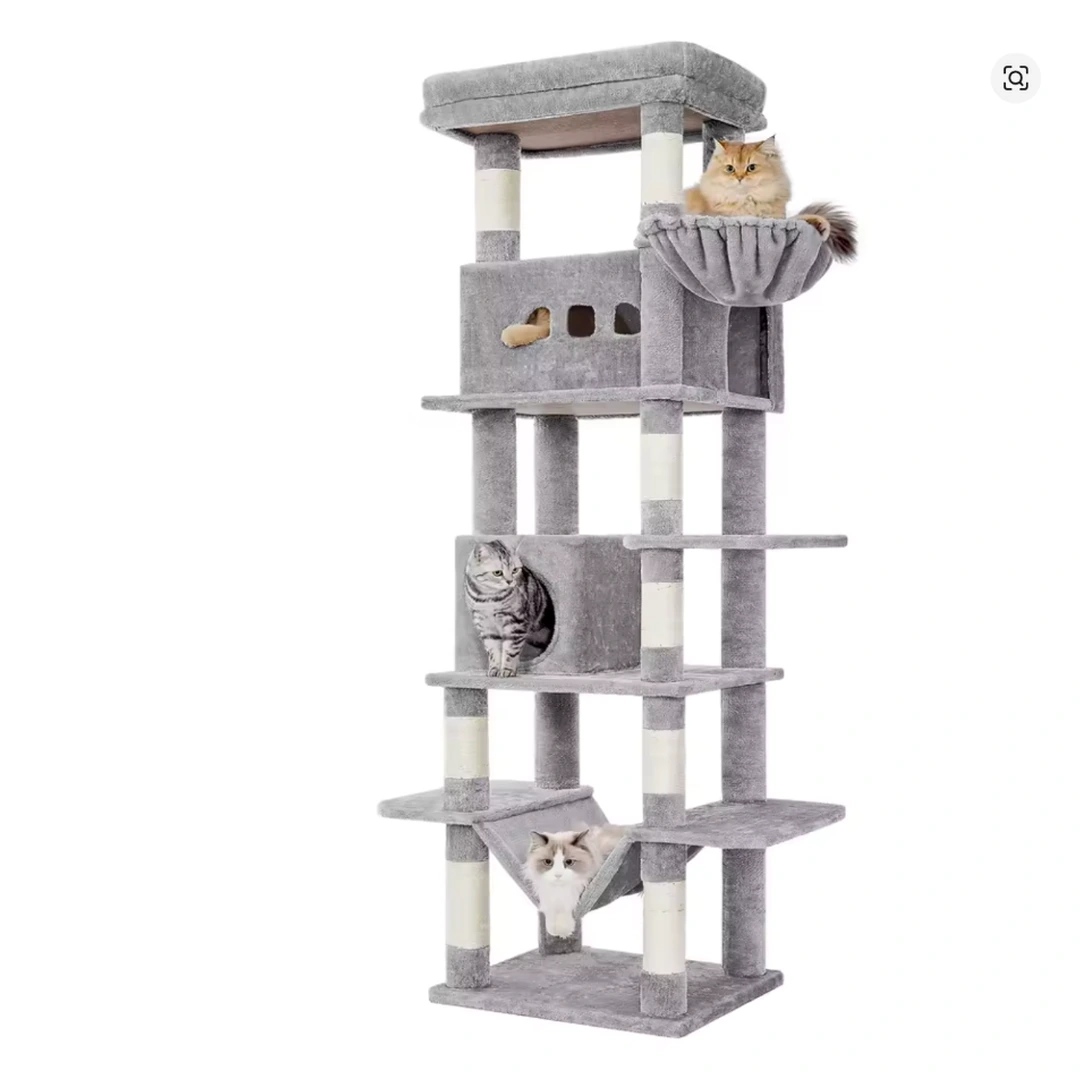
When choosing sisal for a cat tree, the raw fibre alone is only half the story: how it is applied fundamentally alters the scratching experience. Coiled rope creates a rhythm of ridges and grooves, whereas a woven mat presents a flatter, more continuous surface. The right choice depends on how your cat scratches, the surface being clad, and how the material wears over time. This cat tree sisal comparison evaluates both options clearly, without turning texture preferences into rigid rules.
Cat tree sisal: two distinct claw grips
On a post, coiled rope creates a succession of small horizontal ridges. Claws catch the fibres and slot into the gaps between turns. How well they grip depends on the rope’s diameter, twist, and the tightness of the winding. A thicker cord is therefore not automatically more comfortable or appealing for every cat.
A sisal mat provides a woven weave whose texture varies with the loom. Some mats are tightly bound, while others feature coarser intersections. Claws engage this structure across an uninterrupted plane. It is important to distinguish an authentic scratching surface from lightweight decorative fabrics merely labelled as having a sisal look.
Watch your cat’s existing habits: do they pull downwards in long, sustained stretches, or deliver short, rapid paw strokes? These movements indicate preferences without strictly predicting them. The 2013 AAFP and ISFM Feline Environmental Needs Guidelines recognise scratching as an essential feline behaviour; however, they do not prescribe one specific format of sisal.
On a post, rope naturally follows the curve
Rope naturally hugs the circumference of a cylindrical post as it is wound. It suits this rounded profile well, provided the underlying core and fixing method are compatible. The finished result depends on neat, unbroken turns: gaps expose the post underneath, whereas overlapping creates lumps. The ends require meticulous fastening.
A mat can also wrap around certain posts, but its flexibility is decisive. A backing that is too rigid will resist bending, bowing outwards and creating an uneven, bulky seam. The narrower the post diameter, the greater this tension. The manufacturer’s specifications should confirm whether cylindrical wrapping is an intended use, rather than leaving you to test its pliability.
To compare ease of fitting, consider the practical work involved: rope requires continuous, even tension, whilst a mat requires precise cutting and a clean, flush seam. Neither is universally simpler. Always check the manufacturer’s instructions for approved materials, permitted fixings, and any specific assembly limitations.
On a panel, matting provides seamless coverage
On a flat surface, a sisal mat offers a practical advantage: it covers a broad area in a single piece. This avoids having to align multiple lengths of rope side by side. This setup suits cats that splay their paws wide when scratching, provided the texture appeals and the panel stays firmly secured.
Edges and corners represent the key areas to inspect. A frayed edge or a lifted corner creates an unintended snag point, very different from the grip found across the centre. A mat with finished borders simplifies installation, but edge binding cannot replace a secure, flush fixing method approved in the panel’s manual.
Fitting rope to a flat panel remains possible when the design allows for it. However, it requires careful handling of sharp direction changes and end fixings. When deciding, picture the finished surface: your cat should meet an inviting scratching texture, not exposed fasteners or loose ends. Never improvise fixings that could become exposed during use.
Wear patterns: monitoring damage rather than promising lifespan
Over time, rope can become fluffy, shed loose fibres, and develop slack or severed turns. A woven mat tends to flatten, fade in high-traffic patches, or fray across its weave. These changes depend on manufacturing quality and scratching intensity. Without comparable data, claiming that one always lasts longer than the other is misleading.
Slight fuzziness does not mean the entire scratching post is unusable. However, trailing strands, accessible loops, or backing peeling away from the frame call for the area to be placed out of reach. Check what wear reveals: the inner post and any staples or adhesives must never become exposed to claws.
Repairability also differs. Depending on construction, rope sometimes permits localised re-wrapping of worn sections, whereas a mat is usually a single piece requiring full replacement. This cannot be assumed; it must be confirmed in the instructions. Compare the availability of replacement coverings rather than judging the product on its brand-new appearance alone.
Choosing according to the support and your cat’s reactions
In summary, consider rope first for cylindrical uprights and woven mats for flat panels. These are practical guidelines rather than rigid rules. When choosing between products, ask for clear details on texture, edge finish, and permitted applications: the word ‘sisal’ alone does not describe surface quality.
Allow your cat to explore the surface without forcing their paws onto it. Hesitation does not mean the material is unsuitable. If you notice signs of pain, lameness, falls, parasites, or behavioural changes, consult a veterinary surgeon rather than assuming the scratching covering is the sole cause.
VEYRULIS is currently developing a 210 cm tall multi-level cat tree tower, which is not yet on sale. Its retail price is not finalised, and the colour variant remains to be confirmed. To assess its scratching surfaces, coverings, and finishes, all specifications will need to be checked against the user manual provided with the delivered model, without presuming whether rope or matting has been selected.
Sources and further reading
This advice is for information only and does not replace your veterinarian's opinion.