
Stabilising a Wobbly Cat Tree: Practical Steps Against Movement
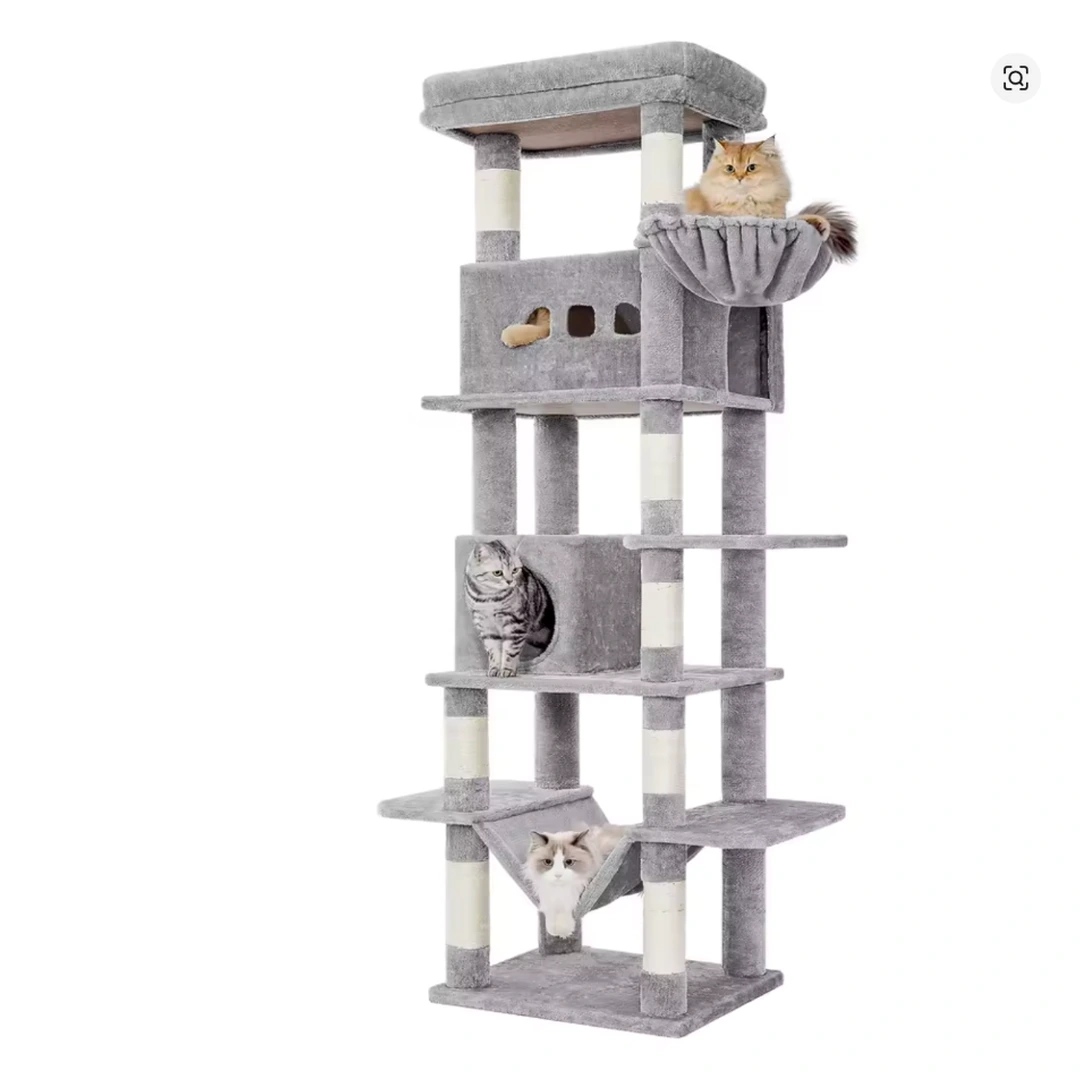
Does your cat tree sway whenever your companion jumps onto an upper platform? Before slipping an impromptu wedge underneath or tightening every screw in sight, you need to identify what is actually moving. Searching for ways to stabilise a cat tree covers several distinct situations: a baseplate rocking on the floor, an assembly developing unwanted play, or a structure whose footprint is simply insufficient for its height. The right approach is to isolate the root cause first, and then apply only an adjustment that fully complies with the manufacturer's manual.
Stabilising a cat tree: start by isolating the movement
Keep your cat away and temporarily prevent any access to the equipment. Without climbing onto it, pulling on a platform, or deliberately causing it to topple, carefully observe the contact points and accessible joints. If the cat tree already appears ready to fall, do not continue testing: make the area safe immediately and seek guidance from the manufacturer.
On an assembly that remains upright without difficulty, applying gentle manual pressure near the base can help locate the movement. Does the baseplate lift alternately off the floor? Inspect the flooring first. Does the base stay flat while a component shifts relative to its mount? Examine that specific connection instead, in strict accordance with the manual.
Note down the exact point where play occurs and the circumstances observed beforehand, without encouraging your cat to recreate a jump. A clear photograph of the joint or the underside of the base, taken without hazardous handling, can assist discussions with customer support. Keep in mind that several underlying causes can also combine.
Checking whether the floor leaves the base compromised
An apparently flat baseplate may actually rest over a recessed grout line, a warped floorboard, or the raised edge of a rug. Check whether its entire supporting surface sits flat as intended by the manufacturer. A thick carpet or underlay can also compress unevenly under weight, giving an impression of flexibility across the whole structure.
If the manual permits moving the assembled cat tree, relocate it with the necessary assistance to a flat, firm, and clear floor surface. Otherwise, follow the manufacturer's specific handling guidelines. Compare the contact points again, without the cat present. If the swaying disappears, the issue lies with floor contact rather than a structural defect.
Avoid using stacked pieces of cardboard, folded fabric, or loose wedges, as these can easily slip or compress over time. A non-slip mat will not automatically correct a difference in floor level either. Only use furniture pads, levelling devices, or an under-base interface if their use is explicitly specified or approved by the manufacturer.
Inspecting fixings without tightening blindly
Once the contact points are verified, consult the assembly diagram provided by the brand. Identify all accessible connections and compare their appearance with the manual. A missing washer, a misaligned part, or an unusual gap warrants careful inspection. Never assume that every visible screw or bolt automatically needs to be tightened further.
Use only the specific tool and method indicated for your model. Follow the inspection sequence and tightening guidance whenever provided. Forcing parts in an effort to eliminate all movement can damage internal threads or crush an engineered panel. If a fixing turns freely, resists abnormally, or immediately loosens again, stop the intervention.
Ask the manufacturer how to proceed, providing a detailed description of the joint concerned. Do not replace a screw with a longer alternative, and do not add glue or drill fresh holes to conceal the problem. After an authorised adjustment, recheck the unloaded assembly: reseating a single fixing does not, on its own, guarantee overall stability.
Recognising a base that fails to stabilise the structure
If the floor is level and the assemblies conform to guidelines, yet the structure still tends to tip, the base may simply be insufficient for this configuration. An added platform, a moved accessory, or a layout differing from the intended assembly can alter balance. First revert to the configuration expressly authorised in the manufacturer's manual.
Do not place makeshift weights on the baseplate or screw an arbitrary wooden board underneath. These homemade solutions can create unintended mechanical stresses, protruding hazards, or fresh instability. A broader base is only an acceptable correction if the manufacturer provides or formally validates that adaptation for your specific model reference.
Check also whether the model requires an additional securing device or wall strap. Its inclusion and exact installation conditions are governed by the manual; an anchor must never be used to disguise a defective part. If no approved adjustment eliminates the risk, keep the tree inaccessible and contact the retailer rather than continuing trial-and-error attempts.
Restoring access only after a satisfactory check
Following any intervention, check the supports and fixings while the structure is completely unloaded, according to the manual. Never use your cat as a stability test. At the slightest ongoing doubt, keep access restricted. Once the adjustment is verified, allow your companion to return freely, without placing them onto a platform to prompt testing.
The 2013 AAFP and ISFM feline environmental needs guidelines emphasise the importance of refuges, elevated vantage perches, and suitable scratching opportunities. They do not, however, constitute a technical manual for structural stabilisation. Whilst the tree is unavailable, ensure your pet has access to stable, familiar alternative resources.
Thereafter, monitor the structure for any recurring play and carry out the routine maintenance checks scheduled by the manufacturer. In the event of pain, limping, a fall, parasites, or sudden behavioural changes, consult a veterinary surgeon promptly. A mechanical adjustment is never a substitute for professional veterinary advice.
VEYRULIS is developing a 210 cm multi-level tall tower cat tree, which is not yet available for purchase. The retail price has not been finalised and the colour variant remains to be confirmed. To assess its stability without speculation, its technical features, support points, and any specific securing requirements must be verified directly in the instructions supplied with the delivered model.
Sources and further reading
This advice is for information only and does not replace your veterinarian's opinion.