
Cat stress and mealtimes: recognising the influence of the environment
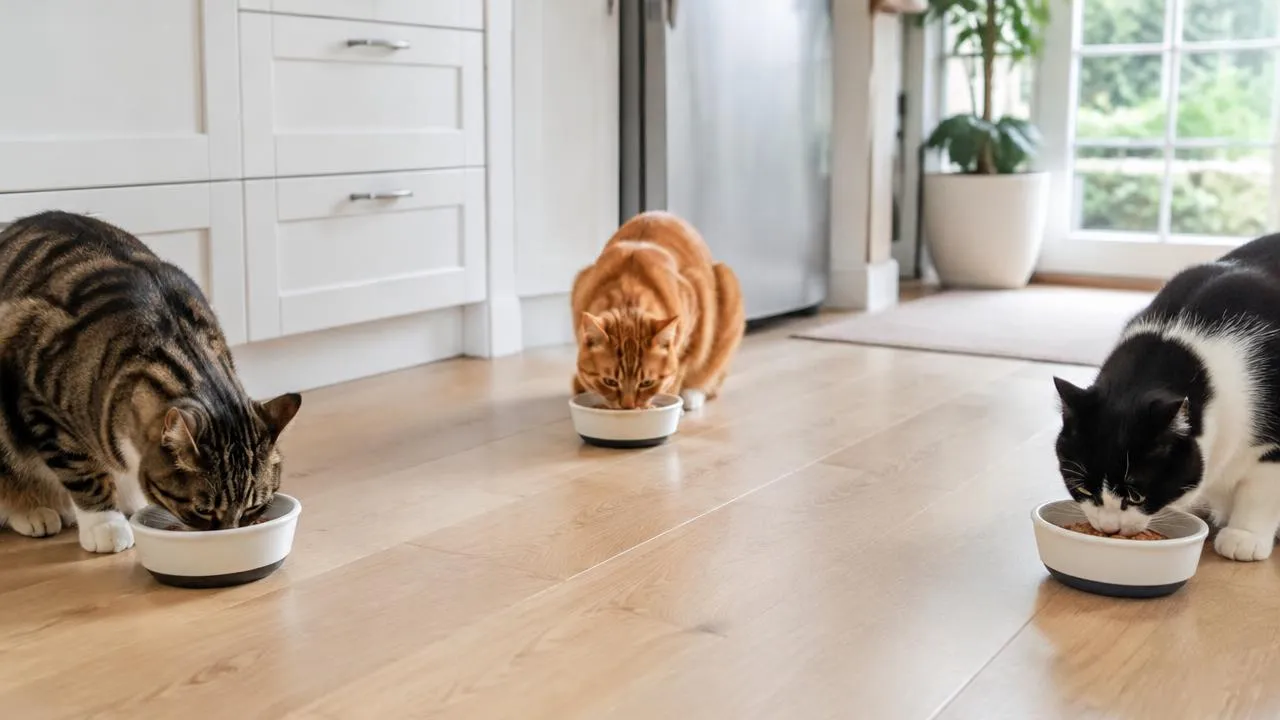
Eating is an experience closely tied to location and household relationships. The AAFP consensus statement highlights that certain cats avoid their housemates and that social tension is not always overtly apparent. An animal may therefore struggle to access their food bowl even when no visible conflict occurs. By observing travel routes, daily feeding schedules, and reactions, you can discuss a more suitable arrangement with your veterinary surgeon. The aim is to identify helpful reference points rather than to impose a universal model. Each household can examine its available resources, feline routines, and practical constraints, adjusting the overall setup whenever observations justify a change.
Understanding feeding habits and routines
Food and the place where it is served form a unique experience for any cat. An animal may display heightened vigilance when another approaches, even in the absence of an open confrontation. Noting prolonged stares, deliberate detours, or sudden departures gives you useful clues to understand the situation better. A visible schedule can help household members coordinate effectively, especially when several people share feeding duties. It is helpful to record what was served and what was consumed, rather than simply refilling the bowl without keeping track of daily intake.
Cats sharing the same household do not always divide space equally between themselves. Some distinctly prefer separate areas and may actively avoid certain companions. The AAFP consensus recommends understanding these social dynamics before deciding where to place feeding stations. It is equally important to check whether the cat has a quiet retreat area after finishing a meal. Being able to move away without crossing paths with another cat matters in the overall setup. These observations remain individual and should always be interpreted with care.
Assessing spatial layout and feeding access
A feeding station placed in a busy household passage does not necessarily provide the calm a cat requires. Observe the times at which the animal chooses to eat and whether people or other pets interrupt their meal. A secure location can make feeding access more peaceful, without guaranteeing a complete solution on its own. Broad advice cannot replace recommendations tailored to your cat's specific history. Age, physical condition, and particular needs may alter which practical choices are appropriate. Always ask your veterinary surgeon to validate any dietary decision prompted by medical concerns.
The AAFP recommends distinct, visually separated feeding areas in multi-cat households. Multiple stations allow each animal to access food without forced physical proximity. Consider each cat's mobility and physical abilities before placing food bowls on elevated surfaces. When comparing several days, keep household conditions as consistent as possible. A dated record helps track changes over time and share factual details without exaggeration. Do not wait for the end of a monitoring period if your companion's condition causes concern.
Organising daily mealtimes effectively
Household resources can be distributed according to observed behavioural patterns. Identify where each cat spends time and which areas they seem inclined to avoid. Physical barriers or selective access devices mentioned in the consensus should be used with good judgement, ensuring no pet is deprived of food. A simple daily routine is often easier to maintain than a complicated arrangement. Check regularly that bowls and feeding equipment remain clean and functional, following the manufacturer's guidelines. The manual for the exact model remains the definitive reference for routine care.
In this context, measuring each cat's daily ration helps clarify who is consuming what. Your veterinary surgeon can advise on appropriate food quantities and accurate measurement methods. Do not rely solely on the visible level in a shared bowl to judge an individual cat's intake. Remember to mention all foods and treats offered, as well as how portions are measured. These details prevent vague estimates and allow a clear discussion of total intake. Never introduce dietary restrictions without professional advice if you are unsure of your pet's needs.
Monitoring and adjusting with a structured approach
Monitoring involves observing behaviour around meals, not merely checking the quantity of food left behind. The AAFP document encourages veterinary professionals to help owners recognise subtle signs of tension and resource guarding around bowls. Share your observations during a consultation if the situation worries you. A puzzle feeder is not necessarily suited to every cat or every situation. The goal is to offer an accessible, enriching activity without making food unduly difficult to obtain. Re-evaluate its use if the animal seems frustrated or struggles to feed.
Any change in layout should be monitored carefully over time. Check that each cat finds their station and eats normally, noting down any difficulties that arise. A practical setup in one household may not suit another, as social relationships and available space differ. Devices and automated options also vary between models and manufacturers. Before relying on automated settings, review the product instructions and test them while observing your cat. Direct observation remains essential to confirm how the arrangement works in practice.
At Accessoires Chat, a black automatic kibble dispenser with Wi-Fi is currently in preparation and is not yet available for sale. Its price has not been finalised, and the image provided is purely illustrative. Specific features remain subject to confirmation in the instruction manual accompanying the model actually delivered.
Sources and further reading
This advice is for information only and does not replace your veterinarian's opinion.