
Getting Your Cat Used to an Automatic Kibble Feeder
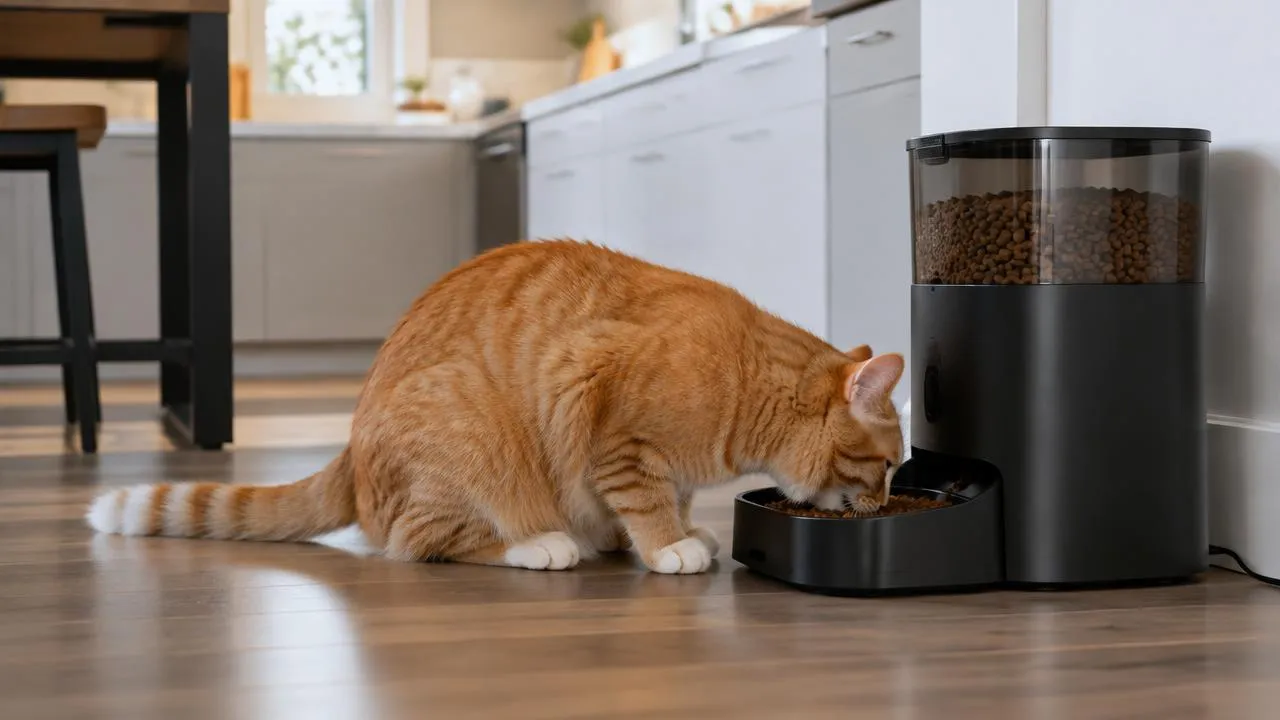
The AAFP consensus statement on feline feeding programmes reminds us that feeding a cat does not solely consist of choosing their food. The way meals are presented matters just as much. Cats generally prefer eating frequently and alone, whereas an automatic feeder does not necessarily meet all their natural foraging and predatory needs. In this practical guide, our advice focuses on household organisation and necessary checks; technical capabilities remain specific to each individual model.
What an Automatic Feeder Can Offer
The general principle involves dispensing dry kibble according to a schedule or setting provided by the appliance. Mechanical features, portion adjustments, and operating modes vary depending on the model: always consult the instructions for your specific unit. Do not assume from appearance alone that a device measures food accurately or recognises an individual pet. When getting your cat used to an automatic kibble feeder, prioritise your companion’s genuine welfare and needs over mere convenience. A well-chosen device should integrate smoothly into a routine you can easily supervise, without stopping your cat from eating peacefully in a calm, quiet spot.
Dividing daily food intake can form part of a structured routine of frequent small meals. The AAFP statement notes that automatic feeders can be useful in domestic routines, whilst pointing out that they do not typically offer natural foraging or predatory opportunities. An electronic appliance is therefore simply a dispensing tool, rather than a comprehensive answer to feline behavioural needs.
Choosing According to the Cat and Their Environment
Begin by identifying the exact location where your feline companion feels secure when eating. In multi-cat households, pets do not always share domestic spaces equally, and certain individuals actively avoid their housemates. The AAFP recommends multiple feeding stations, visually separated, to provide distinct eating zones and limit potential competition. If several animals live together, observe their habits and movements at different times of day. A station easily accessible to one cat may be avoided by another. Separating feeding points and monitoring access individually supports an arrangement aligned with their social relationships and preferred territories.
Consider the physical agility and specific needs of each cat when selecting an appropriate feeder location. An elevated position may suit certain agile cats if their physical condition allows, but it should never become an insurmountable barrier. Feeding stations should not be placed near litter trays, in line with AAFP guidance.
Schedules and Portions: Starting with a Consistent Baseline
Before programming anything, establish the total daily quantity to provide, consulting your veterinary team whenever necessary. The AAFP recommends that a veterinary professional advise on calorie requirements and portion measurement methods. Standard kitchen scales or volumetric measuring cups can be used; careful tracking ensures you know what is actually consumed. When getting your cat used to an automatic kibble feeder, prioritise your companion’s genuine welfare and needs over mere convenience. A well-chosen device should integrate smoothly into a routine you can easily supervise, without stopping your cat from eating peacefully in a calm, quiet spot.
Dividing a planned ration into multiple meals does not justify increasing the total daily allowance without careful thought. Measure portions precisely when filling the feeder hopper and compare this against any leftovers or food actually consumed. Regularly monitor weight and body condition, paying special attention to elderly, frail, or unwell cats with specific dietary requirements.
Programming and Verifying Feeder Operation
Read the instruction manual thoroughly before configuring meal times, portion sizes, and any associated features. Measurement units and control settings vary widely between manufacturers: dispensed quantities cannot be assumed identical between devices. Carry out a test run in your presence, check kibble delivery, and confirm your cat reaches the food comfortably without hesitation. If several animals live together, observe their habits and movements at different times of day. A station easily accessible to one cat may be avoided by another. Separating feeding points and monitoring access individually supports an arrangement aligned with their social relationships and preferred territories.
Note the programmed settings and scheduled feedings, then check for leftovers and observe your cat’s everyday behaviour. An automatic device on its own cannot tell you which pet ate in a shared home. If appetite changes or your cat struggles to access food, do not simply adjust the settings: seek professional veterinary guidance promptly.
Maintaining Foraging Opportunities and Active Observation
Food-dispensing puzzles and foraging for kibble can encourage healthy physical and mental activity. The AAFP suggests starting with an easily solved puzzle and gradually adjusting the difficulty to suit your cat's abilities and temperament. You can introduce these enriching activities alongside meals, ensuring food remains accessible and your pet successfully retrieves it. When getting your cat used to an automatic kibble feeder, prioritise your companion’s genuine welfare and needs over mere convenience. A well-chosen device should integrate smoothly into a routine you can easily supervise, without stopping your cat from eating peacefully in a calm, quiet spot.
The device alone cannot tell you whether a meal was eaten in a calm, stress-free manner. Observe whether your cat approaches, eats, and leaves undisturbed, and whether another pet monopolises the feeding area. The consensus document emphasises that tension between cats is not always obvious or vocal. Regular observation helps you identify subtle changes to discuss with your veterinary surgeon.
At Accessoires Chat, a black automatic kibble feeder with Wi-Fi connectivity is currently in preparation and is not yet available for purchase. Its price has not been confirmed; the accompanying photograph is entirely illustrative. All technical features and operating modes must be verified in the user manual of the model actually supplied. Do not assume any functionality prior to checking this official documentation.
Sources and further reading
This advice is for information only and does not replace your veterinarian's opinion.